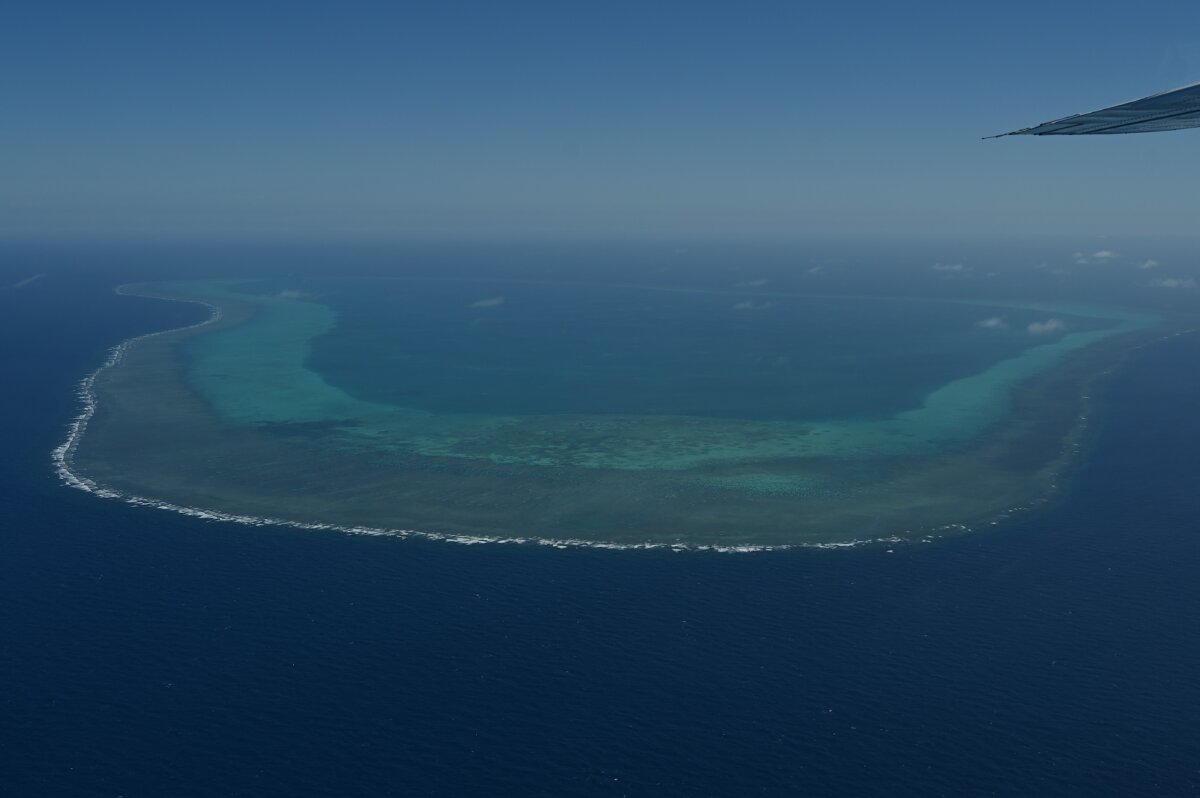

Philippine authorities are investigating reports of a possible new structure at Scarborough Shoal in the disputed South China Sea.
The National Task Force for the West Philippine Sea said on Wednesday it was aware of the reports and that government agencies were working to verify the information through monitoring, surveillance, and operational activities.
“The Philippine Government takes seriously any development that may affect the country’s sovereignty, sovereign rights, and jurisdiction in the West Philippine Sea,” the task force said in a statement, urging the public to avoid speculation while verification efforts continue.
The reports emerged days after Philippine Defense Secretary Gilberto Teodoro Jr. said he had received preliminary information about possible activity at the shoal while attending the Shangri-La Dialogue security forum in Singapore.
“I still don’t know what it is, that’s why it’s still considered raw information,” Teodoro told reporters on the sidelines of the event.
He said the situation remained unclear, describing the area as dynamic and noting that objects such as buoys occasionally appear within the shoal.
“Once in a while, they put a buoy and other things there,” he said, adding that debris could also drift into the lagoon.
A Reuters exclusive reported satellite imagery that suggested a reflective object may have been visible near the entrance of the shoal’s lagoon in late May, though Philippine officials have not confirmed the nature of the object and continue to investigate.
Scarborough Shoal, known in the Philippines as Bajo de Masinloc and in China as Huangyan Island, lies about 200 kilometers west of the main Philippine island of Luzon. The atoll is a traditional fishing ground and one of the most contested maritime features in the South China Sea.
The latest reports come amid continuing tensions between Manila and Beijing over competing claims in the strategic waterway.
The shoal became the focus of a prolonged standoff between Philippine and Chinese vessels in 2012. China has since maintained effective control of access to the atoll, regularly deploying coast guard and other maritime vessels in the area.
In 2016, an international arbitral tribunal in The Hague ruled largely in favor of the Philippines in a landmark case against China over the South China Sea. The tribunal found that China’s actions had violated the Philippines’ sovereign rights under international law and said Chinese authorities had unlawfully interfered with traditional fishing activities around Scarborough Shoal.
The ruling did not determine sovereignty over the feature itself. China rejected the decision and continues to assert its claims in the South China Sea.
Disputes around the shoal have remained a recurring source of friction. Philippine officials have repeatedly protested the presence and actions of Chinese vessels near the atoll, while Beijing has defended what it says are lawful activities within its territory.
Last year, Manila criticized China’s announcement of plans for a national nature reserve covering Scarborough Shoal, saying the move could further entrench Chinese control over the area.
The National Task Force said it would provide updates once verification efforts are complete. China’s embassy in Manila did not immediately respond to requests for comment.
Reuters contributed to this report.
 Friends Read Free
Copy
Facebook
Tweet
Friends Read Free
Copy
Facebook
Tweet