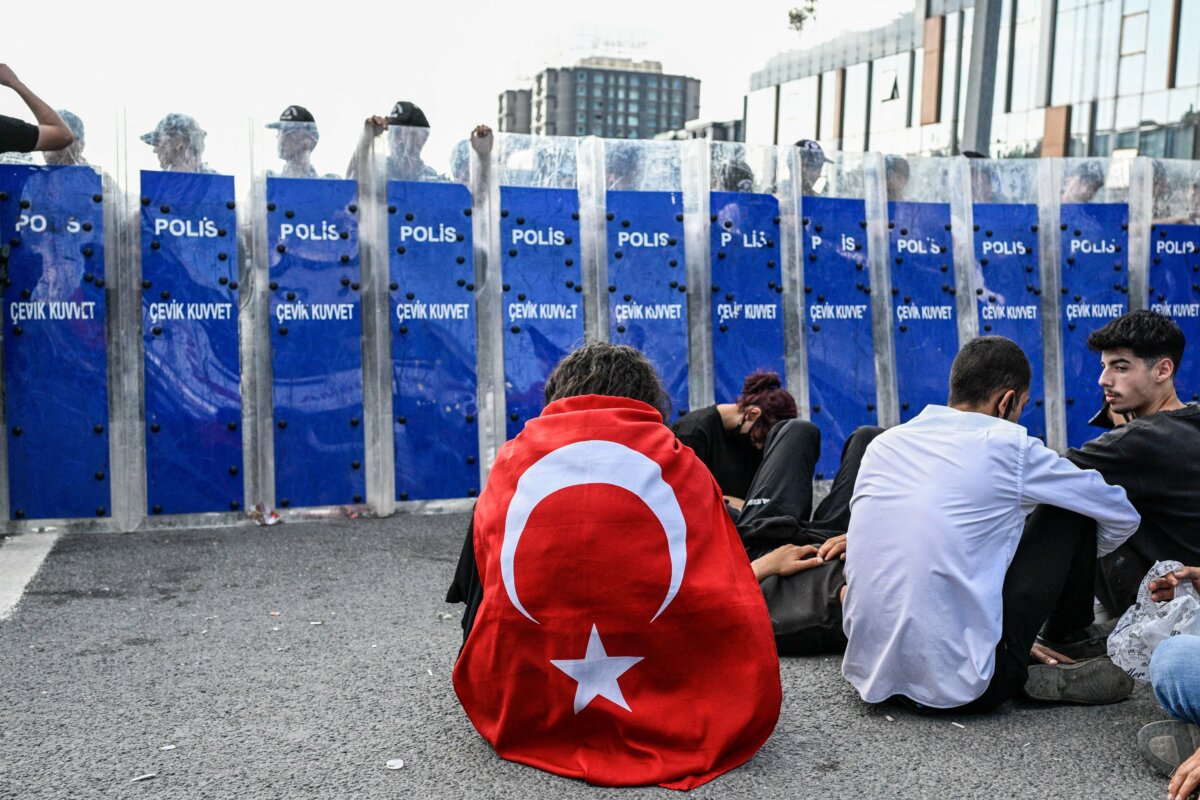

Turkish riot police clashed with demonstrators on Sept. 8 outside the Istanbul headquarters of the opposition Republican People’s Party (CHP), which in recent months has seen scores of its members—including elected officials—arrested.
CHP lawmakers barricaded the entrance of the party headquarters in Istanbul’s Sariyer district to prevent the removal of Ozgur Celik, head of the party’s Istanbul branch, in line with a recent court decision.
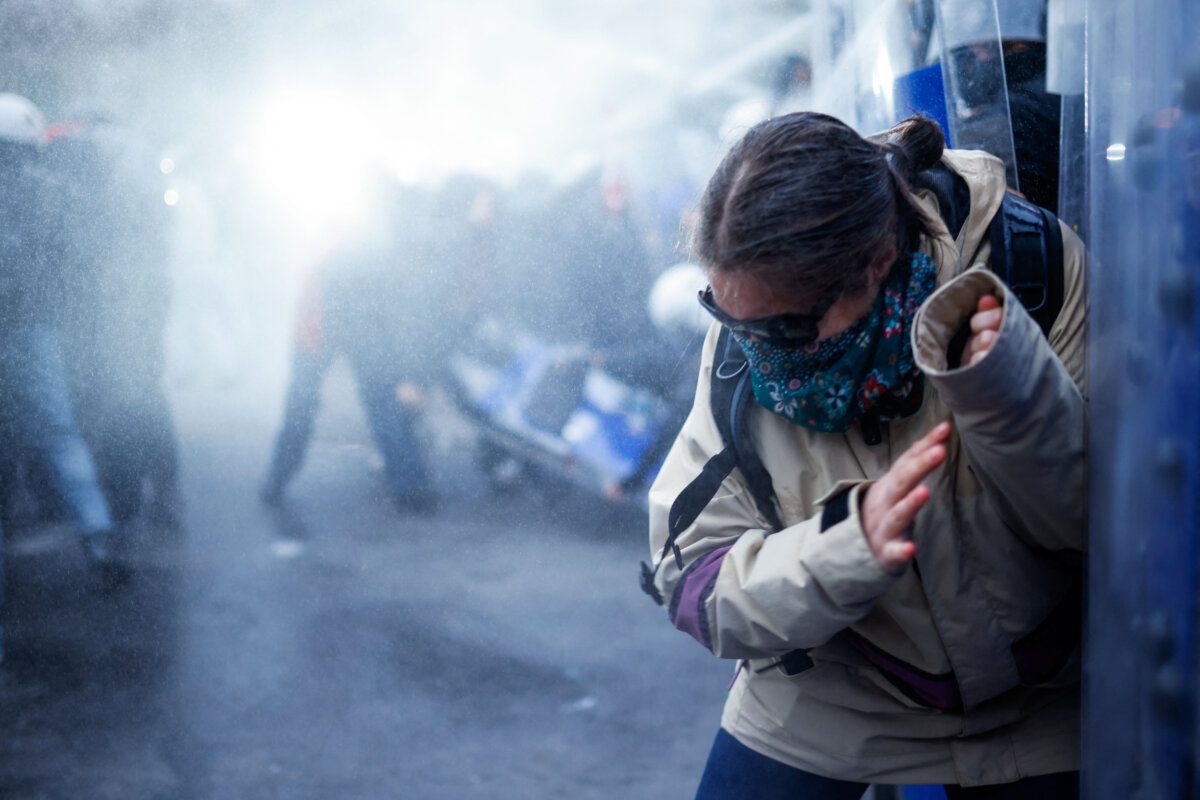
During the melee, riot police armed with pepper spray scuffled with CHP supporters and detained several pro-opposition demonstrators.
Last week, an Istanbul court, citing alleged irregularities, issued a verdict demanding Celik’s removal as head of the party’s Istanbul branch.
The court also ruled that Gursel Tekin, a former CHP deputy chairman, should take over the post on an interim basis.
The CHP, however, rejected the verdict as “null and void,” saying Tekin had been previously expelled from the party and vowing to keep Celik in his position.
Nevertheless, Tekin arrived at the party’s headquarters—escorted by police—to assume the leadership role in line with the court order.
Speaking to reporters before entering the building, Tekin insisted that he did not work for the state and pledged to resolve the CHP’s internal problems.
In a video message posted live from the scene, Gokhan Gunaydin, a CHP lawmaker, accused Tekin’s police escort of seeking to “dismantle democracy.”
Addressing Tekin himself, he added: “You may have entered here [party headquarters] with police forces, but we will not hand over justice and democracy to you.”
“This struggle will not end here,” Gunaydin said in the message, which was posted on X on Sept. 8.
In response to the move, the CHP called on supporters to hit the streets, prompting the authorities to announce a fresh ban on public protests.
Anticipating further unrest, the authorities temporarily blocked several major social media platforms, including X, WhatsApp, TikTok, Facebook, and Instagram.
Commenting on the incident later, Turkish President Recep Tayyip Erdogan accused the CHP of flouting the rule of law and inciting public disorder.
“Criticizing court decisions is one thing and disregarding them is another,” he told reporters.
Any refusal to comply with judicial decisions, Erdogan added, would “not be tolerated.”
Interior Minister Ali Yerlikaya warned that the state would do “what is necessary against any illegal initiative.”
Nevertheless, on Sept. 9, Turkish daily Sozcu reported that the CHP was still refusing to recognize Tekin’s appointment and had changed the location of the party’s headquarters to another district of Istanbul.
Ongoing Suppression
The standoff in Istanbul marked the latest chapter in an ongoing government suppression of the CHP led by Erdogan’s ruling AK Party.
Over the past year, scores of CHP leaders have been arrested and jailed on corruption and terrorism-related charges that they say are politically motivated.
The most prominent of these is Ekrem Imamoglu, Istanbul’s CHP-affiliated mayor, whose arrest in March sparked the country’s largest wave of demonstrations in more than a decade.
Seen as a potential presidential challenger to Erdogan, Imamoglu remains in detention pending trial on corruption and terrorism-related charges.
In local polls held last year, CHP mayoral candidates were elected in Turkey’s three largest cities—Istanbul, Izmir, and the capital Ankara—and in several other municipalities across the country.
Shortly before Imamoglu’s arrest, two other CHP-linked mayors in Istanbul Province were removed from their posts after being convicted on similar charges.
At the same time, eight elected mayors in eastern Turkey affiliated with the pro-Kurdish DEM Party were removed from their posts following similar convictions
All denied the charges against them, saying the convictions—and their subsequent removal from office—were politically motivated.
Earlier this year, the European Parliament condemned what it called the “arbitrary dismissal and imprisonment of democratically elected mayors” by the Turkish authorities.
The Turkish government dismisses the criticisms, saying the country’s judicial apparatus functions independently of the ruling party.
Reuters contributed to this report.
 Friends Read Free
Copy
Facebook
Tweet
Friends Read Free
Copy
Facebook
Tweet