Alberta Premier Danielle Smith says her government and B.C.’s government agree on various shared priorities and that she is “hopeful” about working together on development projects with B.C. Premier David Eby.
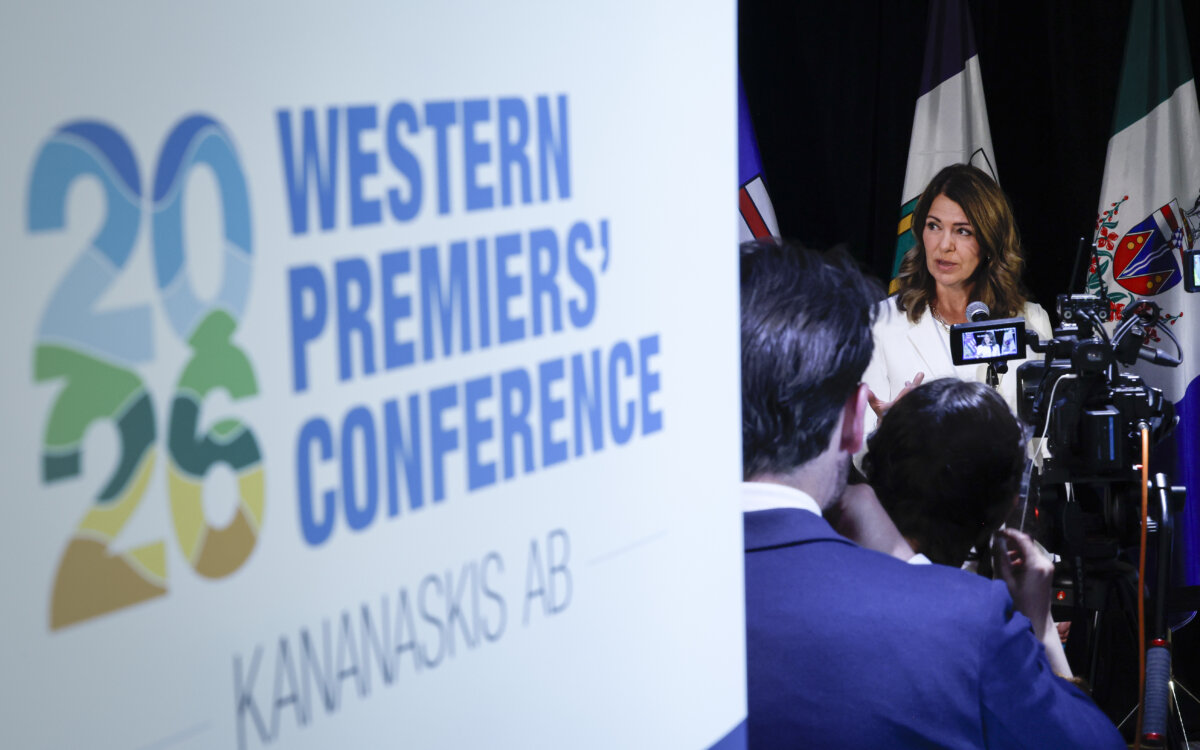
Smith made the comments May 25 at the outset of the annual conference of western premiers in Kananaskis, Alta., a two-day meeting that will include Smith and Eby along with the premiers of Saskatchewan, Manitoba, Yukon, Northwest Territories, and Nunavut.
“I think that, in fact, we’re closer than ever to having agreement on a new West Coast pipeline,” Smith said, though adding that “there are legitimate issues that we have to work with—work through—in British Columbia, in First Nations consultation, First Nations ownership, and an equity stake in that pipeline, and we’re prepared to do that work.”
Eby has spoken out against a recent agreement between Smith and Prime Minister Mark Carney to build a new pipeline to the West Coast if a private proponent comes forth.
Speaking to reporters at the western premiers’ conference, Eby questioned why the meeting was held in Alberta while Smith’s government has called for a referendum related to separation.
Shared Priorities
Specifically, Smith said she’s optimistic about working together with B.C. on a planned further expansion of the Trans Mountain pipeline, along with growing liquefied natural gas exports, interprovincial electricity collaboration, nuclear energy, and a potential planned pipeline to the West Coast.
Trans Mountain is a crude oil pipeline running from Edmonton to Burnaby, B.C. It was bought by Ottawa from Kinder Morgan in the summer of 2018 for $4.5 billion after the company said it might scrap the project due to growing uncertainty over it being approved by B.C.
The original pipeline carried roughly 300,000 barrels of oil per day before being expanded and coming online at approximately 890,000 barrels per day in May 2024.
Smith is seeking a further expansion, saying that more pipeline capacity will be needed as Alberta increases its oil production in the coming years. Alberta currently produces 4.3 to 4.5 million barrels of oil per day, but Smith has said the province aims to reach 7 million barrels per day within the next decade.
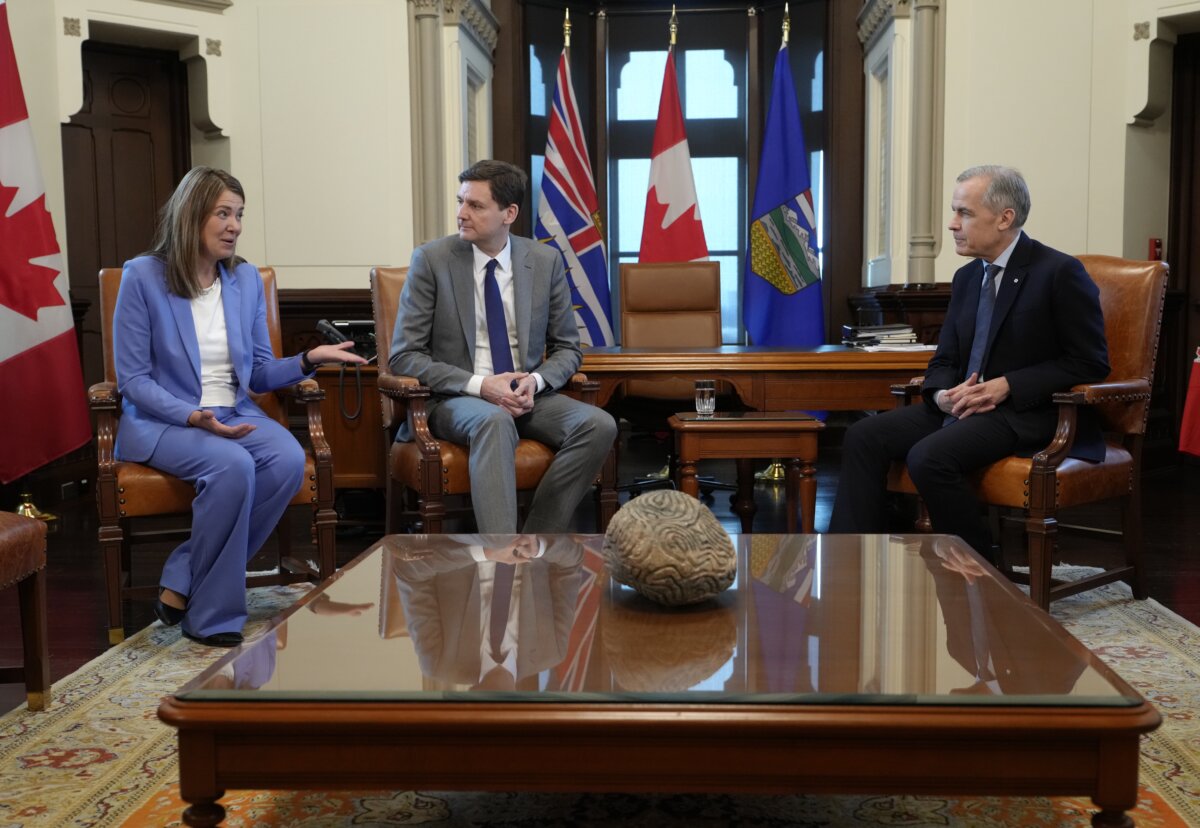
Alberta and Ottawa signed a memorandum of understanding (MOU) in November of last year proposing to build one or more oil pipelines to the West Coast, including potential adjustments to an existing oil tanker ban on B.C.’s north coast.
Smith said Carney has shown he is open to “pretty aggressive timelines” on moving it forward.
“The MOU has demonstrated that the prime minister is prepared to work with us on some pretty aggressive timeframes,” she said. “We are going to get our submission in by July. We will have conditional approval on that route by October, with the final approval by September 2027, which would pave the way for us to start building.”
‘Worst Time’
Eby has repeatedly criticized the proposed new pipeline to B.C.’s north coast and has been joined by opposition from several First Nations. He has said that B.C. opposes the pipeline for economic, environmental, and indigenous rights reasons, citing it as unnecessary and as having the potential to downgrade the importance of major projects B.C. wants approved. He says instead, the focus should be on increasing transfer volumes on the existing Trans Mountain pipeline.
“It cannot be the case that the projects that get prioritized in Canada are those where a premier threatens to leave the country,” Eby said previously in response to Alberta’s MOU with Ottawa.
Any pipeline proposal “cannot draw limited federal resources, limited indigenous governance resources, limited provincial resources away from the real projects that will employ people, provide the country with money that we desperately need, and provide investment and access to global markets,” he said in November.
Although Eby has said he is potentially open to a pipeline that goes to an export terminal in the south of B.C., his opposition to a pipeline to the north coast and to considering any change to the oil tanker ban remains consistent.
On May 25, Eby repeated his criticism of Alberta’s planned referendum.
“To say that this is the worst time to begin testing the bonds that hold this country together is a significant understatement,” Eby said. “It empowers the people who would break our country up and sell us for parts.”
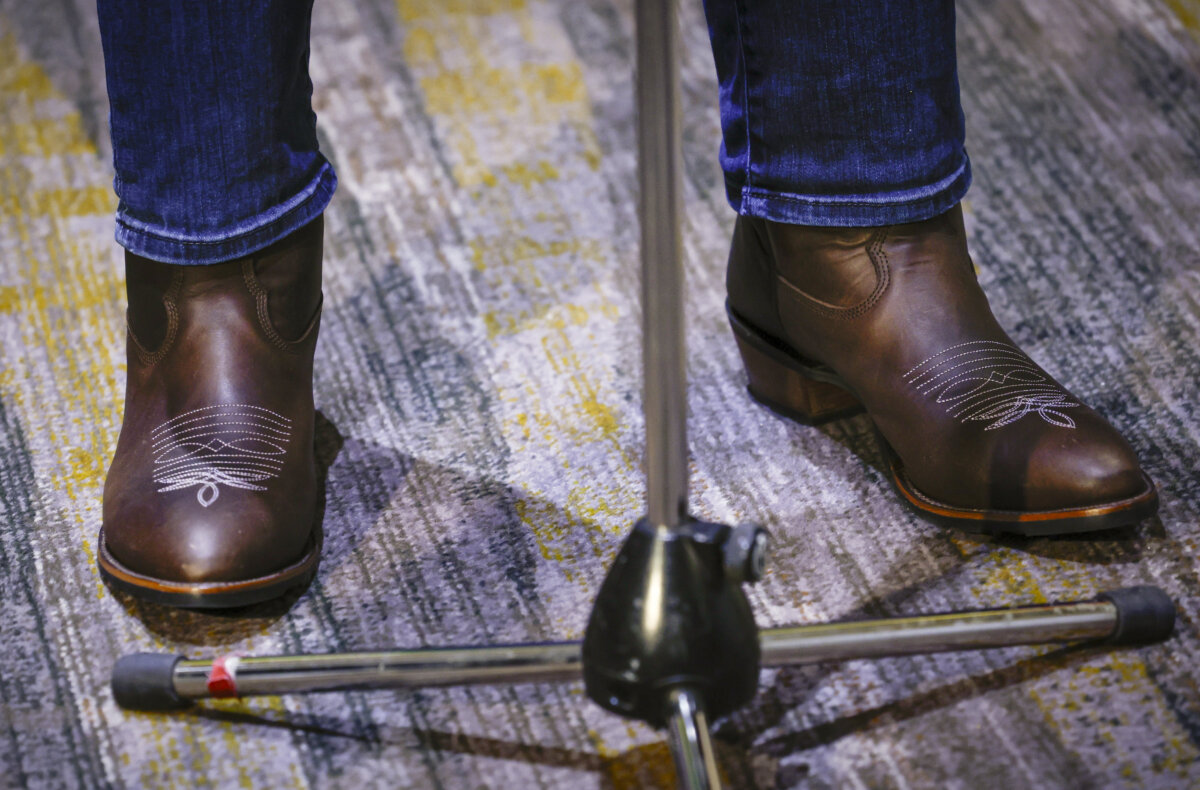
Eby made the comments while wearing a pair of new cowboy boots gifted to him by Smith. “I’m pretty proud of them,” Eby said.
In a more conciliatory note, Eby said a few days ahead of the meeting that he has overall good communications with Smith despite some “awkwardness” created by the question of separation.
“I always have good give-and-take exchange with my colleagues from across Western Canada, which includes Premier Smith,” Eby said May 22. “I’m committed to work with people even I disagree with, and I know she is too because we’ve worked together on many things.”
For her part, Smith said many past B.C. premiers have put barriers in place of Alberta building critical infrastructure to the B.C. coast.
“So I’ve made that case with the current premier, and I’ll continue to make that case to him, and I hope that we’re able to have a really constructive conversation,” she said of the two-day event.
Smith’s comments come less than a week after a May 21 televised address in which she said a question will be included in an Oct. 19 set of referendum questions as to whether Alberta should begin the process on holding a referendum to separate from Canada. She said while she wants Alberta to remain within Canada, hundreds of thousands of Albertans have signed petitions to hold a referendum, and since a court has made an “error” in rejecting the petition, she wants to hold the referendum so that the democratic process can be upheld.
“I think that Alberta has had 10 tough years under Justin Trudeau, and that’s part of the reason for the frustration,” Smith commented May 25 when asked about the referendum.
Smith added that she believes Carney is more willing to hear Alberta’s voice and work together to remain a united country, as she hopes she can also do with Eby.
“We think in a spirit of collaboration that that’s the attitude that all premiers should take to this, is that they don’t own the ports, and with the cooperative federalism that we have, we have to work together to get our products to market,” Smith said.
‘More Time Elsewhere’
Carney has said any new pipeline to the West Coast will only move forward if it is paired with a carbon capture and storage system (CCS), is supported by the affected province, and has meaningful participation and agreement from indigenous peoples and First Nations along the route. The CCS system for a pipeline from Alberta to B.C. is projected to reach a cost of between $16.5 billion and $20 billion. As part of the MOU, Alberta has also agreed to increase its industrial carbon tax.
Carney said last week while visiting B.C. that if there are hurdles to development in the province, he will focus on other areas of Canada instead.
“If things get stalled here, we’re going to be spending more time elsewhere in the country,” Carney said May 20.
“We need to move forward. We need to invest at scale in the country. For all the reasons I mentioned, affordability, sustainability, independence and prosperity.”
In addition to energy, the meeting between the premiers is focused on trade, U.S. tariffs, Arctic sovereignty, and Canada’s overall economic competitiveness.
 Friends Read Free
Copy
Facebook
Tweet
Friends Read Free
Copy
Facebook
Tweet