
Public Safety Canada would not confirm whether its cooperation agreement with Chinese police will involve the transfer of personal information of Canadians or permanent residents, when asked about the issue by a Conservative MP.
Public Safety Canada, which oversees the RCMP, said the memorandum of understanding (MOU) on cooperation between the RCMP and China’s Ministry of Public Security outlines “specific forms of mutual collaboration, which includes the exchange of information, investigative assistance, sharing best practices specific to technical expertise and training, and coordinating with other domestic law enforcement agencies, where necessary.”
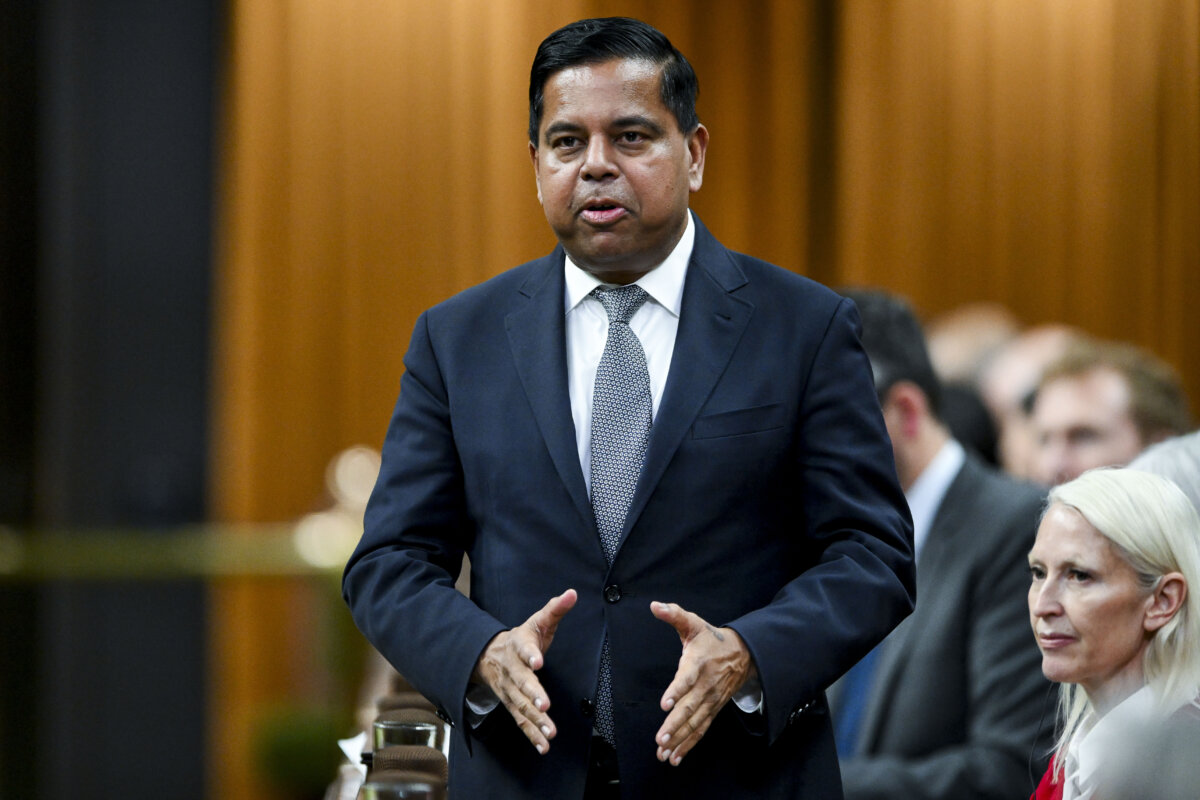
Public Safety’s response was signed by Jacques Ramsay, parliamentary secretary to Public Safety Minister Gary Anandasangaree.
The department’s comments came in response to a written question tabled in the House of Commons on March 23 by Conservative MP John Williamson that was first reported by Blacklock’s Reporter. Williamson asked what the scope of the MOU is and whether it includes provisions related to information sharing, training, or joint activities.
Williamson also asked whether the agreement allows for “access to or transfer of personal information of Canadians or permanent residents.”
The department responded by saying the MOU prescribes that “all cooperation is to be undertaken in accordance with the domestic laws, international conventions, and internal policies of each party, and is guided by the principles of sovereignty, equality, and mutual benefit.” It also said information exchanges “follow Canada’s legal framework.”
The MOU was signed during Prime Minister Mark Carney’s visit to China in January, among several other agreements. Although the details of other agreements have been made public, the police cooperation MOU has so far been kept confidential.
The Conservatives have pressed the minister of public safety to allow parliamentarians to review the agreement if it would not be made public, saying agreements with Beijing, especially on matters related to public safety, should be subject to adequate oversight and parliamentary scrutiny. On May 12, NDP MP Jenny Kwan also called on the government to release the details of the agreement.
Asked whether the government intends to table the full text of the MOU in Parliament or release it publicly, Public Safety said the Canadian government’s information sharing MOUs with law enforcement agencies of other countries “require confidentiality, and as such, are not tabled in Parliament nor released to the public.”
Williamson also asked what oversight and accountability mechanisms govern activities under the MOU, to which the department said the agreement “does not create legally enforceable obligations” and oversight is “based on administrative and cooperative compliance rather than judicial enforcement.”
“Information sharing must abide by the Canadian legal framework and align with the Royal Canadian Mounted Police’s mandate,” Public Safety said.
When asked who was consulted on the MOU before it was signed, the department said, “Extensive consultations were undertaken with relevant stakeholders within the Royal Canadian Mounted Police and Global Affairs Canada.”
Facing questioning about the contents of the MOU, RCMP Senior Deputy Commissioner Bryan Larkin told the Senate national finance committee on April 21 that the agreement is “very standard” and compared it to MOUs the RCMP has with U.S. law enforcement agencies, such as the FBI, the CIA, and the U.S. Drug Enforcement Administration, as well as with other police agencies in Canada.
Larkin said he could not speak to the specifics of what is in the MOU as the RCMP agreed it would not disclose anything in the agreement “without their permission, and mutually they would do the same,” referring to Chinese law enforcement.
Conservative MP Dean Allison said Larkin’s comments shows “a complete failure of judgment.”
“The idea that Chinese police are being described as a ‘partner’ on par with the FBI is outrageous on its own,” Allison said on social media on April 22.
When announcing the new agreements with Beijing, the Prime Minister’s Office said Canada and China’s law enforcement agencies would “increase cooperation to better combat narcotics trafficking, transnational and cybercrime, synthetic drugs and money laundering – and create safer communities for people in both of our countries.”
MPs Call for Transparency
Kwan said in a May 12 letter to Anandasangaree and Foreign Affairs Minister Anita Anand that she is “deeply troubled” that even parliamentarians have been denied “meaningful information” about the agreement.
She noted China’s Ministry of Public Security has been “repeatedly linked by international human rights organizations, journalists, and democratic governments to intimidation campaigns and tactics abroad.”
“In Canada, concerns surrounding alleged Chinese ‘police stations’ and foreign interference activities have already deeply undermined public trust and community safety,” Kwan wrote. “In this context, transparency is essential.”
She said Canadians deserve “clear answers” regarding what specific information-sharing provisions exist under the MOU, as well as what safeguards prevent Canadian information from being used against dissidents, human rights advocates, journalists, or diaspora communities.
Canadians also deserve to know what oversight mechanisms are in place to ensure compliance with the Canadian Charter of Rights and Freedoms and privacy laws, and whether the agreement provides “operational access, liaison privileges, or enhanced coordination mechanisms for Chinese security officials operating in Canada,” she said.
Conservative MP and public safety critic Frank Caputo said in one of his letters to Anandasangaree that the government has a “duty” to be transparent about the MOU.
“Memoranda with the People’s Republic of China, especially on matters related to public safety, should be subject to adequate oversight and parliamentary scrutiny,” Caputo said.
Mimi Lee, head of the HongKongers Action Group in Toronto, said signing a police cooperation MOU with Beijing “creates the appearance of legitimizing the very actors accused of transnational repression.”
“Diaspora communities have been sounding the alarm for years. Hong Kongers, Uyghurs, Falun Gong practitioners, Tibetans, and mainland Chinese dissidents have all reported intimidation, threats, and surveillance in Canada,” Lee said.
“This is not about geopolitics—it’s about safety. Canadians deserve to know that their government will protect them from foreign intimidation.”
 Friends Read Free
Copy
Facebook
Tweet
Friends Read Free
Copy
Facebook
Tweet