
Quebec has become the first province in Canada to restrict the purchase of caffeinated energy drinks for people younger than 16.
Legislators enacted Bill 9—the Act to Prevent the Harmful Effects of Energy Drinks on Young People—by a decisive vote of 103 in favour and 1 against in the National Assembly on June 11.
The independent representative for Saint-Jérôme, Youri Chassin, was the lone dissenting voice. Two other independent members, Rimouski MNA Maïté Blanchette Vézina and Chomedey MNA Sona Lakhoyan Olivier, abstained from the vote.
The legislation forbids the sale of energy drinks to individuals 15 and younger, as well as to those attempting to buy them for someone in that age range. An energy drink is defined as a beverage with a caffeine concentration of 150 mg/L or more, alongside other additives like taurine, vitamins, or minerals, according to the bill.
It also explicitly forbids individuals younger than 16 from buying these beverages for themselves or for others. The province has established fines of $100 for underage individuals who breach the law, while retailers that disregard it may face penalties of up to $62,500, which can double for repeat offenders.
All vendors must ask to see a government-issued photo ID to verify age before completing any energy drink sales once the law takes effect in six months.
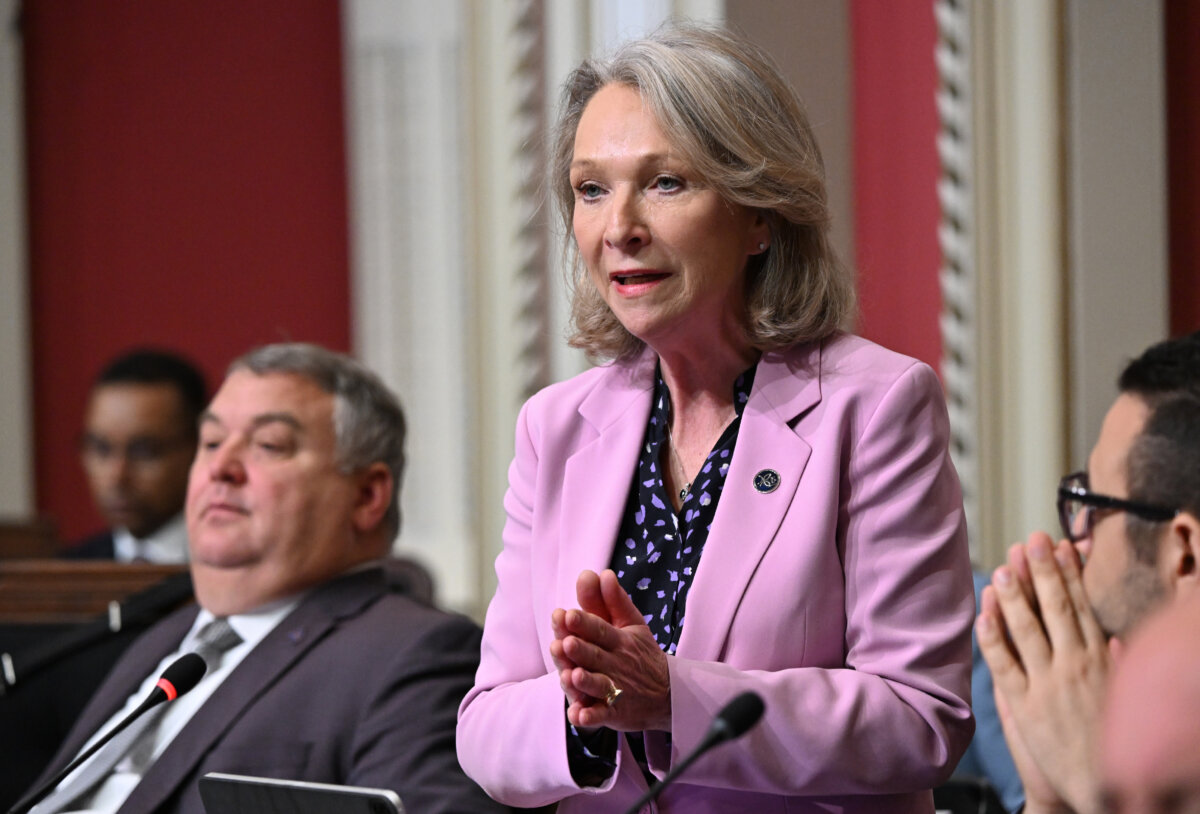
The six-month timeframe will give the industry and retailers time to adapt to the upcoming change, Quebec Health Minister Sonia Bélanger said while speaking about the bill in the National Assembly.
“Quebec is demonstrating leadership by becoming the first Canadian jurisdiction to propose banning the sale of energy drinks to… those under 16,” Bélanger said, noting that passing the bill is a “good start.”
“We believe it’s better to take preventive action when young people’s health is at stake,” she added.
The legislation, also dubbed the “Zachary Miron Act,” was introduced after the 2024 death of 15-year-old Zachary Miron, who went into cardiac arrest after taking his ADHD medication with a can of Red Bull.
Bélanger made a point of extending special thanks to Zachary’s parents, David Miron and Veronica Martinez, during the debate on the bill’s passage on June 10. She said the pair had “raised real awareness” about the problem in Quebec, noting that “their determination and courage will help prevent other tragedies.”
Zachary died in January 2024 while participating in a school ski trip in Morin Heights, a scenic mountain range north of Montreal. His mother, Veronica Martinez, told reporters during an April 1 press briefing that her son’s heart stopped while he was on a ski lift.
Zachary was in “perfect health” at the time of his death, she said.
“If it can happen to a boy like that, nobody is safe,” she added.
Bélanger also announced the formation of a working group to assist in the execution and evaluation of the law’s impact.
This working group will include representatives from both the industry and retail sectors, along with a representative designated by the provincial health authority, Direction nationale de santé publique, she said. It will also be consulted prior to any regulatory changes.
The Canadian Press contributed to this report.
 Friends Read Free
Copy
Facebook
Tweet
Friends Read Free
Copy
Facebook
Tweet