
The Quebec government has passed a law imposing new restrictions on religious symbols, public prayer, and funding for religious schools.
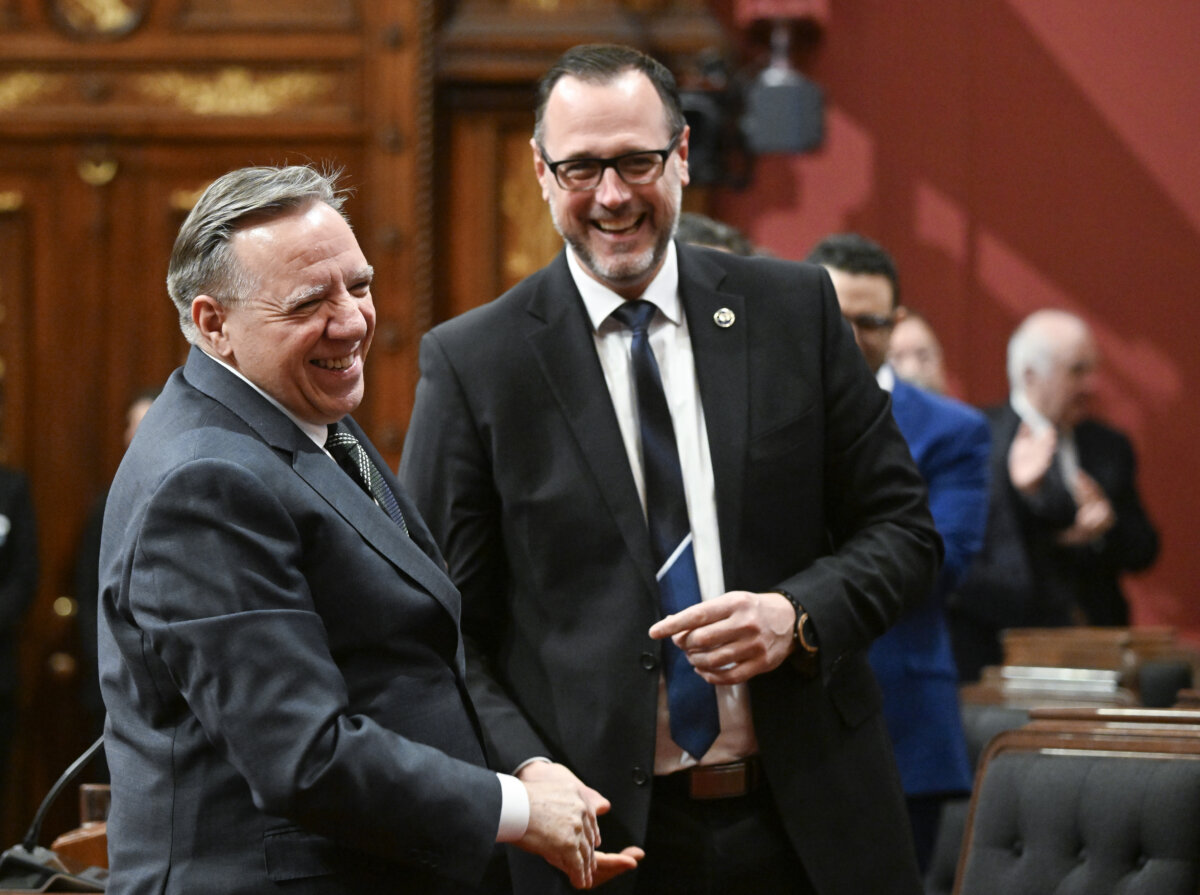
The province’s Bill 9, titled An Act respecting the reinforcement of laicity in Quebec, passed 76–28 on April 2, with Premier François Legault’s Coalition Avenir Québec and the Parti Québécois voting in favour of the legislation, and the Liberals and Québec solidaire voting against it.
The legislation bans prayer in public institutions such as colleges, universities, daycares, and health institutions, with “certain exceptions,” as well as in public roads and parks without the authorization of the municipality.
The law expands the province’s ban on religious symbols, like hijabs and turbans, for those working in daycares, colleges, universities, and private schools.
It also prohibits institutions, including daycares and educational institutions, from offering food based exclusively on a religious precept or a tradition, such as halal food.
In addition, the law will phase out funding for subsidized religious schools by giving them three years to end the selection of students or staff members based on religious criteria. It gives the province’s minister of education the ability to revoke funding for non-compliance with the requirement. While religious activities are still permitted to take place at these schools, the law says they must be optional and take place outside of class hours.
When the legislation was initially tabled last November, Quebec Secularism Minister Jean-François Roberge told reporters the province’s secularism rules were due for an upgrade since the passage of Bill 21 in 2019, which banned teachers, judges, and police officers from wearing religious symbols at work.
The province also expanded the ban last fall to prohibit those working in public elementary and high schools from wearing religious symbols, and to forbid students from covering their faces.
Roberge had promised to ban prayer in public places after an increase of public prayers during pro-Palestinian demonstrations in major cities in Canada following the Israel–Hamas conflict. He had said it’s “shocking” to see people using prayer to block streets as a form of “provocation.”
The new law also proactively invokes the notwithstanding clause of the Charter of Rights and Freedoms to protect it from constitutional challenges. The notwithstanding clause was also invoked for the province’s Bill 21 and the recently passed legislation that extended the religious symbols ban.
Quebec’s Bill 21 is currently being challenged at the Supreme Court of Canada with debate focusing on the province’s use of the notwithstanding clause.
The new law was passed on Legault’s last sitting at the National Assembly as Quebec’s premier. The legislature is on recess next week and the Coalition Avenir Québec is set to choose a new leader on April 12. Legault is expected to stay on as an elected member of the legislature until the October general election.
Opposition to New Restrictions
The new law has been met with opposition from various religious groups, including the Assembly of Quebec Catholic Bishops, who have voiced concern that the law “restrict[s] fundamental rights without compelling justification.”
“We remain convinced that, despite the amendments made to the bill, people of faith will see their fundamental rights restricted without compelling justification,” Bishop Martin Laliberté, president of the Assembly of Quebec Catholic Bishops, said in a March 30 statement.
National Council of Canadian Muslims says the bill violates civil liberties, calling it an “attack against the very structure of Canadian democracy.”
The Centre for Israel and Jewish Affairs said last November that while it supports the law’s ban on “street-blocking prayers” and face coverings in higher-education institutions, it was “dismayed” to see that the law targets subsidized private schools by restricting religious symbols and “undermining freedom of choice.”
The Canadian Press contributed to this report.
 Friends Read Free
Copy
Facebook
Tweet
Friends Read Free
Copy
Facebook
Tweet