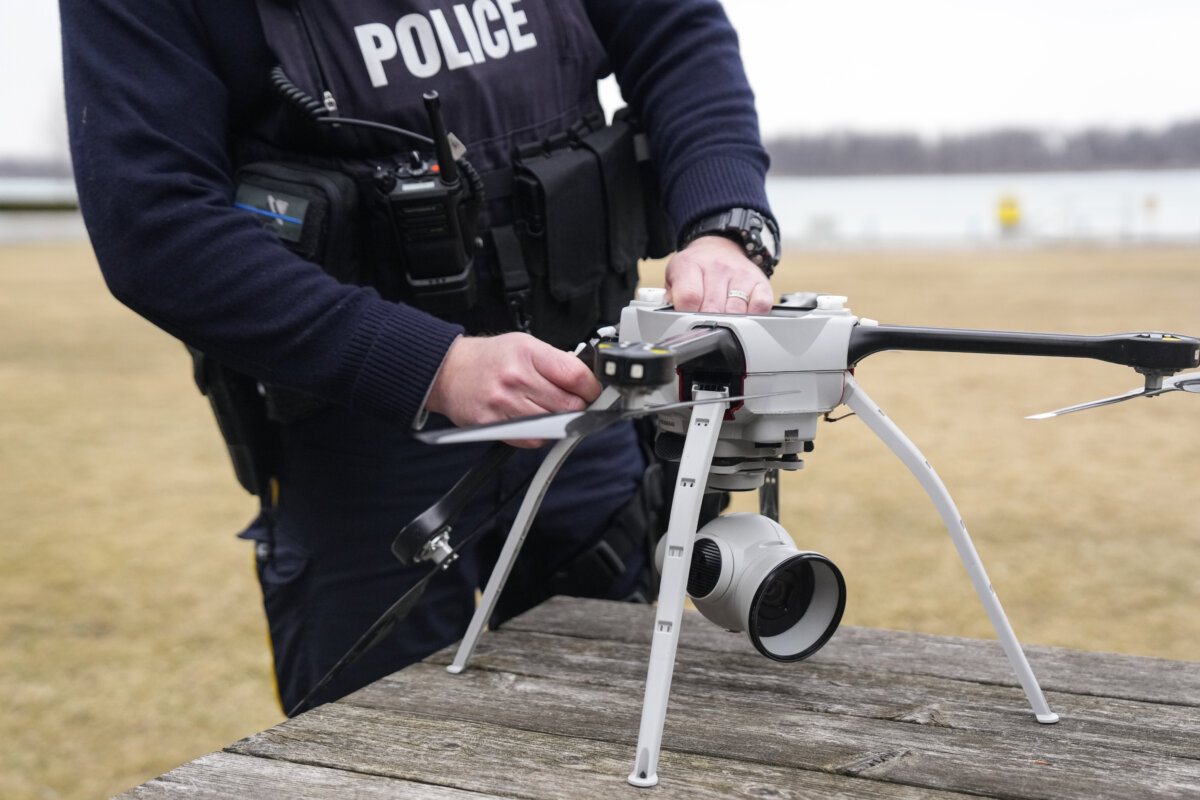

The RCMP is creating a “drone corridor” along the Canada-U.S. border in the Prairies in an effort to improve border security by detecting illegal border crossings and smugglers.
Drones, referred to by the RCMP as Remotely Piloted Aircraft System (RPAS), will patrol along the Canada-U.S. border in Alberta, Saskatchewan, and Manitoba within Canadian airspace, the RCMP Federal Policing Northwest Region said on Aug. 11.
“The RCMP is committed to advancing the use of RPAS technology to enhance our service delivery models that protect the security of our Border,” RCMP Assistant Commissioner Lisa Moreland said in a statement.
The drone corridor aims to boost border security by targeting illegal activity along the border through “intelligence-driven patrols,” including searching for individuals who illegally enter Canada between the official entry ports, as well as human smugglers who facilitate illegal border crossings.
The RCMP says the drones will also detect and stop illegal drug smuggling and trafficking into and out of Canada.
“The use of this technology and the creation of the RCMP RPAS corridor will also augment our ability to enhance coordination efficiencies amongst our law enforcement partners, which will ultimately have a direct impact on public safety,” Moreland said.
The RCMP calls this initiative a “strategic trial” that will allow the police force to decide how RPAS technologies could be implemented in other locations along the border.
The drone corridor took effect at 9 p.m. on Aug. 11, and was collaboratively established by the RCMP and Transport Canada. The initiative’s operational value, cost, and impact on communities along the border will continue to be evaluated and assessed, the RCMP says.
Flight activity is not restricted in the corridor, which was formerly known as Advisory Airspace (CYA). The corridor’s space spans from the ground to 500 feet in the air and one nautical mile (1.85 kilometres) north of the border.
To reduce the risk of mid-air conflicts and allow for safer drone patrols of the border, the RCMP is requesting those who plan to fly in the corridor to provide advance notice of their plans.
“Local pilots, agricultural operators, and recreational aviation users may continue to fly in the area but are asked to exercise increased caution, and to notify the RCMP before entering the corridor,” the RCMP release says.
Border Measures
The RCMP has increased its presence at the Canada-U.S. border with drones, helicopters, and other measures as part of the federal government’s $1.3 billion plan to boost border security in an effort to stave off U.S. tariffs.
The RCMP announced in January that it was deploying two Blackhawk helicopters and 60 new drones to patrol the border. The Blackhawk helicopters, known for their use by the U.S. military, joined a fleet of nine other helicopters previously deployed across the country.
Blackhawk aircrafts have the required capabilities for border surveillance and would provide the RCMP with “significant coast-to-coast coverage,” RCMP Deputy Commissioner Bryan Larkin said at a Jan. 15 press conference on Parliament Hill.
Ottawa announced its $1.3 billion border plan in December 2024 in response to U.S. President Donald Trump’s threat to impose 25 percent tariffs on various Canadian goods if the issues of illegal migration and drug smuggling at the border were not addressed.
Finance Minister Dominic LeBlanc said in December that the border plan was based on five pillars: disrupting the fentanyl trade, giving law enforcement new tools, enhancing operational coordination, increasing information-sharing, and stopping the flow of migrants crossing the border.
The federal government said it would use artificial intelligence and imaging tools to address the flow of fentanyl and detect illegal drugs, as well as put new funding into helicopters, drones, and surveillance towers to provide 24/7 monitoring between ports of entry.
In February, Canada appointed a “fentanyl czar,” designated drug cartels as terrorist organizations, committed $200 million for intelligence operations to combat fentanyl, and sent 10,000 frontline personnel to protect the border.
Despite Ottawa’s efforts to improve border security, Trump implemented the 25 percent tariffs on Canada in February, which he hiked to 35 percent on Aug. 1. The White House said this action was due to the fact that Canada “failed to cooperate” in stopping the flow of fentanyl and other illicit drugs into the United States.
Prime Minister Mark Carney has said that only 1 percent of the fentanyl entering the United States comes via the Canadian border and that Canada has been “working intensively to further reduce these volumes.”
Matthew Horwood and Noé Chartier contributed to this report.
 Friends Read Free
Copy
Facebook
Tweet
Friends Read Free
Copy
Facebook
Tweet