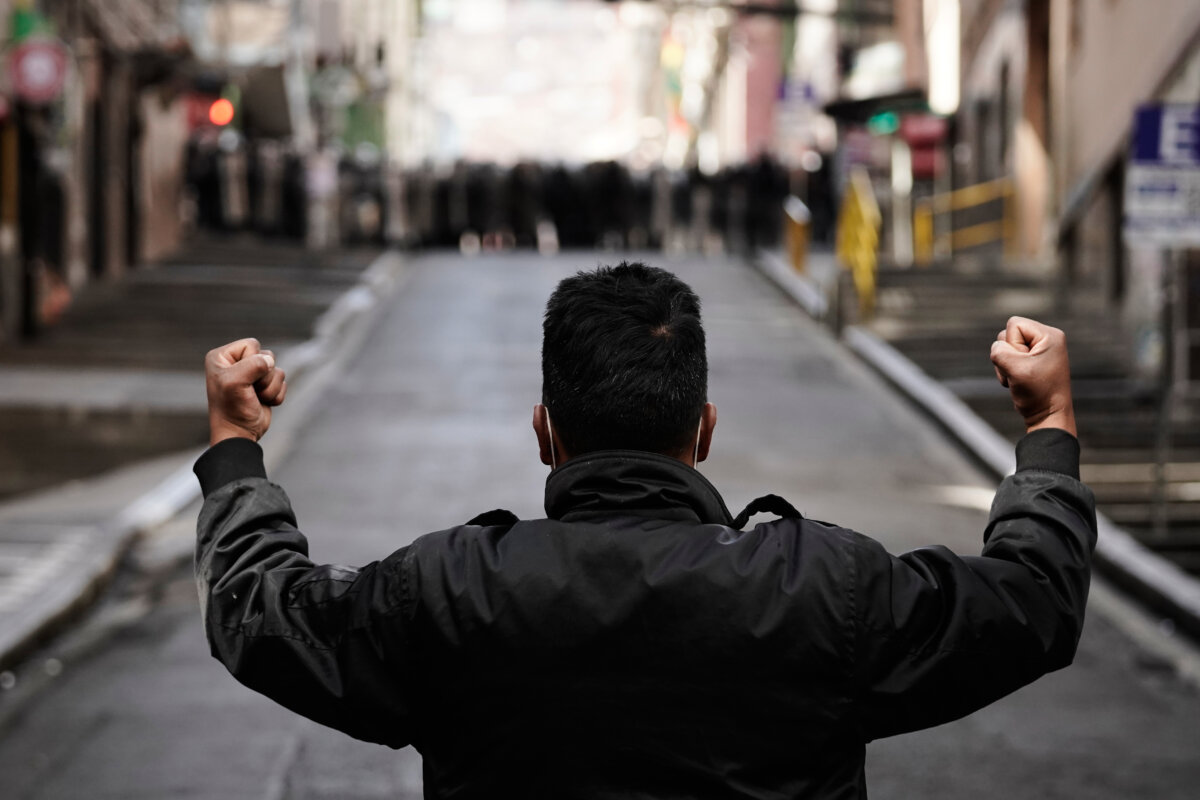
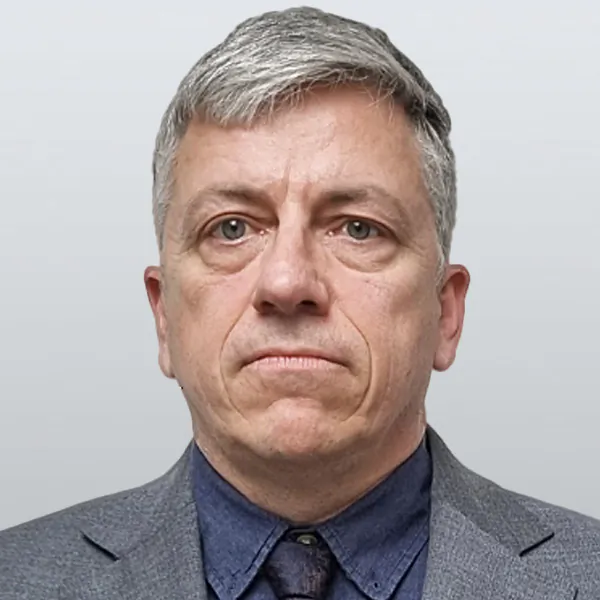
U.S. Secretary of State Marco Rubio has given his support to Bolivian President Rodrigo Paz, who faces violent protests and blockades from leftist demonstrators in the capital, less than six months after he was elected.
Road closures—organized by the Bolivian Workers’ Central (COB) trade union federation, trade unions representing peasants, and miners—have depleted the food markets in La Paz, and left hospitals short of oxygen supplies.
At least three people have died after emergency vehicles were blocked from reaching hospitals, says the government.
When Paz, representing the Christian Democratic Party (PDC), was elected in October 2025, it brought to an end 20 years of leftist rule in Bolivia.
“Let there be no mistake: the United States stands squarely in support of Bolivia’s legitimate constitutional government,” Rubio said in a May 20 post on X. “We will not allow criminals and drug traffickers to overthrow democratically elected leaders in our hemisphere.”
The COB has been demanding wage increases, while peasant groups are protesting for better supplies of gasoline.
The miners are seeking access to additional mining areas, while public schoolteachers are holding separate talks demanding better salaries.
‘Dark Forces’ at Work?
“These demands have been largely addressed in a manner consistent with current realities,” presidential spokesperson José Luis Gálvez said. “However, there are dark forces seeking to destabilize our democracy.”
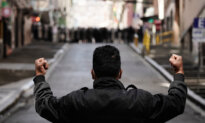
Supporters of former Bolivian President Evo Morales—a socialist who was ousted in 2019—clashed with police in La Paz on May 18 as they demanded the resignation of Paz, who lacks a legislative majority.
“Those seeking to destroy democracy will go to jail,” Paz warned on May 15.
Paz says he has inherited a “bankrupt state” from the previous leftist governments and needs to get the country’s finances in order.
Bolivia has suffered fuel shortages this year, and inflation remains high.
Business organizations in Bolivia say the protests and blockades are costing the economy $50 million per day, and around 5,000 cars, trucks, and buses remain stranded on the roads.
U.S. Deputy Secretary of State Christopher Landau said he had spoken to Paz on Tuesday afternoon.
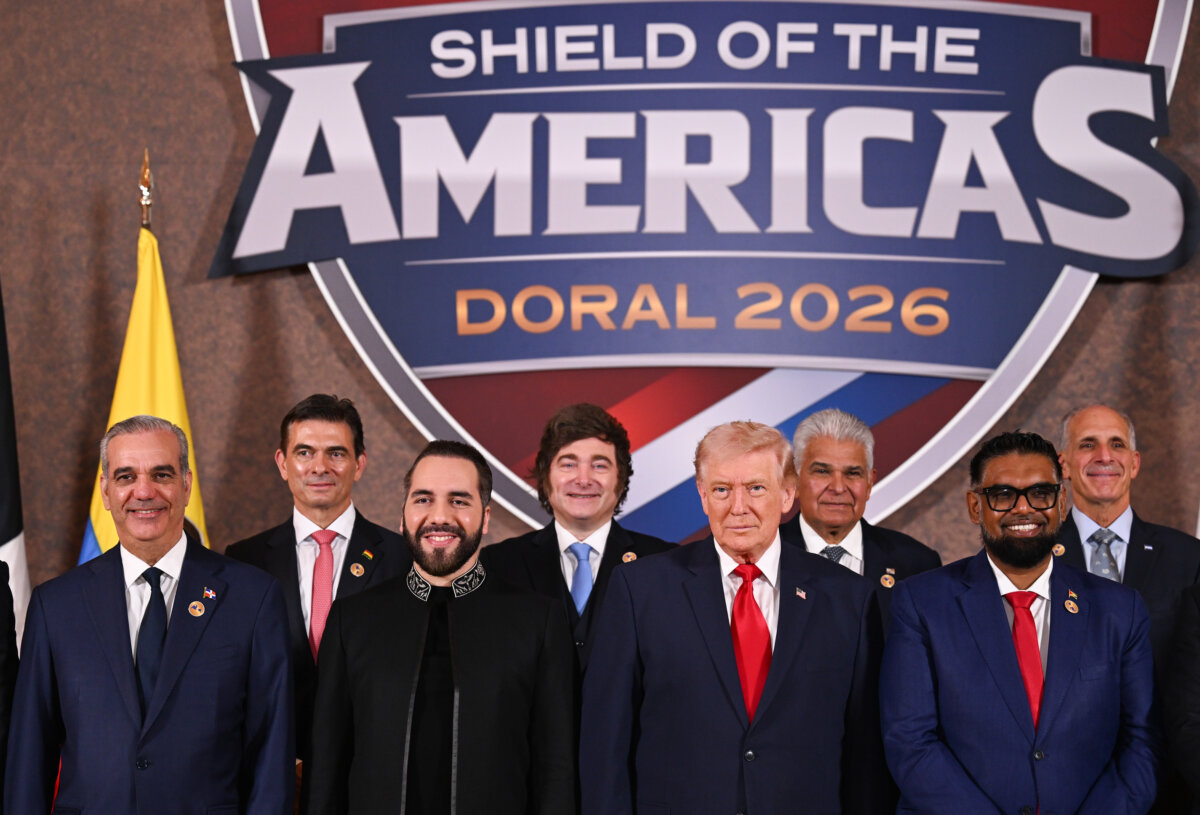
Landau said later in a post on X that he “assured him that the United States stands squarely in support of Bolivia’s legitimate constitutional government and rejects this attempt to substitute the institutional order with mob rule.”
When Paz was elected, it brought to an end almost two decades of rule by the Movement Toward Socialism under Morales and Luis Arce, but the party suffered a defeat last year after its two leaders fell out spectacularly.
Morales Calls Paz a ‘Spaniard’
In a post on X on May 21, Morales claimed that Paz was a “Spaniard.”
“Being a foreigner, he surely hates Bolivians. He criminalizes, persecutes, and represses indigenous people. He thinks and acts like an imperialist, neoliberal, and neocolonialist,” Morales wrote.
“He labels as vandals, terrorists, coup plotters, drug traffickers, and violent agitators the workers, miners, peasants, factory workers, teachers, students, and university students who are in the streets and roads demanding justice, food, jobs, and not handing over the lithium to foreigners.”
Spain ruled Bolivia for centuries, until it gained independence in 1825. The country was named after Simon Bolivar, who liberated large parts of Latin America from Spanish rule.
Morales garnered much of his support from indigenous Bolivians, who have often claimed to have been oppressed by the Spanish and by governments led by those of Spanish descent in the 200 years since independence.
Paz was born in Santiago de Compostela, Spain, in 1967, after his father, Jaime Zamora, a socialist, fled Bolivia, which was then under military rule.
Zamora was Bolivia’s president from 1989 to 1993.
The Associated Press contributed to this report.
 Friends Read Free
Copy
Facebook
Tweet
Friends Read Free
Copy
Facebook
Tweet