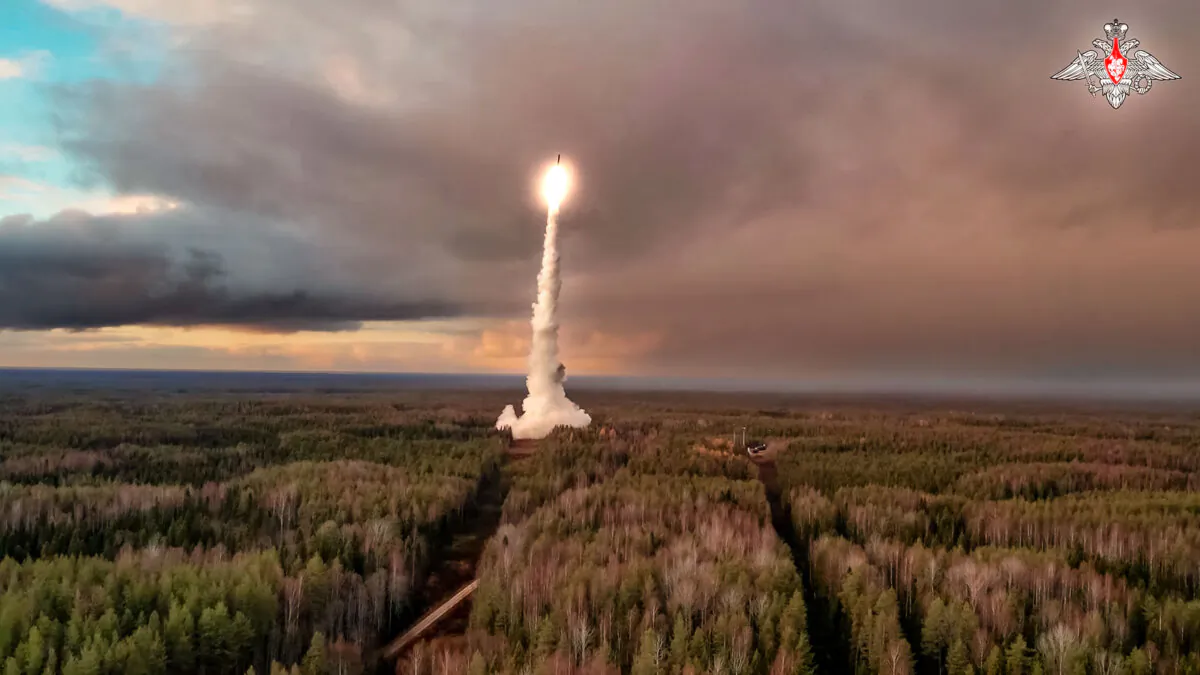

Russian President Vladimir Putin on Oct. 22 directed a wide-ranging exercise of the country’s strategic nuclear forces, including the test launch of intercontinental ballistic and cruise missiles. The drills followed his recent announcement that Moscow is actively developing new nuclear weapons.
The exercises involved land, sea, and air forces, according to Russian state-owned news agency TASS, and they coincided with the postponement of a planned summit between Putin and U.S. President Donald Trump in Budapest.
The drills featured the launch of a Yars intercontinental ballistic missile from the Plesetsk facility in northwestern Russia and a Sineva submarine-launched ballistic missile fired from the Bryansk strategic nuclear missile submarine in the Barents Sea. Strategic Tu-95MS bombers also took part, launching long-range cruise missiles at designated targets, according to a Kremlin statement.
“The exercise evaluated the readiness of military command bodies and the operational staff’s proficiency in organising and managing the troops (forces) under their command,” the Kremlin said. “All training objectives were successfully accomplished.”
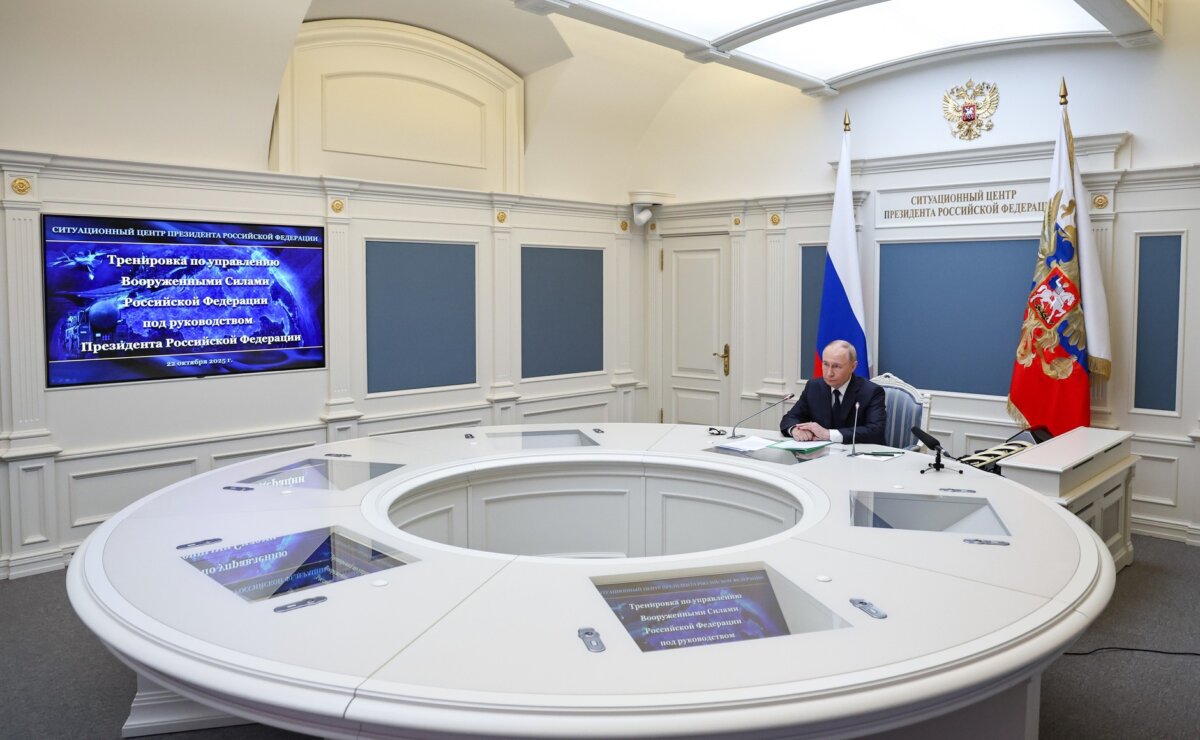
Putin, speaking from the Kremlin’s command center, said the maneuvers were scheduled and part of routine preparedness drills.
“Today, we have a scheduled strategic nuclear forces management drill, as the defense minister just reported. Let’s get to work,” he told officers during a briefing, TASS reported. He oversaw similar nuclear drills in 2024 and 2023, on both occasions in October.
Recently, Putin said that Russia is “very actively” developing and testing nuclear weapons, adding that the “novelty” of Russia’s nuclear deterrence capabilities is higher than that of any other nuclear power.
Long-Range Capabilities
Although billed as routine, Russia’s nuclear exercise came just hours after Trump announced that his planned meeting with Putin in Budapest had been put on hold. The summit—expected to focus on a possible cease-fire framework in Ukraine—was delayed, Trump said, because he did not want it to be a “waste of time.”
The decision followed an Oct. 21 call between U.S. Secretary of State Marco Rubio and Russian Foreign Minister Sergey Lavrov, who later explained Moscow’s opposition to an immediate cease-fire in Ukraine.
Lavrov said that he believes that a cease-fire would allow Kyiv to rearm and “encourage its terrorist activities,” referring to Ukraine’s strikes on Russian energy infrastructure, according to TASS.
Kyiv forces have been carrying out long-range drone strikes inside Russia, targeting its energy industry, a key source of war funds for the Kremlin. Ukrainian President Volodymyr Zelenskyy has been asking Trump to provide Ukraine with Tomahawk missiles, which Zelenskyy has said would pressure Russia to halt its offensive.
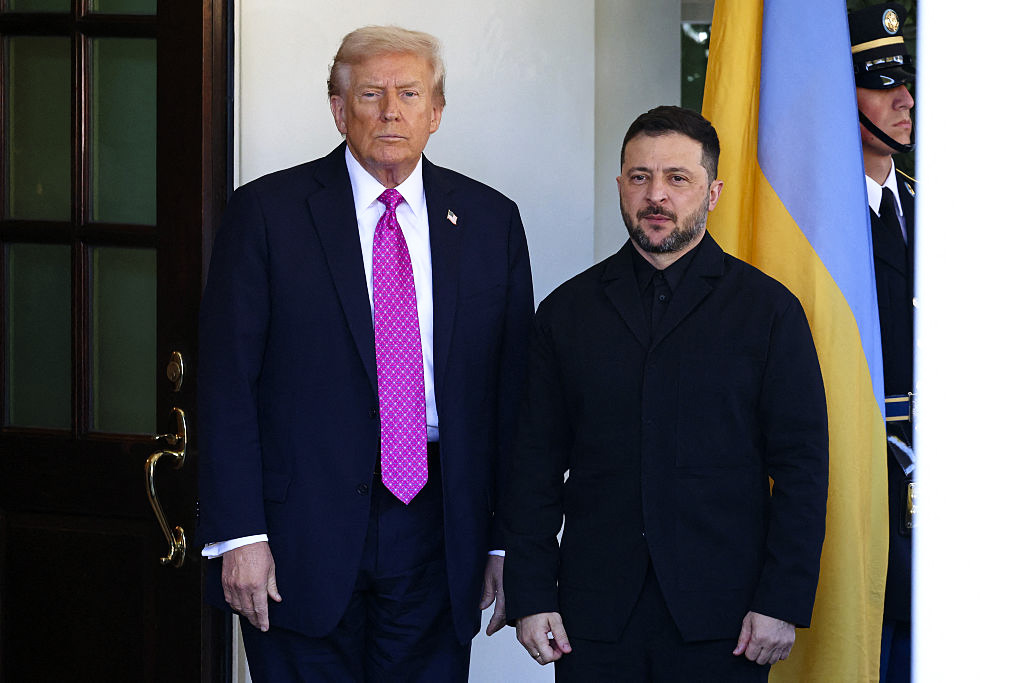
“The greater Ukraine’s long-range reach, the greater Russia’s willingness to end the war. These weeks reaffirmed it,” Zelenskyy said in an Oct. 21 social media post. “Discussion on Tomahawks turned out to be a major investment in diplomacy—we forced Russia to reveal that Tomahawks are the card they take seriously. We will continue engaging with Europeans and Americans on long-range capabilities.”
Trump has said he’s considering providing the Tomahawks to Ukraine. Putin has said that Moscow’s relationship with Washington would be destroyed if the United States were to provide the long-range missiles, which would allow Ukraine to hit targets deep inside Russia.
Arms Control Uncertainty
Russia’s nuclear exercise also unfolded against the backdrop of uncertainty over the future of the New Strategic Arms Reduction Treaty (New START), the last remaining nuclear arms control agreement between the United States and Russia. The treaty, signed in 2010 and extended in 2021, is due to expire in February 2026.
Under the pact, both countries are limited to 700 deployed long-range missiles and bombers, 1,550 deployed nuclear warheads, and 800 total launchers. The treaty also caps deployment of Russia’s most powerful weapons, including the Avangard hypersonic glide vehicle and the Sarmat intercontinental missile.
In February 2023, Putin said that Russia was “suspending” its participation in the treaty, citing what he called the Biden administration’s “extremely hostile policy.” Moscow said it would continue to respect the core limits on deployed warheads and delivery systems, but would no longer allow U.S. verification measures.
In a speech to the Russian Security Council last month, Putin said Russia remained prepared to extend the treaty by one year beyond its expiration and continue adhering to its “central quantitative limits” if the United States did the same.
“We believe this measure will only be viable if the United States acts in the same way and does not take steps that undermine or violate the existing balance of deterrent capabilities,” he said.
Trump has welcomed Moscow’s proposal to maintain those limits.
“Sounds like a good idea,” he told reporters earlier this month, adding that he hoped to include both Russia and China in future arms-control negotiations.
Beijing has so far rejected the idea of trilateral talks.
North Korea test-fired multiple short-range ballistic missiles on Oct. 22. South Korea’s Joint Chiefs of Staff said the projectiles were fired from an area near Pyongyang early on Wednesday and flew about 217 miles toward the northeast.
 Friends Read Free
Copy
Facebook
Tweet
Friends Read Free
Copy
Facebook
Tweet