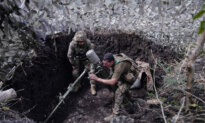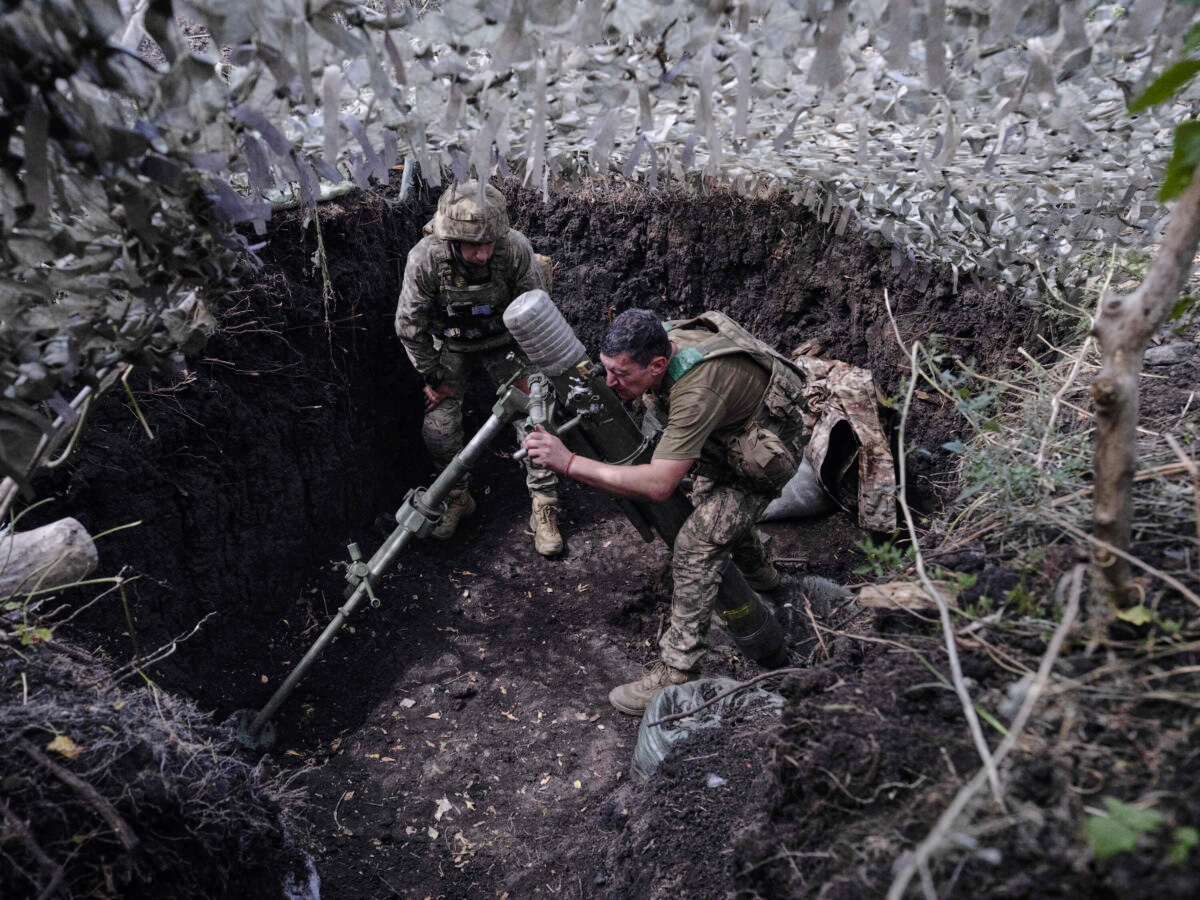

Russian troops have breached the eastern fringes of the fortified city of Kostyantynivka in the Donetsk region, according to officials and military experts cited by Russian state media.
“Serious combat is underway on the eastern outskirts of Kostyantynivka,” Andrey Marochko, a Russian military expert, told Moscow’s TASS news agency on Oct. 12.
According to Marochko, the breakthrough followed an abrupt Russian advance from the nearby settlement of Predtechyne.
Russian forces, he said, were now conducting “maneuvering operations” in the area.
In July, Russia’s defense ministry claimed that its forces had “liberated” Predtechyne, which sits roughly five miles east of Kostyantynivka.
Kostyantynivka is one of four heavily fortified cities in Donetsk, which together are often referred to as Ukraine’s “fortress belt.”
Along with Kostyantynivka, the fortress belt includes the Ukrainian-held cities of Slovyansk, Kramatorsk, and Druzhkivka.
On Oct. 12, Denis Pushilin, head of the Moscow-recognized Donetsk People’s Republic, also said that Russian forces were overrunning positions on Kostyantynivka’s outskirts, according to TASS.
“The zone under Russia’s control in the Kostyantynivka area is expanding,” Pushilin said in remarks cited by TASS.
“The territory south of the Kleban-Byk water reservoir has been mopped up of Ukrainian troops, [while] fighting for Pleshchiivka and Ivanopillya continues,” he said, referring to frontline positions just south of Kostyantynivka.
As of publication time, Kyiv had yet to comment on the Russian assertions, which The Epoch Times could not independently verify.
In 2022, Moscow said it had annexed Donetsk and Luhansk (which together make up the Russian-speaking Donbas region), along with Kherson and Zaporizhzhia in southeastern Ukraine.
Moscow now regards all four areas as part of the Russian Federation and insists that its territorial claims be recognized as part of any future peace deal with Kyiv.
According to recent estimates, Russian forces currently control all of Luhansk and approximately 75 percent of Donetsk, Kherson, and Zaporizhzhia.
On Oct. 7, Russian President Vladimir Putin asserted that Russian forces had captured approximately 1,930 square miles of territory—and more than 200 localities—so far this year.
“At this time, the Russian armed forces fully hold the strategic initiative,” Putin told top Russian military commanders in St. Petersburg.
He went on to claim that Ukrainian forces were “retreating throughout the line of combat contact despite attempts at fierce resistance.”
In August, Kyiv’s military claimed that Moscow’s recent offensives had failed, noting that Russian forces had yet to capture any major Ukrainian cities this year.
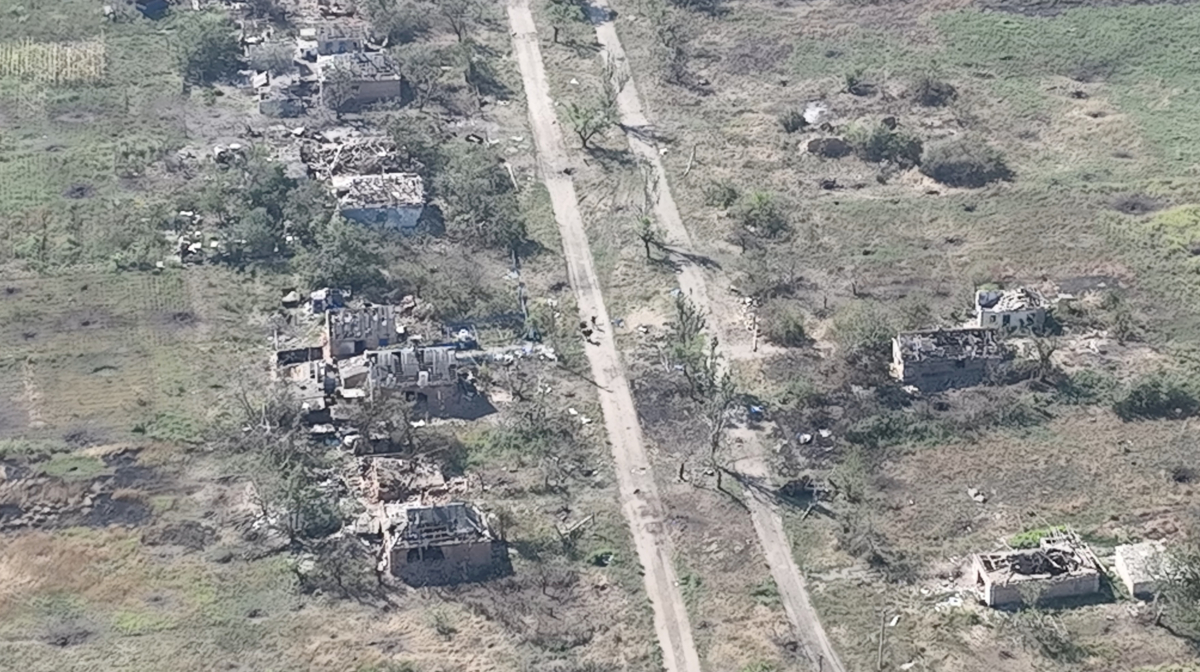
Kyiv Claims Zaporizhzhia Gains
On Oct. 12, Ukrainian President Volodymyr Zelenskyy said an ongoing Ukrainian counteroffensive had registered gains in the Zaporizhzhia region.
In a nightly video address, he said Ukrainian forces had advanced almost 2 miles south along the Zaporizhzhia frontline, especially near the city of Orikhiv.
“There, our forces have advanced—today, more than 3 kilometers (about 1.86 miles),” Zelenskyy said.
Writing on the Telegram messaging platform, the Ukrainian army’s 24th Separate Assault Battalion said that it—along with another unit—had established control over the village of Mali Shcherbaky between Orikhiv and the Dnipro River.
In his nightly address, Zelenskyy also referred to an ongoing Ukrainian counteroffensive in the Donetsk region near the frontline town of Dobropillia.
Dobropillia sits roughly 14 miles north of the city of Pokrovsk, a key Ukrainian transit hub and longstanding Russian military objective.
“At this time, Ukrainian units are continuing our counteroffensive actions near Dobropillia,” Zelenskyy said.
In late September, Oleksandr Syrskyi, Kyiv’s top military commander, said Russian forces operating near Dobropillia were sustaining heavy losses and had effectively been surrounded.
Moscow never responded to Syrskyi’s claims, which The Epoch Times could not independently verify.
Reuters contributed to this report.
 Friends Read Free
Copy
Facebook
Tweet
Friends Read Free
Copy
Facebook
Tweet