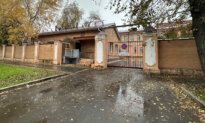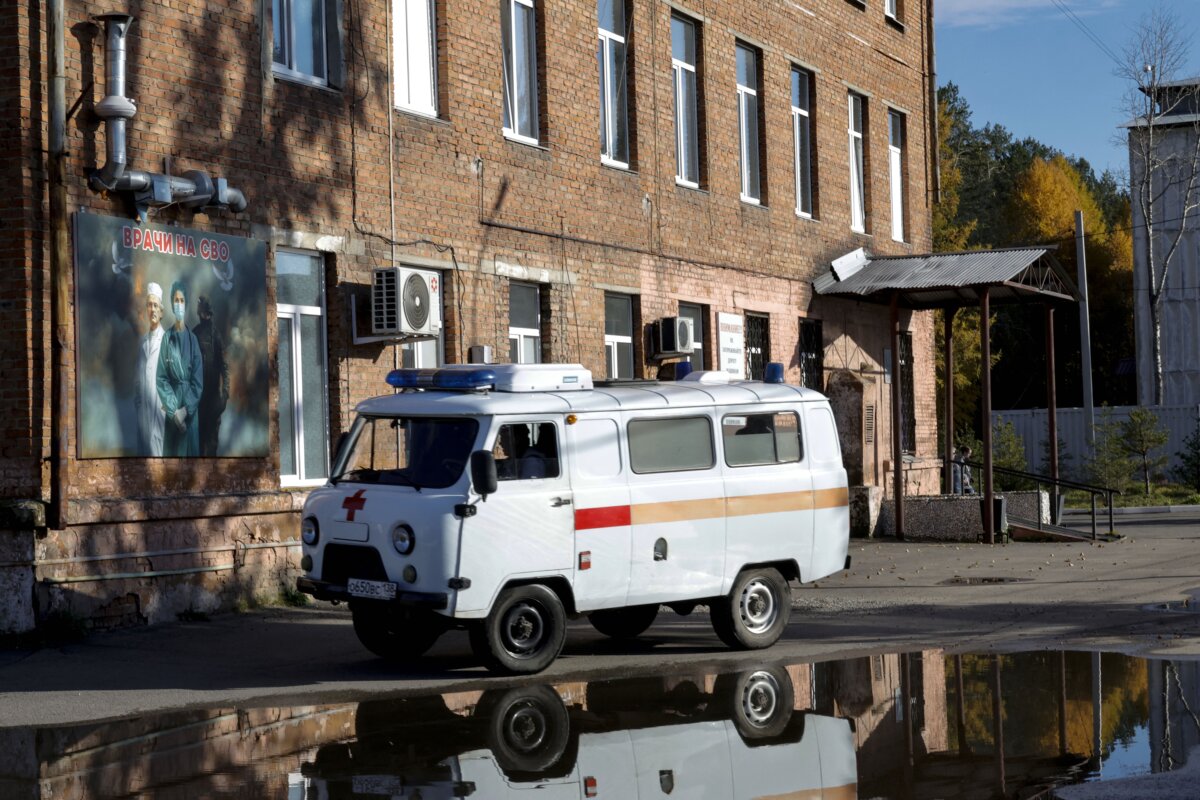

A local Russian official on Thursday sought to assuage the public’s fears following the death of a worker at a plague research lab in Siberia, saying a quarantine and other preventive measures had been completed with no dangerous pathogens detected.
On social media, Irkutsk Gov. Igor Kobzev said that officials with the Russian health watchdog agency Rospotrebnadzor announced that “the full range of preventive measures in the region has been completed following a case of community-acquired pneumonia” involving the deceased worker at the Irkutsk Anti-Plague Institute of Siberia and the Far East.
“The affected employee had been vaccinated and possessed immunity against the dangerous pathogens she worked with,” his statement said, according to a translation.
“No incidents or accidents involving pathogenic microorganisms were identified at the institute; compliance with proper safety protocols during work with such pathogens has been confirmed.”
The monitoring of all of the worker’s contacts has also been concluded, he said, and no infectious diseases have been detected in those individuals. Some 5,000 lab tests conducted as part of the measures found no pathogens, the governor said.
There were reports in Russia published earlier this month claiming that the worker died of the pneumonic plague, a form of the bacterial infection that can spread via person to person. Russian health officials said the woman died of pneumonia of unknown origin and said her tests were negative.
Kobzev’s statement on Thursday didn’t provide further details about what may have caused the woman’s pneumonia or what kind of pathogens she worked with. He also did not explicitly state that her death was not caused by pneumonic plague.
He also wrote that the investigation came amid “scrutiny” from the media, calling it “a challenge” but said it was handled in a professional manner.
On Wednesday, Maria Van Kerkhove, the World Health Organization’s (WHO) director of Epidemic and Pandemic Management, said the U.N. health agency doesn’t know what caused the woman’s death and asked for more information from Russia. The WHO also referenced media reports that a second employee had pneumonia of undetermined cause.
Earlier this week, the WHO asked Russian officials for more details about the situation at the Irkutsk research institute. Russian officials had imposed a quarantine of around 200 people after the woman’s death.
On Wednesday, the Kremlin rejected reports about a second person falling ill after coming into contact with the lab worker.
“There is a great deal of media coverage, and the vast majority of what the media are reporting about this situation is false information,” Kremlin spokesman Dmitry Peskov said.
U.S. officials, including President Donald Trump and Secretary of State Marco Rubio, have commented on the incident, with Rubio earlier this week demanding Moscow provide more information about the woman’s death.
When asked on Wednesday about whether a biological weapon may have been involved, Trump said there was no evidence suggesting that was the case. “Well, we don’t think so. We’re going to find out soon enough, but we don’t think so,” he said.
U.S. Centers for Disease Control and Prevention Director Erica Schwartz also said Wednesday that the agency deemed the risk to the United States extremely low. In the meantime, the CDC will work to monitor and screen travelers, she added.
The Associated Press contributed to this report.
 Friends Read Free
Copy
Facebook
Tweet
Friends Read Free
Copy
Facebook
Tweet