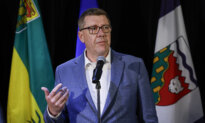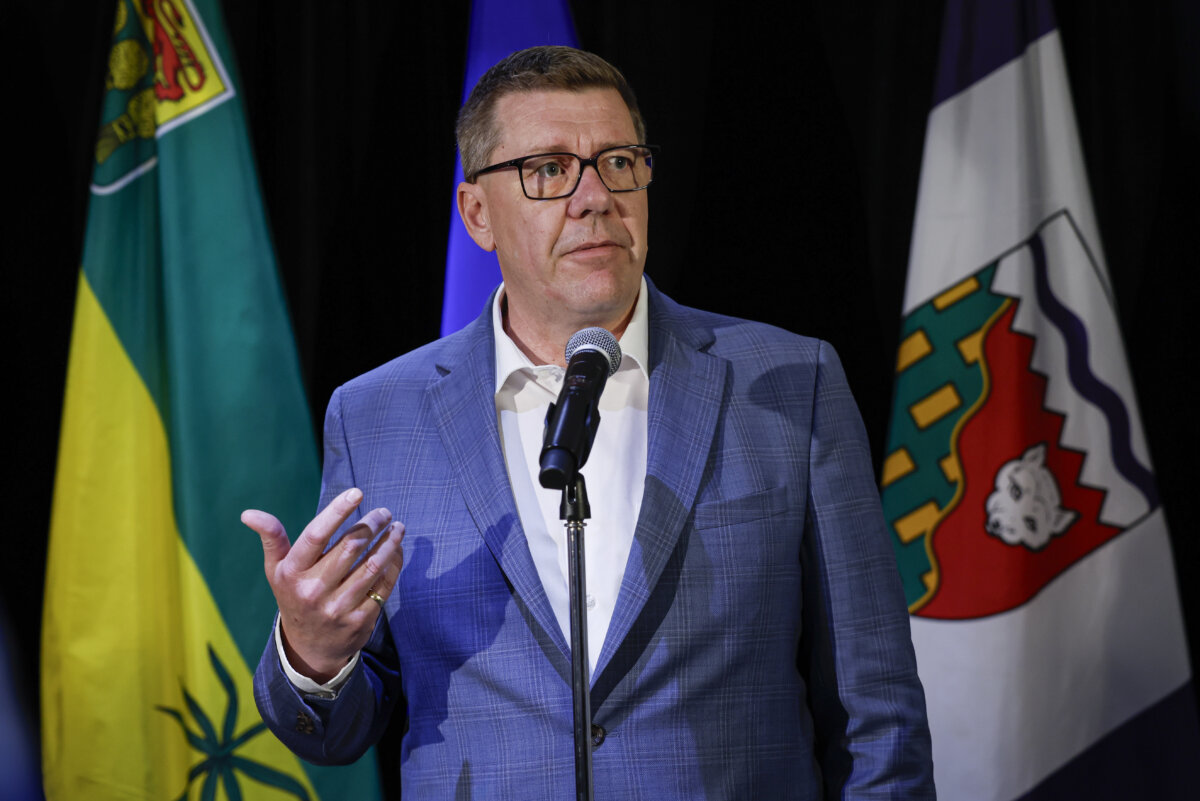

Saskatchewan Premier Scott Moe says the province could build one or two 1,000-megawatt nuclear reactors along the North Saskatchewan River to support anticipated growth in heavy oil and mining.
Moe discussed the prospect during the Lloydminster Heavy Oil Show on Sept. 17, saying the province is reviving information gathered more than a decade ago about potential reactor sites along the river.
Moe told reporters he is looking to increase the province’s supply of energy to support economic growth.
“Our power needs are going to increase and increase substantially,” hesaid.
He said the government conducted “a fair amount of work a decade ago” on potential nuclear sites along the North Saskatchewan River and is now reviving that information to determine whether a reactor site could be built in western Saskatchewan.
Moe said the project is more feasible because of recent federal decisions, including rolling back some of the Impact Assessment requirements.
3-Way Agreement
Moe’s comments follow an agreement he signed with Alberta and the Northwest Territories on Sept. 14 to strengthen the security, reliability, and long-term affordability of electricity systems, evaluate nuclear technologies as a source of carbon-neutral electricity, and explore ways to improve electricity transmission.
Moe described the agreement as a “significant milestone.”
The agreement also establishes a framework for the three jurisdictions to collaborate and share information on nuclear generation technologies, including large-scale reactors, small modular reactors, and microreactors.
Alberta and Saskatchewan previously partnered on energy initiatives. The provinces signed a memorandum of understanding in 2024 to advance nuclear generation, industrial decarbonization, and grid capabilities.
Meanwhile, Prime Minister Mark Carney said in June that Canada needed a new national energy plan and should grow oil and gas production while rapidly expanding low-emissions electricity and nuclear power.
Heavy Oil Potential
Moe said Saskatchewan is “on the cusp” of a major expansion in heavy oil production, driven by advances in technology that have allowed producers to extract more oil while reducing methane emissions. He said thermal sites in the area have reduced methane emissions by about 65 percent since 2015.
He said recent federal and provincial policy changes and investment could help expand oil and gas infrastructure and increase production in Saskatchewan and Alberta, improving Canada’s energy security and creating opportunities to supply oil to Canadians, North Americans, and allied countries.
Existing Energy Industries
Moe said Saskatchewan businesses, including those in Lloydminster, could participate in the nuclear supply chain if the province moves ahead with reactor construction.
He said SaskPower will determine what it can operate and what the province needs, including whether Saskatchewan builds one or more nuclear reactors, and cautioned that any development would take years.
A large-scale nuclear project would involve significant local and modular procurement, creating opportunities for Saskatchewan companies to supply the project. Moe said the larger goal would be to use a nuclear build to help companies develop the capacity to supply the hundreds of reactors expected to be built around the world.
“This is not just about building nuclear reactors to power Saskatchewan’s future,” Moe said. “That is a big part of it, but it’s not the only part of it.”
Moe compared the potential nuclear supply chain to Saskatchewan’s existing energy and mining industries, where companies have expanded beyond provincial and Canadian markets to sell products globally.
 Friends Read Free
Copy
Facebook
Tweet
Friends Read Free
Copy
Facebook
Tweet