
A new Saskatchewan law allows people harmed by illegal drug trafficking, including those affected by addiction, to sue drug traffickers for damages in civil court.
Under the Response to Illicit Drugs Act, which came into effect on June 1, individuals harmed by illicit drug activity can bring civil actions to recover damages from people who produce, traffic, import, or export highly addictive drugs, the province said in a June 1 news release.
“By bringing this Act into force, the Government of Saskatchewan is ensuring that those who profit from trafficking deadly substances face meaningful consequences for the damage they cause,” Saskatchewan Justice Minister and Attorney General Tim McLeod said.
“At the same time, our government continues to address mental health and addictions through expanded treatment and recovery supports.”
The Act would also allow provincial authorities to void appointments, grants, and agreements held by an individual or entity convicted of offences related to Schedule I drugs including fentanyl, methamphetamine, heroin, cocaine, morphine, codeine, and other highly addictive drugs.
However, the Act does not apply to offences related to simple possession of those substances, it said.
Saskatchewan recorded 1,799 federal drug-prosecution files in the 2023–24 fiscal year, according to the Public Prosecution Service of Canada. While the total was lower than in some provinces, including Alberta, which recorded 4,585 files, Saskatchewan’s figure remains significant given its much smaller population of about 1.2 million people, compared with roughly 4.9 million in Alberta.
Saskatchewan continues to face significant challenges related to Schedule I drugs, particularly fentanyl and methamphetamine, which the provincial government has identified as major drivers of addiction, crime, and overdose harms.
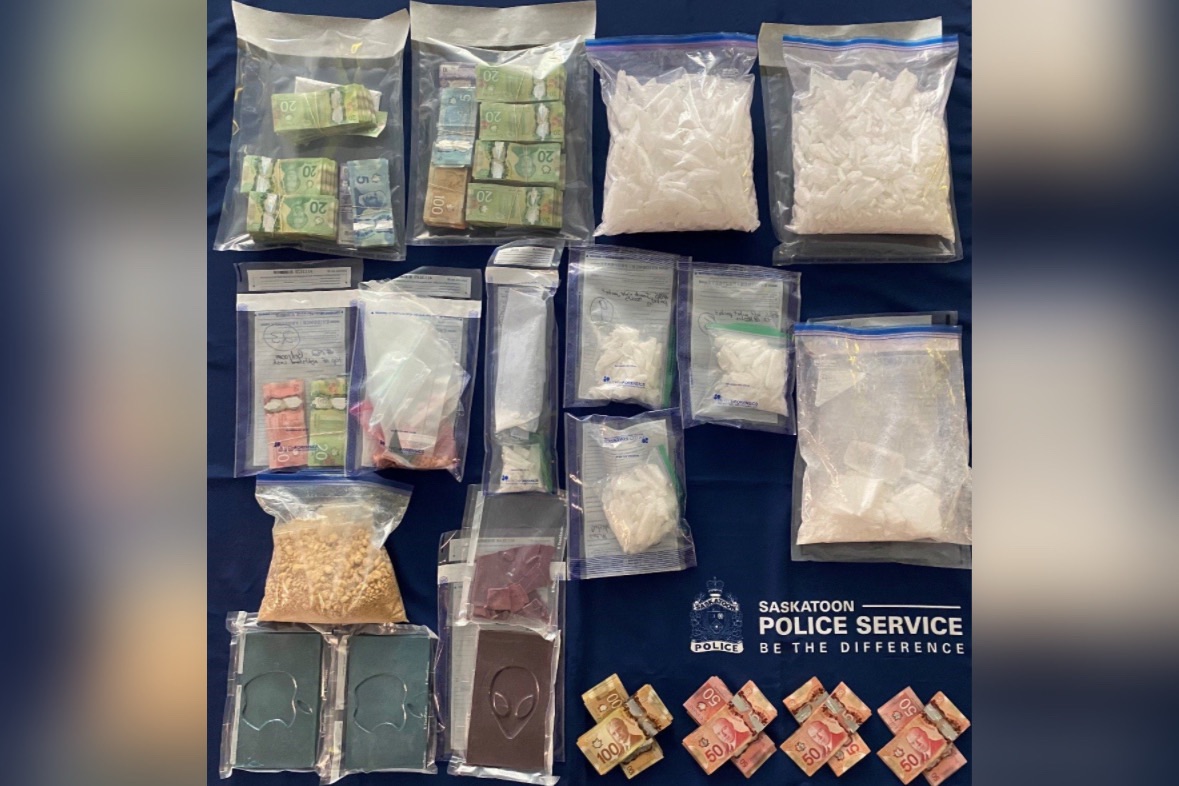
According to Saskatchewan RCMP, Saskatchewan Enforcement Response Teams (SERT) seized approximately 60 kilograms of methamphetamine, 14 kilograms of cocaine, 357 grams of fentanyl, three kilograms of other illicit drugs, and more than 120 firearms in 2025. SERT units also executed 765 arrest warrants, made 1,048 arrests, and laid 955 charges under the Criminal Code and Controlled Drugs and Substances Act.
The province said the new Act is part of Saskatchewan’s broader strategy to address addiction and strengthen public safety. Part of that strategy involves investing $22.7 million in 2026–27 to support 160 municipal police positions in nine municipalities and expand enforcement capacity, while providing an additional $190,000 to small-town and rural police services. Nearly $6 million was also allocated in 2025–26 to support a multi-year plan to add about 100 frontline officers across Saskatchewan.
The 2026–27 provincial budget also allocates $674 million for mental health and addictions services. The province added 330 addictions treatment spaces and says it has plans for 500 spaces total.
 Friends Read Free
Copy
Facebook
Tweet
Friends Read Free
Copy
Facebook
Tweet