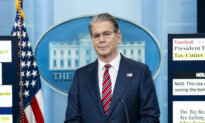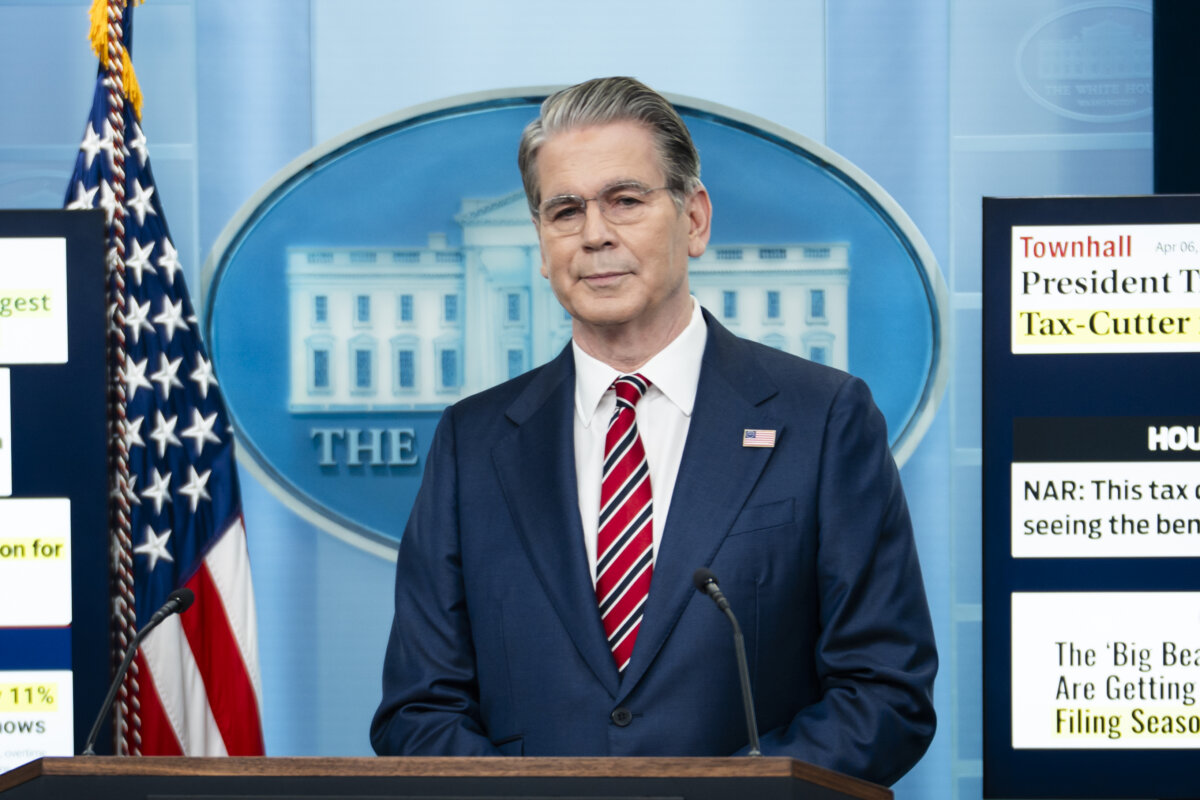

Treasury Secretary Scott Bessent urged allies in the Group of Seven (G7) to join the United States in “crushing the threat of terrorism” from Iran.
In a May 18 speech at the “No Money for Terror” conference in Paris, Bessent said world leaders should stop Iranian terrorism and impose “aggressive and targeted” sanctions on the regime.
While Bessent touted America’s “modernized sanctions architecture” and “maximum pressure campaign,” he stated that the United States is not “alone in facing the scourge of terrorism.”
“Crushing the threat of terrorism compels all of you to step up and join us in rooting out the financing that sustains it—from shell companies that are embedded within Europe, to shadow banking networks that lurk across the Middle East, and drug cartels across the Western Hemisphere,” Bessent said in his prepared remarks.
In a call for more countries to participate in the U.S. sanctions regime, Bessent noted that Europe will help the United States in “designating its financiers, unmasking its shell and front companies, shuttering its bank branches, and dismantling its proxies.”
Bessent provided a framework of what the United States has been doing to clamp down on Tehran.
Washington is reassessing what he calls “outdated sanctions designations.” The administration, he says, is using economic and military pressure to curb Iran’s revenue streams for nuclear development, proxy terrorist groups, and weapons programs. These measures have limited the country’s illicit financial networks, shadow banking operations, and cryptocurrency assets.
Additionally, since the outbreak of the war in Iran—approaching its 13th week—the White House targeted Iran’s energy infrastructure, including its shadow fleet.
“In short, if you share our fury about Iran’s destabilizing agenda, terrorists seeking to hold the global economy hostage, drug cartels poisoning our communities, and threats to innocent lives, then now is the time to join the United States in moving aggressively,” he said.
In a joint statement on May 19, G7 finance ministers and central bank governors agreed that reopening the Strait of Hormuz was critical, highlighting that the disruption of the global chokepoint has generated economic strain.
“We acknowledge that global economic uncertainty has heightened risks to growth and to inflation amid the ongoing conflict in the Middle East, particularly through pressures on energy, food, and fertilizer supply chains, which particularly affect the most vulnerable countries,” they said.
“To mitigate these negative impacts, we recognize that a swift return to free and safe transit through the Strait of Hormuz and a lasting resolution to the conflict are imperative.”
The narrow waterway handles about a fifth of the world’s oil and petroleum supply. The closure has rocked global energy markets, with crude oil prices trading above $100 per barrel.
Other administration officials, including Secretary of State Marco Rubio, have been urging the international community to confront Iran’s activities in the Strait of Hormuz.
Rubio spoke with United Nations Secretary-General António Guterres about the international body’s role in helping to resolve the conflict in the region.
“The Secretary further discussed U.S. efforts to stop the Islamic Republic of Iran’s unlawful mining and tolling of the Strait of Hormuz, including a draft UN Security Council resolution, presented by the United States and Bahrain with the support of other Gulf partners,” State Department spokesperson Tommy Pigott said in a readout of the call.
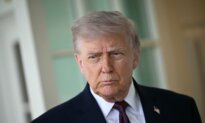
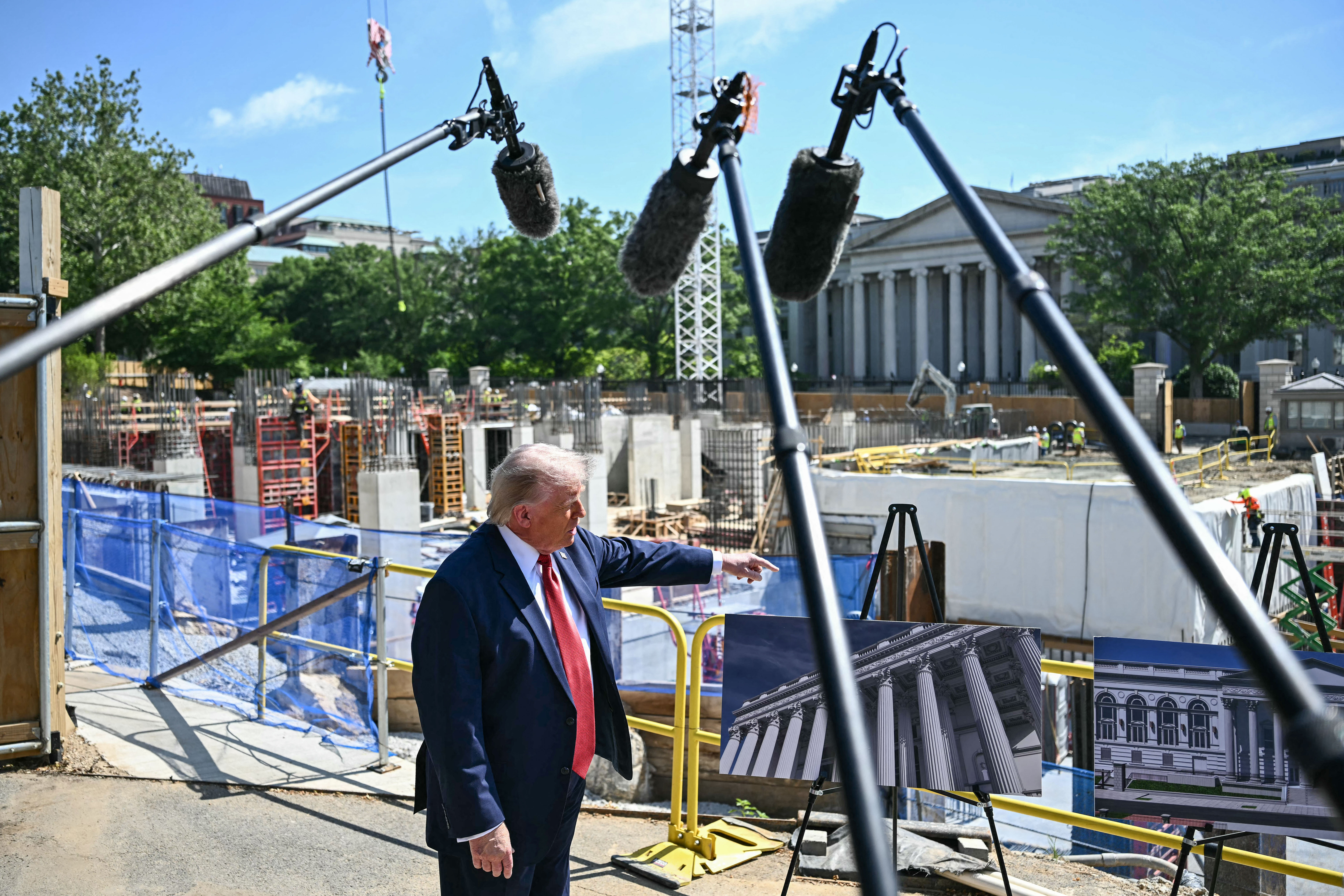 President Donald Trump speaks to the press near the construction site of his proposed ballroom at the White House in Washington, on May 19, 2026. (Kent Nishimura/AFP via Getty Images)
Speaking to reporters at the White House ballroom construction site, Trump said Gulf leaders knew he was poised to attack Iran.
“They knew I was getting ready to attack. I didn’t tell them. I never tell anybody when,” the president said.
“But they knew that we were very close. I would say … I was an hour away from making the decision to go today, and we would probably not be talking about a beautiful ballroom today. We’d be talking about that.”
Sanctions
These remarks come as the Treasury Department announced the implementation of a new round of sanctions on Iran as part of Operation Economic Fury.
On May 19, the Treasury said it slapped sanctions on individuals, vessels, and other entities linked to Iran’s petroleum and petrochemicals industry and its foreign exchange markets.
At the same time, the administration has eased sanctions to help mitigate rising energy prices.
In March, U.S. officials temporarily lifted sanctions on Iranian crude oil stranded at sea to help push down global energy prices.
Additionally, Bessent announced another 30-day extension of a sanctions waiver for “vulnerable” nations purchasing Russian oil and petroleum products currently traveling at sea.
“This extension will provide additional flexibility, and we will work with these nations to provide specific licenses as needed. This general license will help stabilize the physical crude market and ensure oil reaches the most energy-vulnerable countries,” the Cabinet secretary said in a May 18 X post.
Tom Gantert and Jack Phillips contributed to this report.
 Friends Read Free
Copy
Facebook
Tweet
Friends Read Free
Copy
Facebook
Tweet