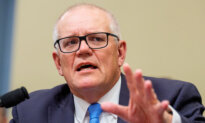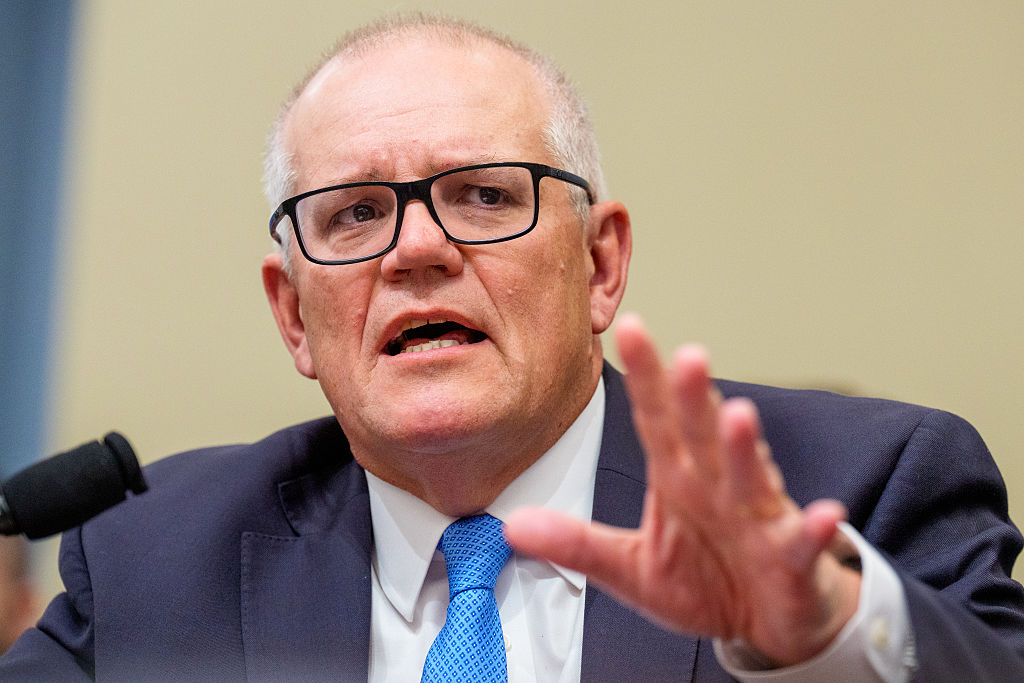

Former prime minister Scott Morrison has been cleared of any corrupt conduct by the National Anti-Corruption Commission (NACC) in relation to the controversial Robodebt program, although two senior public servants were found to have engaged in serious corrupt behaviour.
The watchdog released its findings on March 11 after investigating six individuals referred to it by the Royal Commission into the Robodebt Scheme.
Alongside Morrison, the NACC also cleared former senior officials Kathryn Campbell, Catherine Halbert, and Annette Musolino of wrongdoing.
However, the commission concluded that Mark Withnell and Serena Wilson engaged in serious corrupt conduct during the development and administration of the automated welfare debt recovery scheme.
Withnell, who previously served as general manager of business integrity at the Department of Human Services, was found to have misled officials who were preparing a cabinet submission about the Robodebt policy.
According to the report, Withnell had a significant role in shaping the program but failed to ensure cabinet was properly informed about a key aspect of the measure—the use of income averaging to calculate welfare debts.
The NACC also determined that Serena Wilson, a former deputy secretary in the Department of Social Services, engaged in misconduct when dealing with an investigation by the Commonwealth Ombudsman in 2017.
The report stated that Wilson “engaged in corrupt conduct by intentionally misleading the Ombudsman.”
While both cases were considered serious, the commission concluded that the available evidence did not meet the threshold required for criminal proceedings and therefore decided not to refer the matter to the Commonwealth Director of Public Prosecutions.
The investigation was led by NACC Deputy Commissioner Kylie Kilgour, who said the final report was intended to explain the reasoning behind the commission’s conclusions.
The inquiry gathered testimony from more than 40 witnesses, including through interviews and hearings.
Morrison Welcomes NACC Clearance
The commission also examined Morrison’s role during cabinet discussions when the Robodebt policy was introduced. At the time, Morrison served as minister for social services, the portfolio responsible for the program.
The NACC considered whether he should have recognised that some of the information presented to cabinet was misleading.
Ultimately, the commission found that Morrison was entitled to rely on advice from government departments and briefing materials provided to ministers.
The report said Morrison’s failure to recognise that the NPP was misleading did not breach any personal obligation of honesty or good faith.
“Like other ministers, Morrison was expected to rely on the advice of his department and on the NPP and the Finance Green Brief, and he did so,” the report stated.
Morrison welcomed the outcome of the investigation and expressed sympathy for people who were harmed by the Robodebt system, while arguing that ministers had acted on flawed departmental advice.
“The NACC has rightly concluded that ministers must be able to rely on the accuracy of the advice provided by their departments, especially on matters of technical expertise, and receive that advice in good faith,” he said.
“Whether they follow that advice is a matter for those Ministers. In this case, I relied upon, and followed, that advice.”
Attorney-General Michelle Rowland said the investigation’s findings underscored the need to ensure similar failures never occur again.
“The illegal Robodebt scheme was a betrayal of everyday Australians, resulting in human tragedy and untold misery,” she said in a statement.
Fallout From the Robodebt Scheme
The Robodebt program, introduced under the Coalition government, used an automated system to recover welfare debts by averaging annual tax office income data across two-week periods rather than verifying actual earnings.
This method often produced inflated or incorrect debts, affecting about 443,000 welfare recipients. The scheme caused widespread distress and was linked to several suicides before it was ruled unlawful and dismantled.
In April 2025, the federal government agreed to pay $475 million (US$310 million) in compensation to people affected by the scheme. The settlement is expected to become the largest class-action payout in Australian history.
 Friends Read Free
Copy
Facebook
Tweet
Friends Read Free
Copy
Facebook
Tweet