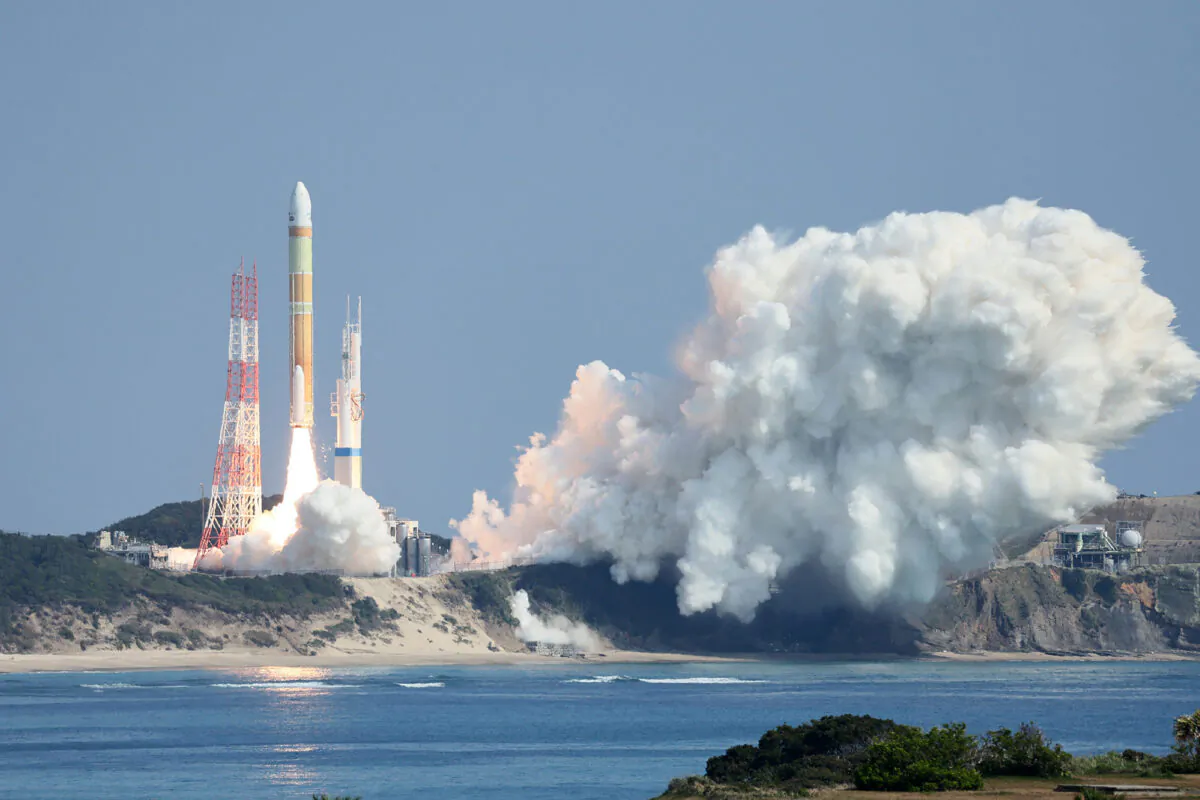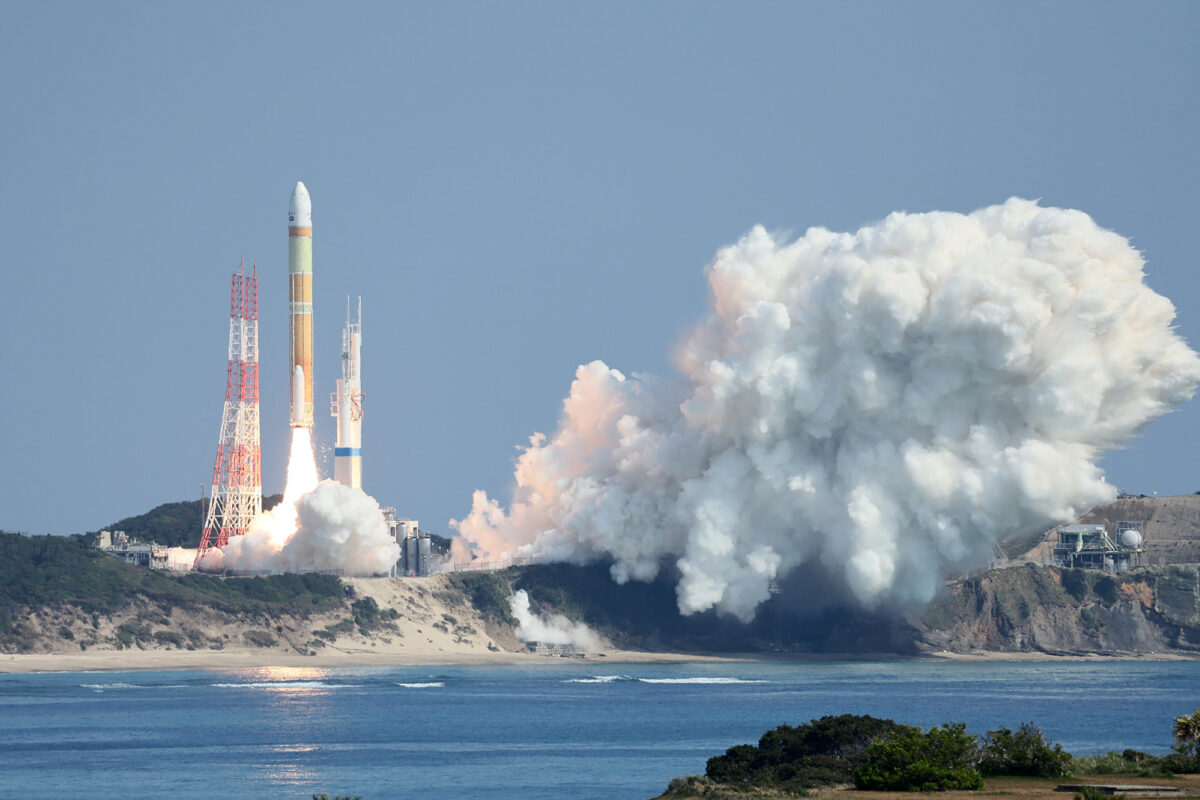

Japan Aerospace Exploration Agency (JAXA) said it has had to destroy its new medium-lift H3 rocket that it launched toward space on Tuesday.
The self-destruct command was issued after the vehicle’s second-stage engine failed to ignite after liftoff, and it was determined that the mission could not succeed.
The 57-meter (187 ft) tall H3 rocket lifted off from the JAXA Tanegashima spaceport. It was the second launch attempt for the rocket following an aborted launch on Feb. 17 after a main engine failure on the launch pad.
The team later reported that the engine failure was due to a voltage transient within the rocket’s first-stage controller, which was then corrected.
The space venture was a partnership between JAXA and Mitsubishi Heavy.
The rocket was carrying the ALOS-3 (Advanced Land Observing Satellite-3), a disaster management land observation satellite that is also equipped with an experimental infrared sensor designed to detect North Korean ballistic missile launches. It is also called the DAICHI-3 by the Japanese.
The plan was to push the optical imaging satellite into a 669-kilometer Sun-synchronous orbit. The satellite had a high-resolution sensor that could image at a 0.8-meter resolution over a 70-kilometer range.
ALOS-2, which has a 1.2 GHz synthetic-aperture radar (SAR) sensor, remains in orbit, but ALOS-1 was taken offline by a suspected meteorite hit in May 2011.
Reuters contributed to this report.
 Friends Read Free
Copy
Facebook
Tweet
Friends Read Free
Copy
Facebook
Tweet