
Independent Senator David Pocock is concerned energy companies are not paying enough compensation for extracting Australia’s natural resources.
At a recent Senate debate, Pocock pointed to INPEX Australia, a subsidiary of INPEX Corporation, Japan’s largest petroleum and exploration company.
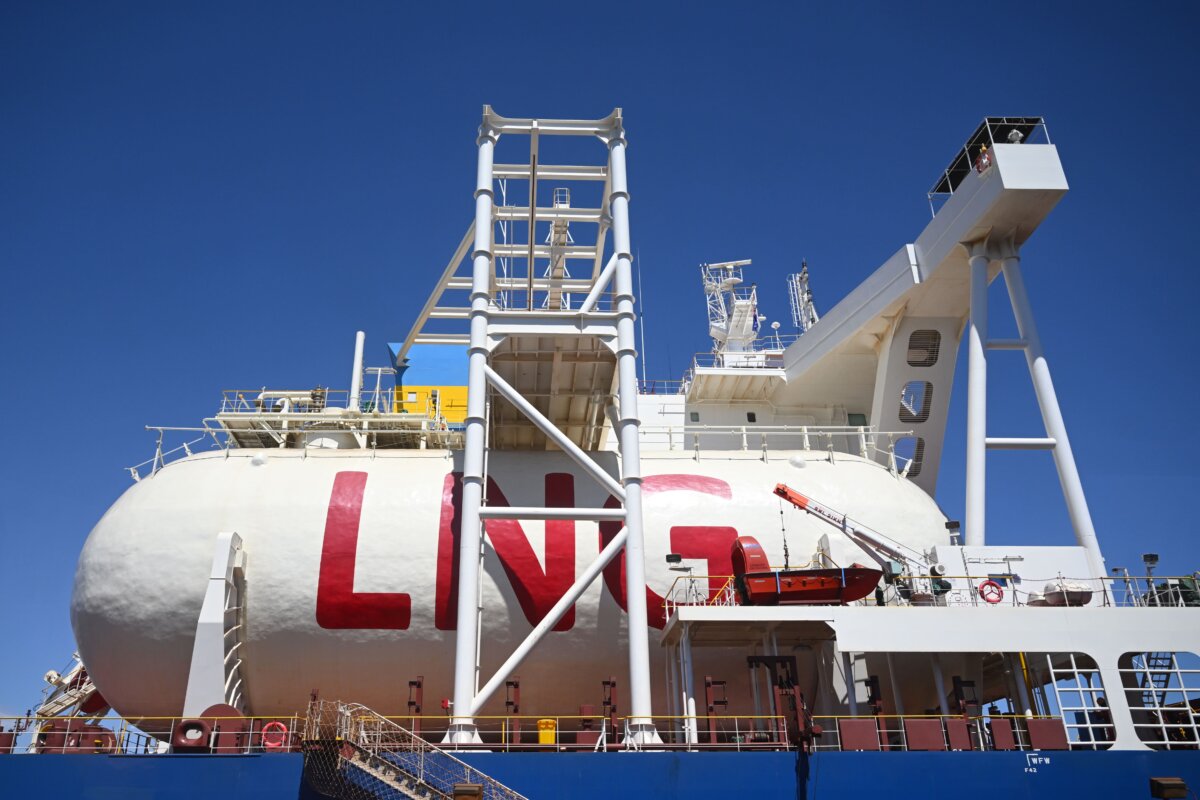
INPEX began operating in Australia in 1986 and is now the major shareholder of the Ichthys LNG Project, one of the country’s largest gas developments, with operations in the Northern Territory and offshore Western Australia.
The senator stressed that each year INPEX exports over 9 million tonnes of LNG (liquefied natural gas) from Australia, more than the amount of gas consumed by Victoria, New South Wales, and South Australia combined.
“This is the same company that turned up to a Senate inquiry in the last parliament and tried to tell us that opening up new gas projects was really important for our domestic gas security,” he said.
“And when I asked them what percentage of their gas was used domestically, they sheepishly admitted: ‘Oh, we export 100 percent of our gas.’
“And the kicker is that they don’t pay for the gas that they export, because the Australian government does not charge a royalty on most offshore gas extraction impacts. [They] have never paid a single cent of petroleum resource rent tax.”

In response, INPEX said it was committed to paying its fair share of taxes in Australia.
“At every phase of a project, INPEX makes tax contributions. This includes payroll tax, fringe benefits tax, goods and services tax, interest withholding tax and the Offshore Petroleum Levy. These taxes are paid regardless of whether any revenue is generated,” the company told The Epoch Times.
“Paying tax is one of the most important contributions we make to the social and economic development of Australia. We are proud of the tax we pay and the benefits these payments bring to all Australians.”
The company also noted that it paid $2.069 billion (US$1.35 billion) between 2011 and 2023.
While INPEX acknowledged that the Petroleum Resource Rent Tax contributions from energy companies have been a subject of public debate, the company said the policy was necessary to attract the multi-billion-dollar investments needed to develop projects like Ichthys.
“Ichthys LNG is in its seventh year of operations into its anticipated 40-year life. It has not recouped the initial expenditure on the project, and, consistent with the policy intent and design, it has therefore not made any PRRT payments,” the company said.
“INPEX will commence paying PRRT from July 1, 2026, following federal parliament’s amendment last year to the Petroleum Resource Rent Tax Assessment Act 1987.”
Over 50 Percent of Gas Not Subject to Royalties: Think Tank
Pocock’s comments followed a 2024 research paper (pdf) by the Australia Institute that found that more than half (56 percent) of gas exported from Australia was not subject to royalty payments.
While companies are generally required to pay royalties, there is no uniform national system governing these obligations.
In some cases, state governments and corporations can strike agreements that can reduce or remove royalties altogether.
“Australia has 10 facilities that export gas as LNG. Six of these projects—both of the Northern Territory’s facilities and four of the five operating in Western Australia—pay no royalties, either state or federal,” the report said.
“This means that all the gas exported from the Northern Territory, and more than half the gas exported from Australia, is given for free to the companies exporting it.”
The Institute estimated that around $265 billion (US$173 billion) worth of gas was exported nationwide in the previous four years, of which royalty-free exports amounted to $149 billion.
“To put this another way: in the last four years alone, Australians have given away the gas that made $149 billion worth of LNG, for free,” the report said.
Australia Receiving Less Than Other Countries: Report
The Institute also noted that royalties were also minimal from the other portion of gas exports.
Over the four years, LNG exporters only paid an estimated $10.4 billion—about 9 percent of the $116 billion worth of exports.
When compared with other countries, the report found that Australia was far behind other countries around the world in terms of royalty collection.
“For an international comparison, Qatar produces only 50 percent more oil and gas than Australia but receives six times more government revenue from its oil and gas industry,” it said.
“Norway exports more oil and less gas than Australia, but expects tax revenue from oil and gas to be a staggering A$127 billion in 2023 alone.”
The report also argued that Australia could be in a better financial position if it managed its resources better.
“The billions of dollars in forgone revenue each year from effectively giving away Australian gas for free could be invested in a sovereign wealth fund (as it is in Norway) or used to raise productivity and increase the living standards of Australians by funding schools, hospitals, renewable energy, and other needed public infrastructure,” it said.
 Friends Read Free
Copy
Facebook
Tweet
Friends Read Free
Copy
Facebook
Tweet