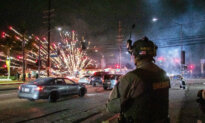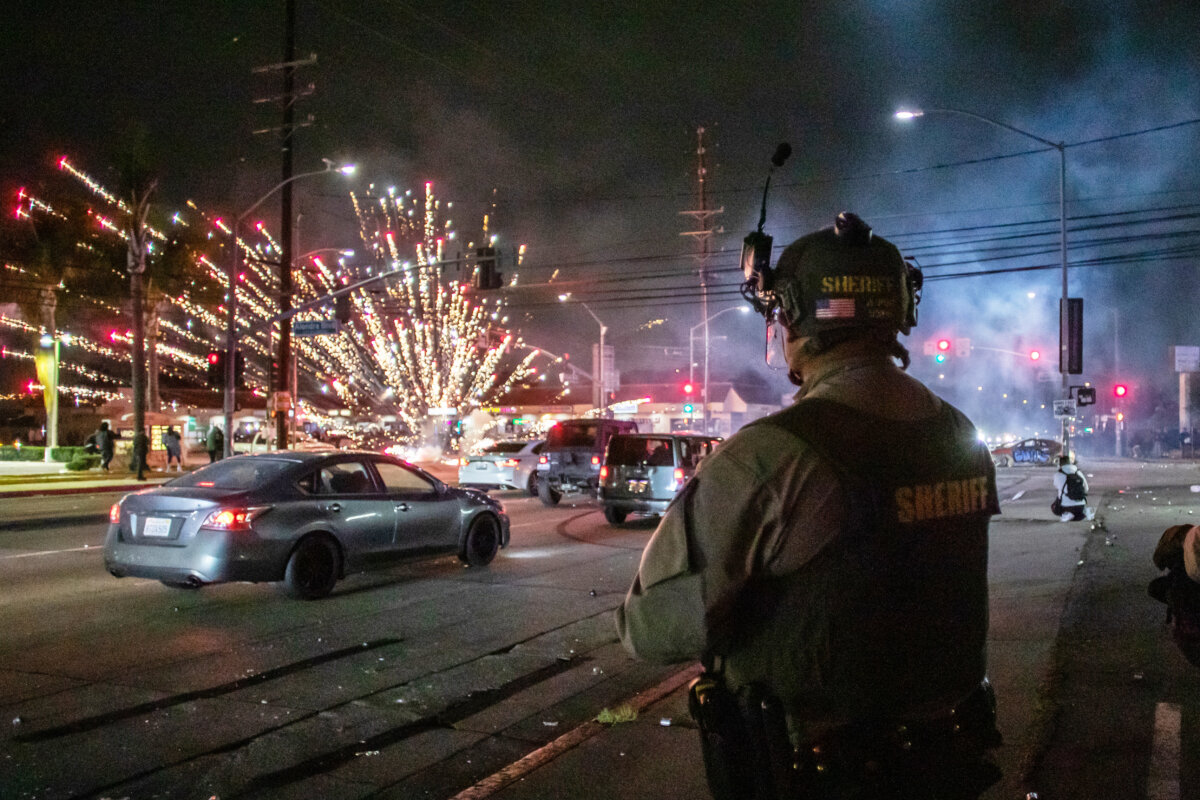

The Los Angeles Police Department (LAPD) will investigate reports of several Australian journalists being affected or struck by crowd control measures during violent riots.
The demonstrations were aimed at counteracting the enforcement of U.S. immigration laws.
Early this week, Lauren Tomasi, U.S. correspondent for Nine News, made headlines when a video showed her being struck by a rubber bullet from riot police.
On June 10, Lauren Day, a U.S. correspondent for the national broadcaster, the Australian Broadcasting Corporation (ABC), reported she and her team were affected by tear gas.
Later, an ABC cameraman was struck in the chest with a non-lethal bullet while filming a violent demonstration. He was not injured.
“An ABC camera operator was filming a group of protesters in the neighbourhood of Little Tokyo, who were pushing a large bin towards police when officers opened fire with less-lethal rounds,” Day reported.
“He was hit in the chest with what may have been a rubber or foam round but was thankfully wearing a Kevlar vest at the time.
“He described the pain as ‘like being punched in the chest.’”
LAPD Chief Acknowledges the Incidents
During a press conference on June 10, LAPD Chief Jim McDonnell acknowledged reports of journalists being affected.
“We saw that, we are very concerned about that, [and] we’ll look into that,” he told reporters.
When asked how the department could minimise the risks to journalists, McDonnell said the LAPD had a risk reduction strategy.
“We minimise it through training, through the equipment we use. It is a target-specific munition,” he said.
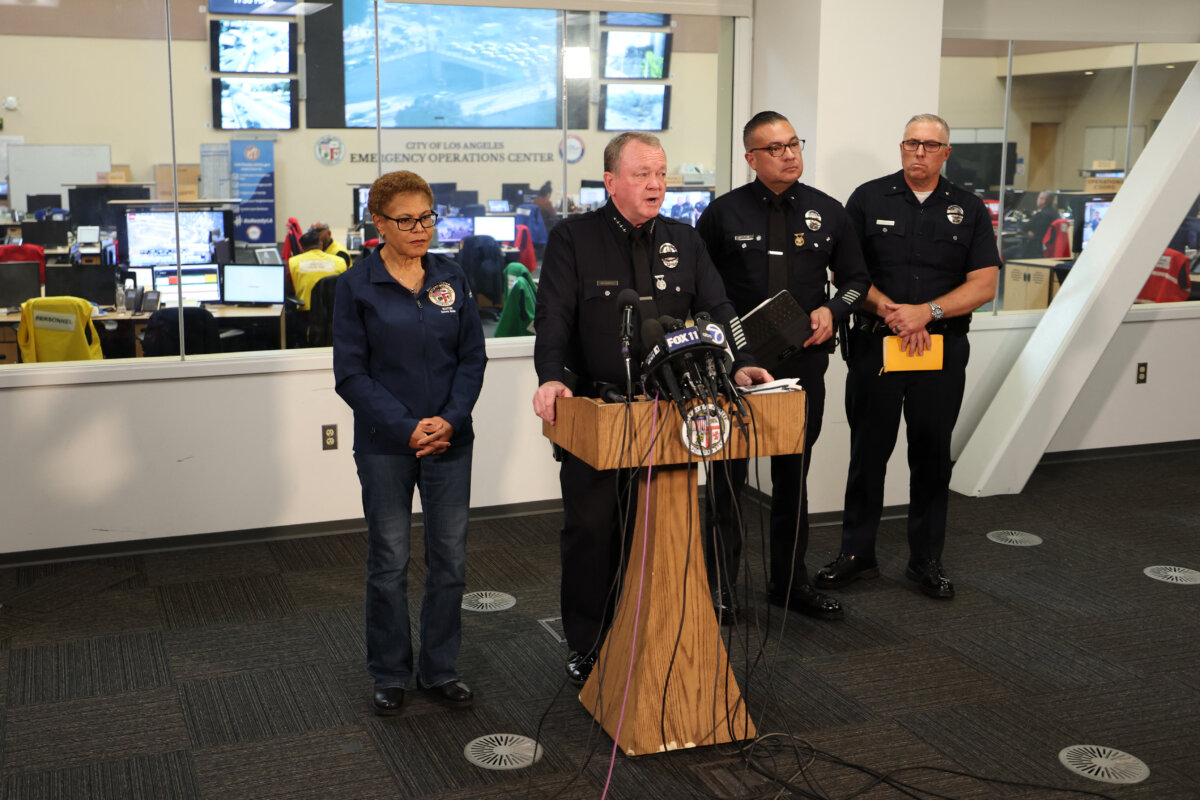
“That’s not to say that it always hits the intended target, particularly in a dynamic situation.”
According to the LAPD’s latest update, 96 individuals were arrested on June 9 for failure to disperse, and an additional 14 were detained for looting.
Australian media professionals are not the only ones affected by LAPD officers’ non-lethal ammunition.
Nick Stern, a British news photographer based in LA, had to go through emergency surgery after a 14mm “sponge bullet” pierced his thigh and caused bleeding.
Livia Albeck-Ripka, a reporter from The New York Times, also got hit by crow control ammunition below her rib cage.
While she did not sustain serious injury, Albeck-Ripka said she had a “nasty bruise.”
Australian Government Raises Concerns with US Administration
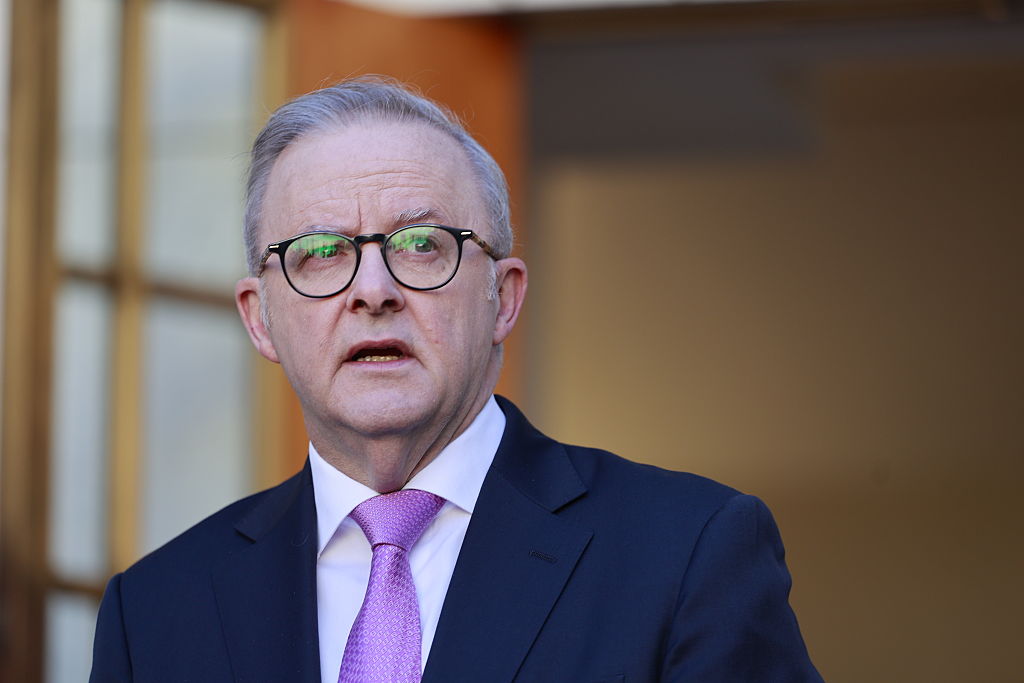
Australian Prime Minister Anthony Albanese said his government had raised concerns with the U.S. administration about Tomasi’s case.
“We don’t find it acceptable that it occurred. And we think the role of the media is particularly important,” he said at the Australian National Press Club.
The prime minister also said he had talked with Tomasi, and the reporter confirmed that she was fine.
“She’s pretty resilient, I’ve got to say, but that footage was horrific,” he said.
“That was the footage of an Australian journalist doing what journalists do at their very best, at their very best, which is to go into an environment that’s not comfortable.”
Meanwhile, Foreign Affairs Minister Penny Wong said Australia believed in free media and that journalists should be able to do their jobs safely.
“Obviously, we have raised concerns through diplomatic channels,” she told the ABC.
“What I would say more generally is obviously, though, what is occurring in the U.S. is a matter for obviously domestic considerations, but I would ask Australians to avoid as much as possible the areas of protest.”
The minister also noted that the Australian government had received assurance about an independent investigation into Tomasi’s case and would continue to express its stance in an appropriate way.
In a recent development, a U.S. federal judge has rejected California Governor Gavin Newsom’s request to temporarily block President Donald Trump’s deployment of the National Guard.
 Friends Read Free
Copy
Facebook
Tweet
Friends Read Free
Copy
Facebook
Tweet