
Singapore tops the world as the most religiously diverse country, while the United States leads in that category among the ten most populous nations, according to a sweeping Pew Research Center analysis covering 201 countries and territories.
The report, “Religious Diversity Around the World,” measures how evenly each nation’s population is spread across seven groups: Christians, Muslims, Hindus, Buddhists, Jews, people of other religions, and those with no religious affiliation. Drawing on religious composition estimates from 2020—sourced from more than 2,700 censuses and surveys—researchers calculated a Religious Diversity Index (RDI) for every country in the study.
On a scale from 0 to 10, Singapore achieved a score of 9.3, the highest in the study. About 31 percent of Singapore’s population is Buddhist, 20 percent are unaffiliated, 19 percent are Christian, 16 percent are Muslim, 5 are Hindu, and 9 percent follow other religions. This relatively balanced mix places the city-state at the top of the global rankings.
Suriname comes in second overall and is the only Latin American country in the top 10. In Suriname, Christians make up 53 percent of the population, Hindus 22 percent, Muslims 13 percent, and 8 percent are unaffiliated. Most other highly diverse countries are found in the Asia-Pacific region or sub-Saharan Africa, with France being the only European nation in the top tier.
While the United States ranks 32nd overall, it stands out as the most religiously diverse among the world’s ten most populous countries. As of 2020, 64 percent of Americans identified as Christian and 30 percent as religiously unaffiliated. Muslims, Hindus, Buddhists, Jews, and followers of other religions each made up about 1 percent to 2 percent of the population, resulting in an RDI of 5.8—enough to place the U.S. in the “high” diversity category.
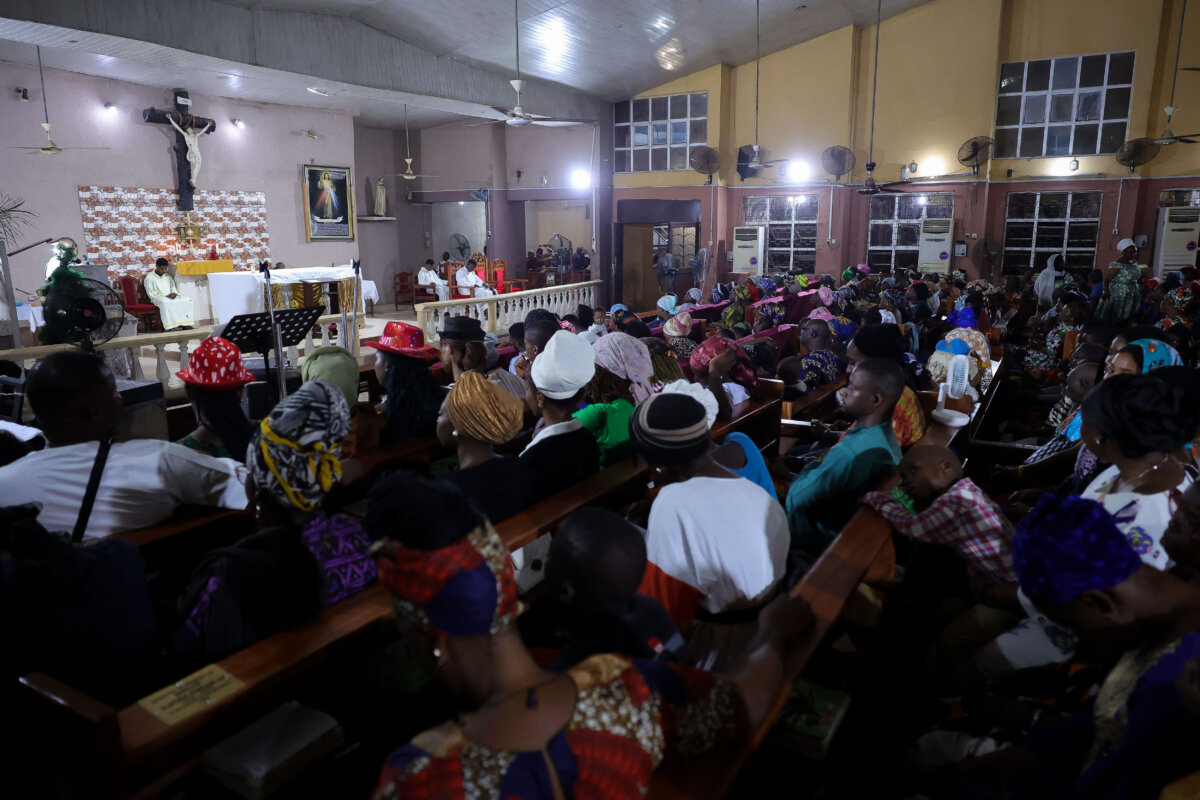
Nigeria ranks second among the largest countries, reflecting a near-even split between Christians and Muslims, who each make up more than 40 percent of the population. India, Brazil, and Russia also fall into the higher diversity range among populous nations. On the other end of the spectrum, Pakistan is the least diverse of the ten largest countries, with Muslims comprising 97 percent of its population.
Across all 201 countries and territories, the study found that complete religious uniformity is rare, and dominant majorities are the norm. RDI scores range from zero (entirely one religion) to 10 (a perfectly even distribution among the seven groups). No country scored a 10.
Yemen, Afghanistan, and Somalia recorded some of the lowest diversity scores, each close to zero, as Muslims make up 99.8 percent or more of their populations. Eight of the ten least diverse places are almost entirely Muslim; the other two are overwhelmingly Christian.
In 194 of the 201 countries and territories, at least half the population belongs to a single religious group. Forty-three countries have populations that are 95 percent or more affiliated with one religion, most commonly Islam or Christianity. Only seven countries—Singapore, the United Kingdom, Mauritius, South Korea, Australia, France, and Ivory Coast—lack a single religious majority.
Regionally, the Asia-Pacific area stands out as the most religiously diverse, with an RDI of 8.7 and no single group forming a majority. About one-third of the region’s population is unaffiliated, with Muslims, Hindus, Buddhists, and Christians all present in significant numbers.
North America, sub-Saharan Africa, and Europe are all classified as having “high” diversity, each with a Christian majority and a sizable second-largest group. Latin America and the Caribbean are moderately diverse, while the Middle East and North Africa—94 percent Muslim with an RDI of 1.3—rank as the least diverse region in the study.
Globally, 58 percent of people live in countries with moderate religious diversity. Nineteen percent live in highly diverse societies, and just 1 percent live in very highly diverse places. The rest of the world’s population is in countries classified as low or very low in diversity.
Comparing data from 2010 and 2020, researchers found that religious diversity levels have remained largely stable worldwide: 76 percent of countries saw their RDI change by less than half a point, and 84 percent stayed within the same diversity category. In several Western countries, including the United States and Ireland, the share of people unaffiliated with any religion has grown, modestly increasing national diversity scores as Christian majorities have declined.
The index itself is adapted from a formula used by economists and ecologists to measure concentration and diversity. It accounts for both the size of the largest religious group and the distribution among other groups. Researchers note that breaking down religions into more detailed subgroups would change some national scores, but using seven broad categories allows for consistent global comparisons.
 Friends Read Free
Copy
Facebook
Tweet
Friends Read Free
Copy
Facebook
Tweet