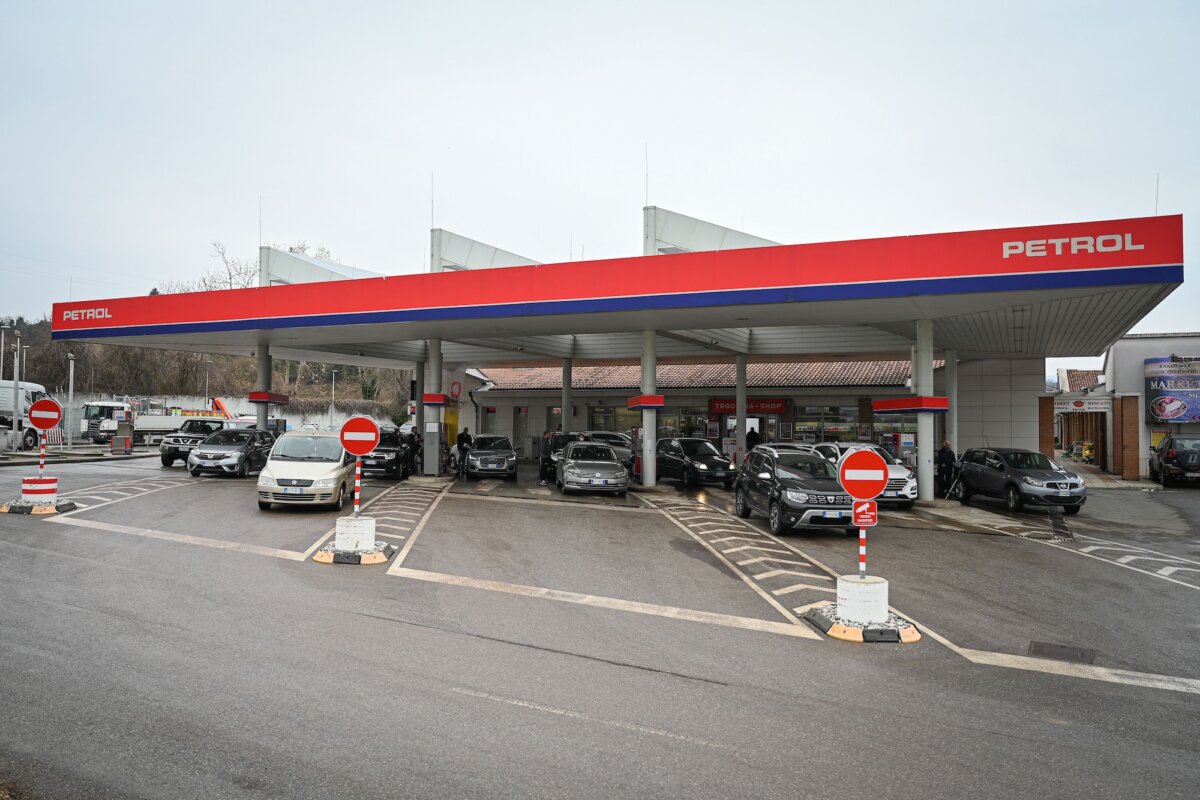

Slovenia has deployed the army to help move fuel supplies after becoming the first European country to ration fuel at the pump amid shortages and surging demand.
Slovenia on March 22 temporarily limited fuel purchases to tackle shortages at the pump caused in part by cross-border fuelling and stockpiling due to the Iran war, according to Slovenian state news agency STA on March 21.
Fuelling at individual service stations has been restricted to 50 liters per day for private vehicles and 200 litres per day for companies and other priority users, such as farmers, Prime Minister Robert Golob said.
Golob said the army would be called in to help retailers move supplies.
STA reported on March 23 that fuel prices would increase on Tuesday despite the government cutting excise duties on diesel and heating oil.
The report said that new prices would be in effect for a week as the government transitions to a weekly price-setting scheme.
Petrol, the country’s biggest fuel retailer, which operates almost 320 service stations, has been accused by the government of being responsible for fuel supply disruptions at service stations nationwide.
At the weekend, the government took a series of steps against the company, which is partly state-owned, including urging the management and supervisory boards to immediately implement an action plan to restore fuel availability.
Petrol has rejected the accusation that it is responsible for fuel supply disruption, saying the problems were caused by “a sharp and sudden surge in demand in recent days,” STA reported on Sunday.
The government also recommended that retailers prepare special measures for foreign drivers.
Slovenia is the latest country to impose fuel restrictions amid a wider wave of shortages linked to the Iran conflict and disruption in the Strait of Hormuz, a route that normally carries about 20 percent of global oil and liquefied natural gas (LNG).
Major Gulf producers are also warning they may be unable to guarantee long-term LNG deliveries for years after Iranian attacks continue to knock out capacity.
On March 6, Bangladesh imposed daily limits on fuel sales after panic buying and stockpiling.
Bangladesh Petroleum Corporation (BPC), the state-run importer and distributor, said the measures aim to curb excessive demand, calm the public, and keep nationwide stocks stable.
“Fuel oil is essential for the country’s development, but about 95% of it must be imported,” it said, adding that global instability had occasionally delayed shipments.
Rumours about shortages had prompted consumers and dealers to hoard fuel, it added.
Sri Lanka began nationwide fuel rationing and mandatory QR code distribution for vehicles on March 15, according to the U.S. Embassy in Sri Lanka.
That means users must register with the government and obtain a QR code, which must be presented at the fueling station.
The Philippines and Pakistan have taken steps such as shortening the work week to counter the impact of rising fuel costs.
Pakistani Prime Minister Shehbaz Sharif said on March 9 that schools would close for two weeks and office workers would have to work more from home.
Philippine President Ferdinand R. Marcos Jr. ordered the temporary implementation of a four-day workweek in some executive branch offices starting March 9, as part of the government’s efforts to conserve energy and reduce fuel use.
South Korea has not introduced fuel rationing, opting instead for conservation measures, including vehicle-use restrictions and price controls.
South Korean President Lee Jae Myung’s government is calling on people to adopt 12 energy-saving practices, such as taking shorter showers, charging phones and electric vehicles during the day, and using washing machines and vacuums over the weekend.
Rabobank macro strategist Ben Picton told Australian news outlet ABC on March 23 that in the face of rumoured stoppages of bunker fuel exports from Singapore, it’s possible Australian supplies could be rationed within weeks.
Reuters contributed to this report.
 Friends Read Free
Copy
Facebook
Tweet
Friends Read Free
Copy
Facebook
Tweet