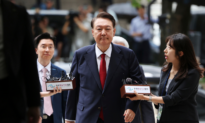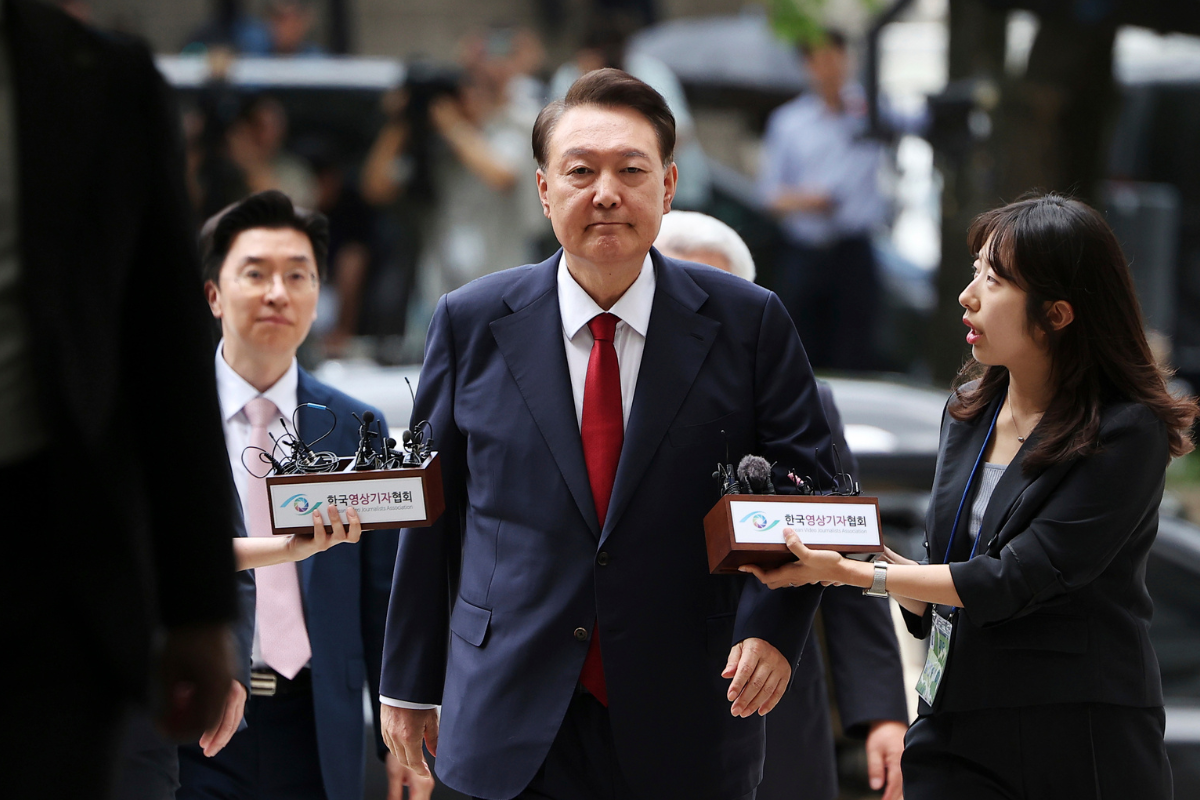

The Seoul Central District Court on July 10 approved the arrest of former South Korean President Yoon Suk Yeol on charges related to his brief martial law decree in December 2024.
The decision followed a seven-hour hearing on June 9. Special prosecutor Cho Eun-suk argued that the president posed a risk of destroying evidence—a claim that the court ultimately accepted, resulting in the decision to detain Yoon.
Lawyers representing the conservative former president said that the arrest request was excessive and unsubstantiated.
On July 10, Yoon was sent back to Seoul Detention Center, approximately 12 miles from the capital, where he had been held awaiting the court’s ruling.
Cho is pursuing additional charges in relation to Yoon’s enactment of martial law on Dec. 3, 2024, including allegations of obstruction of official duties, abuse of power, and falsification of official documents.
The prosecutor’s team of investigators had questioned the former president twice before submitting the request for an arrest warrant on July 6.
Yoon is already facing charges of insurrection, after public prosecutors indicted him on Jan. 26, 2025, for allegedly attempting to illegally seize power and detain political opponents.
Charges
These new legal probes come after President Lee Jae-myung—formerly the leader of the opposition—passed legislation that launched special investigations into Yoon’s martial law decree, as well as other criminal investigations into Yoon’s Cabinet and his wife.
The new charges stem from allegations that Yoon, a former top prosecutor, did not fulfill legally mandated procedures before initiating martial law, such as convening a Cabinet meeting to discuss the measures.
He is also accused of ordering presidential security officials to delete electronic records related to devices equipped with anti-wiretapping technology allegedly used to communicate with those in the military involved in the martial law order.
Prosecutors also allege Yoon unlawfully deployed presidential security forces to stop an initial attempt in early January to arrest him at his residence.
Yoon denies the allegations, and his lawyers have accused the special prosecutor of conducting an unsubstantiated and politically motivated investigation.
Incarceration
Yoon will initially be incarcerated for up to 20 days; however, this could be the start of a period of prolonged incarceration for the former president that could last months or even longer.
Park SungBae, a lawyer specializing in criminal law, told The Associated Press that if Cho brings additional charges against Yoon, his stay in prison could last up to six months until an initial court ruling. If convicted of any of the crimes he is accused of and handed a custodial sentence, Yoon would begin serving those sentences even if the case moves to higher courts.
“It’s possible that the verdict in the rebellion trial could take more than six months, given the large number of defendants involved … but there’s a strong likelihood that Yoon will receive prison sentences on the other indictments before then,” Park said.
The lawyer added that Yoon’s legal team could ask the court to review the legality of his arrest or seek his release on bail. But given the severity of the charges and that the court already views Yoon as a threat to the preservation of evidence, Park said it is unclear whether such efforts would be successful.
Martial Law
When he invoked martial law on Dec. 3, 2024, Yoon said the measures were necessary to quash “anti-state” activities being conducted by liberal opponents, who were using their majority in the legislature to block his agenda.
Troops were then deployed outside of the National Assembly, South Korea’s parliament, but the decree only lasted for around six hours, ending after lawmakers broke through the blockade and voted to lift the measures.
The charge of insurrection is punishable by death or life imprisonment. However, there have been no executions in South Korea since 1997, and in 1998, then-President Kim Dae-jung introduced a moratorium on executions.
The Associated Press contributed to this report.
 Friends Read Free
Copy
Facebook
Tweet
Friends Read Free
Copy
Facebook
Tweet