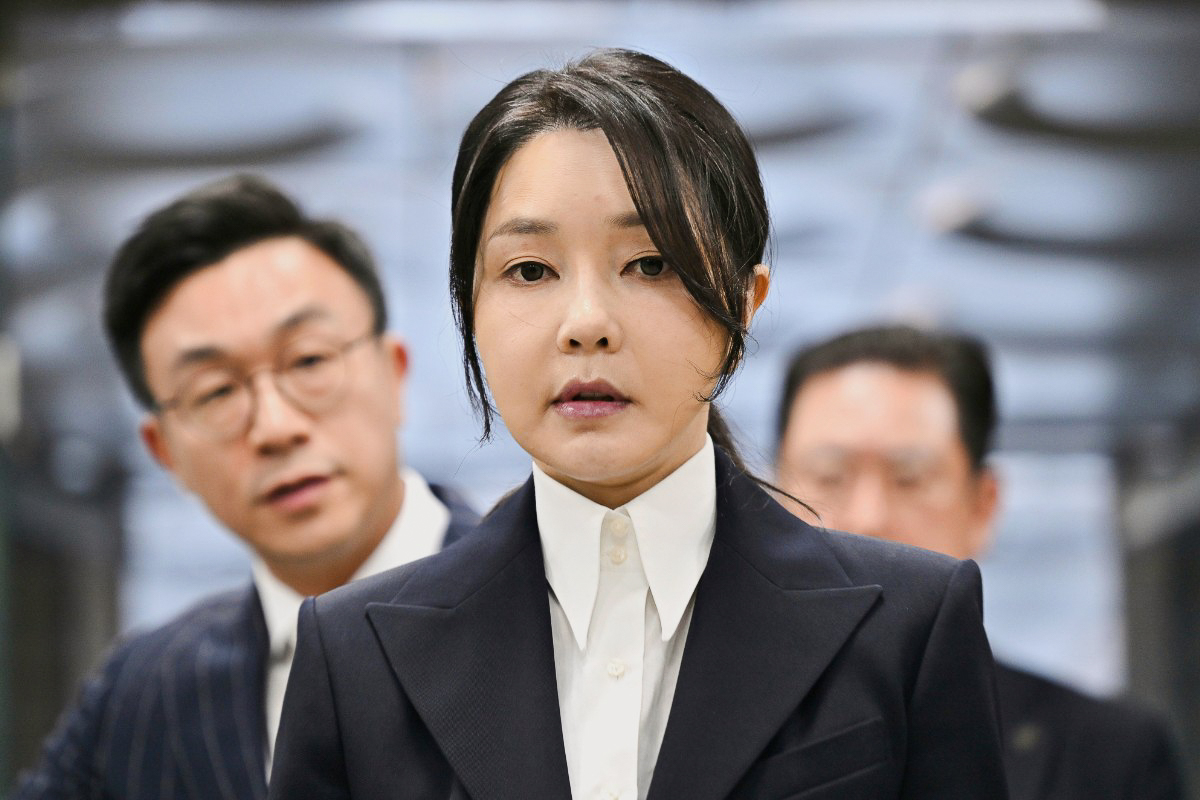

South Korea’s former first lady, Kim Keon-hee, the wife of former President Yoon Suk Yeol, was sentenced on Jan. 28 to one year and eight months in prison for corruption.
The Seoul Central District Court handed down the sentence after finding Kim guilty of receiving luxury gifts, including a Chanel bag and a Graff diamond necklace, from the Unification Church, in exchange for promises of political favors.
“Being closest to a president, a first lady can exert significant influence on him and is a symbolic figure who represents the country together with a president,” the judge said during the televised verdict.
“But the defendant exploited her position to seek personal gains.”
The court acquitted Kim of charges of stock price manipulation and political funding law violations, citing a lack of evidence among its reasons.
She was also fined 12.8 million won ($8,990), and the necklace was confiscated.
The prosecution had requested a 15-year prison sentence and a fine of 2.9 billion won ($2.7 million) for all three charges.
Independent Counsel Min Joong-ki said that the prosecution could not accept the ruling and will appeal to a higher court.
South Korea’s judicial system allows prosecutors to challenge sentences and rulings—giving them the same rights as defendants—if they believe the decisions are flawed.
The former first lady said via her legal team that she would “humbly accept” the court’s view and apologized “to everyone for causing concerns.”
Kim’s lawyer, Choi Ji-woo, said that Min’s investigation was politically motivated and that the 20-month prison term was “relatively high.” He said his team would be discussing whether to appeal the decision.
The former first lady has been in prison since August 2025 after the court approved a warrant to have her detained, citing the chance that she might destroy evidence.
The Unification Church’s leader, Han Hak-ja, who is also on trial, has denied that her church attempted to bribe Kim.
Former President’s Verdict Expected
Kim’s charges were unrelated to her husband’s trials stemming from his failed attempt to impose martial law in December 2024, and investigators have said that the former first lady was not involved in Yoon’s martial law decree.
Yoon attempted to impose martial law on Dec. 3, 2024, but backed down after six hours amid public protest and after parliament voted to overturn the decree. At the time, Yoon said he was seeking to protect the constitution because the opposition, which controlled the parliament, was sympathetic to communists and North Korea.
The former president faces a total of eight trials related to his short-lived imposition of martial law.
He received his first verdict on Jan. 16; judges found him guilty of obstruction for mobilizing the presidential security service to prevent authorities from detaining him, fabricating official documents, and failing to follow the legal process required to declare martial law. He was found not guilty on charges of using false official documents and ordering the dissemination of false press statements.
He was sentenced to five years’ imprisonment. Still, South Korea’s special prosecution team, which had initially sought 10 years in prison for the former president, said on Jan. 22 that it had filed an appeal against the verdict and sentence.
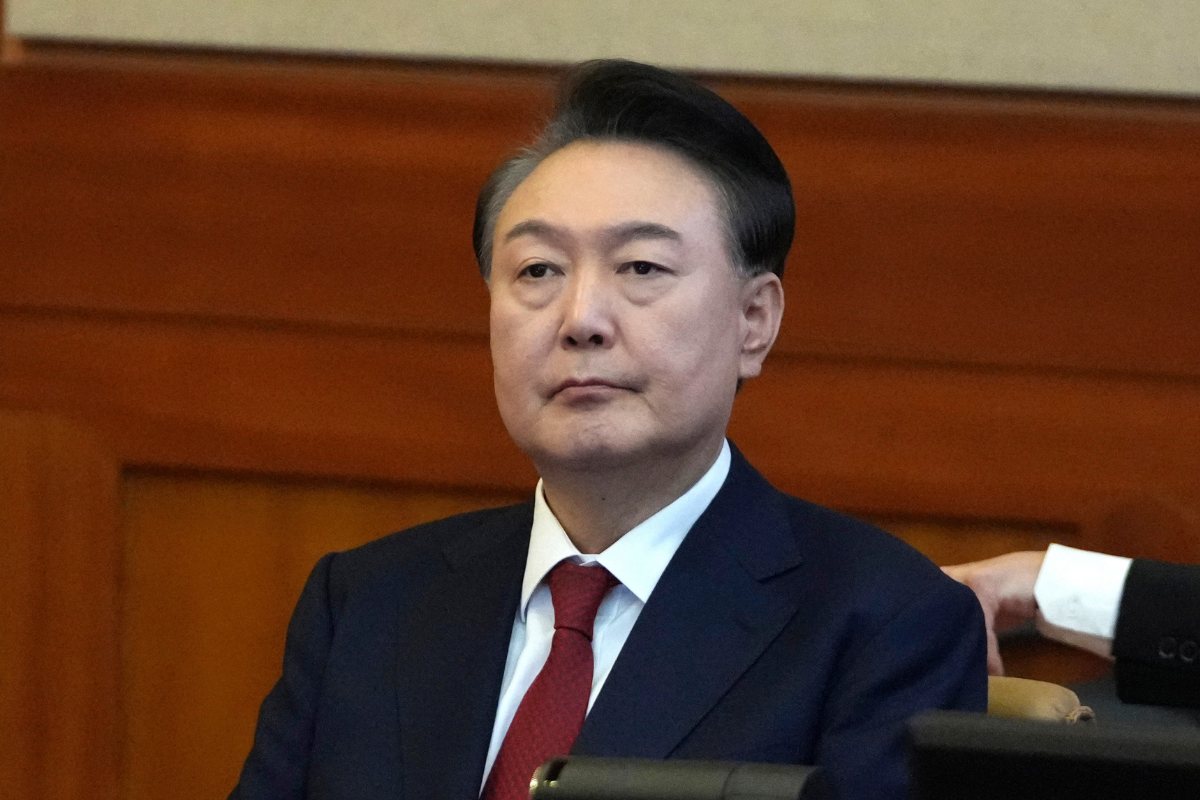
The ruling against the former first lady came three weeks before the same court is to deliver its verdict on her husband’s rebellion charges.
Prosecutors have called for the death penalty. However, South Korea has not executed anyone since 1997, after then-President Kim Dae-jung introduced a moratorium on executions in 1998.
In his final 90-minute statement to the court on the rebellion trial’s final hearing on Jan. 13, Yoon said it was within presidential powers to call for a state of emergency and that doing so cannot constitute an insurrection.
The former president said, “It was not a military dictatorship that suppresses citizens, but an effort to safeguard freedom and sovereignty, and revive the constitutional order.”
The Seoul Central District Court is expected to return a verdict on the rebellion charges on Feb. 19.
The Associated Press and Reuters contributed to this report.
 Friends Read Free
Copy
Facebook
Tweet
Friends Read Free
Copy
Facebook
Tweet