
The government said on Monday it will exempt thousands of businesses from paying green levies in a bid to grow the economy and increase the UK’s global competitiveness.
The new British Industrial Competitiveness Scheme will cut electricity costs by up to £40 per megawatt hour for over 7,000 electricity-intensive manufacturing companies, in major sectors such as aerospace, automotive, and chemicals.
This will cut costs by up to 25 percent, bringing them more closely in line with other major economies in Europe.
The government said these firms will be exempt from paying levies such as the Renewables Obligation and Feed-In Tariffs, to help “level the playing field and make them more internationally competitive.”
Some 500 of the most energy-intensive industries—such as steel, ceramics, and glass—will also benefit from higher discounts on their electricity charges. Currently, these businesses receive a 60 percent discount on charges, but from 2026 this will increase to 90 percent.
The plans form part of the Labour government’s Modern Industrial Strategy, which sets out measures to create skilled jobs, drive investment, and make the UK a more attractive place to do business.
Globally Competitive
Business and Trade Secretary Jonathan Reynolds said the strategy will attract billions of pounds of investment by making electricity prices more competitive.
Reynolds said that tackling energy costs and fixing the skills issue “has been the single biggest ask of us from businesses and the greatest challenge they’ve faced – this government has listened, and now we’re taking the bold action needed.”
The government says these reforms are compatible with its long-term clean power strategy.
Secretary of State for Energy Secretary Ed Miliband blamed a reliance on importing gas sold on “volatile international markets” for the high electricity costs for businesses.
He added that as a result, the government was doubling down on home-grown wind and nuclear energy “to bring down bills for households and businesses for good.”
Net Zero ‘Unaffordable’
The government says the schemes will be funded through reforms to the energy system and without raising household bills or taxes.
Net Zero Watch criticised the plans, saying that costs will be shuffled from one user to another.
“This latest wheeze will bring temporary relief for sectors favoured by the Secretary of State, but at the expense of others, who can ill afford it,” the organisation’s director, Andrew Montford, said in a June 23 statement.
“And in the medium term, bills will continue to rise for everyone. The country can’t afford this madness any longer.”
Andrew Bowie, the acting shadow secretary of state for energy, posted on social media platform X that the Labour government’s net zero plan for business is to “spend billions of pounds of taxpayers’ money on businesses’ energy bills to offset green levies to stop them going bust.”
“Or maybe just admit Net Zero by 2050 is unaffordable?” Bowie said.
The shadow minister’s criticism comes after the Conservatives dropped their commitment to hitting net zero emissions by 2050, with the party’s leader Kemi Badenoch saying in March that the target was impossible to achieve.
Industrial Strategy
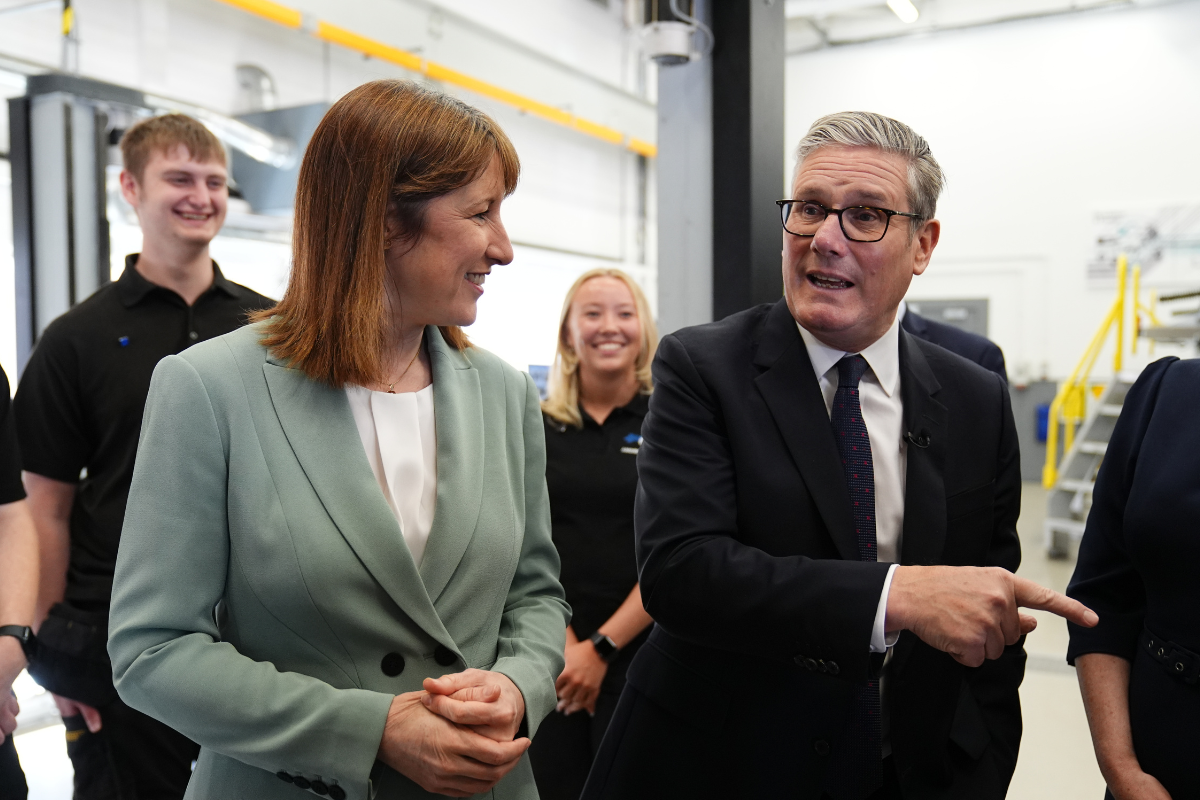
The changes were announced in conjunction with parts of Prime Minister Keir Starmer’s 10-year Modern Industrial Strategy.
The strategy includes plans to reduce the regulatory burden by cutting the administrative costs of red tape by 25 percent; raising research and development spending to £22.6 billion a year by 2029/30; and providing £1.2 billion of additional investment in skills training by 2028/29.
It focuses on eight sectors where the UK is already strong and has scope for faster growth.
Plans for advanced manufacturing, clean energy industries, creative industries, digital and technology, and professional and business services were released on June 23.
Detailed proposals for defence, financial services and the life sciences sector will be published later.
Advanced manufacturing, for example, will receive up to £4.3 billion in government funding, including up to £2.8 billion for research and development programmes over the next five years. Ministers say such investment–along with other measures, including the proposed cuts to green energy levies–could see annual business investment in the sector nearly double from £21 billion to £39 billion by 2035.
“Frontier manufacturing industries” in this sector will be prioritised under the strategy. These include the automotive, aerospace, and agri-tech industries.
The latest figures showed the UK’s economic output declined in April, with GDP falling by 0.3 percent from the previous month.
Starmer said that in an era of global economic instability, the industrial strategy “delivers the long term certainty and direction British businesses need to invest, innovate and create good jobs that put more money in people’s pockets.”
“Our message is clear, Britain is back and open for business,” he said.
 Friends Read Free
Copy
Facebook
Tweet
Friends Read Free
Copy
Facebook
Tweet