

Swiss voters on June 14 rejected a proposal to cap the country’s permanent resident population at 10 million people, preserving economic cooperation with the European Union.
Preliminary referendum results showed 54.79 percent of voters opposed the initiative, while 45.21 percent supported it.
The proposal, known as the “Sustainability Initiative,” was backed by the right-wing Swiss People’s Party (SVP) and sought to limit the permanent resident population to fewer than 10 million people by 2050.
The vote removes the immediate threat to Switzerland’s agreements with the European Union, including the free movement of people, which supporters of the initiative had sought to curb as immigration continued to drive population growth.
Swiss Justice Minister Beat Jans said the result showed voters favored stability and continued cooperation with Europe.
“The electorate has made it clear that it wants to continue the bilateral path with Europe and, in times of geopolitical and economic uncertainty, relies on stability and reliability,” he said during a June 14 press conference.
Immigration Debate
The initiative reflected growing concern among some Swiss voters that rapid population growth is straining housing, transport networks, public infrastructure, and social services.
At the end of 2025, Switzerland’s permanent resident population stood at 9.1 million people, including 2.53 million foreign nationals, according to the Federal Statistical Office. Data, published earlier this month, showed that Switzerland’s population growth reached 0.8 percent during 2025.
Government information accompanying the referendum noted that Switzerland’s population has increased by about 1.7 million people since the introduction of free movement with the EU in 2002, largely due to immigration.
The initiative proposed that if Switzerland’s population exceeded 9.5 million before 2050, the government would be required to adopt measures in areas including asylum and family reunification.
If the population had surpassed 10 million under the initiative, Switzerland would eventually have been required to terminate agreements that contributed to population growth, including its accord with the EU on the free movement of people.
The Swiss People’s Party said that population growth was increasing pressure on public services and public safety.
In posts published on X before the vote, the party said on June 8 that rising migration had contributed to crime and placed growing burdens on taxpayers. It also accused Jans of failing to adopt stronger border controls and immigration measures.
Jans rejected suggestions that the government had ignored public concerns.
“The Federal Council has always taken very seriously the concerns of the people about the cost of living, the cost of housing, about infrastructure,” Jans said when asked about the close result.
Jans acknowledged that many voters remain worried about the effects of immigration. He added that rapid immigration can create uncertainties and problems.
The minister later said housing had emerged as one of the most significant issues during the campaign and that the government would study post-referendum surveys to determine where additional action may be needed.
European Ties
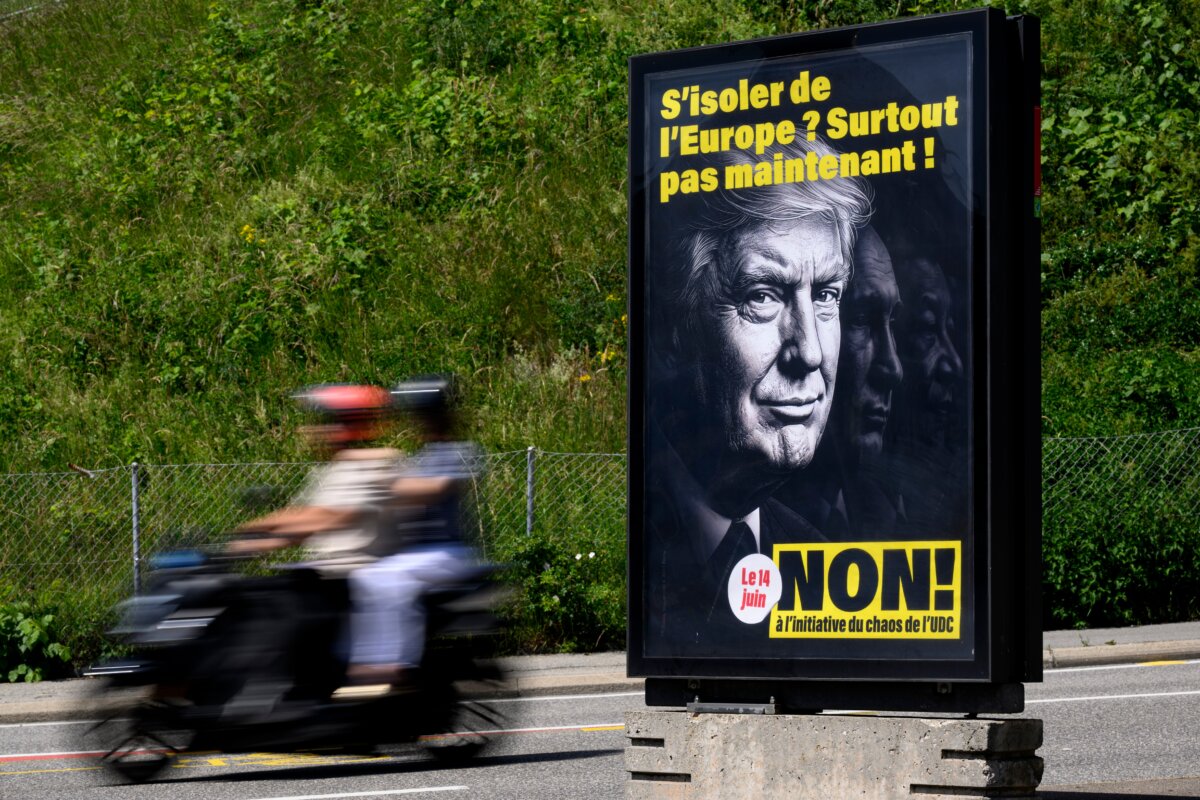
The “No” campaign framed the referendum as a choice between economic stability and isolation.
Campaigners argued that disrupting ties with the European Union would be risky after a turbulent 2025, when the Trump administration imposed steep tariffs on Swiss exports.
One campaign poster featured a smiling Trump and the slogan, “Isolate ourselves from Europe? Certainly not now!”
The referendum was closely watched in Brussels because of its potential impact on Switzerland’s relationship with the European Union.
The EU and Switzerland are linked through a network of agreements that give Switzerland access to key parts of the EU’s single market, including the free movement of people, mutual recognition of product standards, and access to transportation and public procurement markets.
“For the Federal Council, the result is also an important signal for the ongoing discussions concerning the bilateral agreements,” Jans said.
The government intends to continue working to stabilize and deepen relations with the EU, he added.
European Commission President Ursula von der Leyen welcomed the result in a June 14 post on X.
“The Swiss people have spoken,” von der Leyen wrote. “The EU and Switzerland share deep ties and a strong partnership. We will continue working together to modernise and deepen our cooperation, for the benefit of our citizens and businesses.”
 Friends Read Free
Copy
Facebook
Tweet
Friends Read Free
Copy
Facebook
Tweet