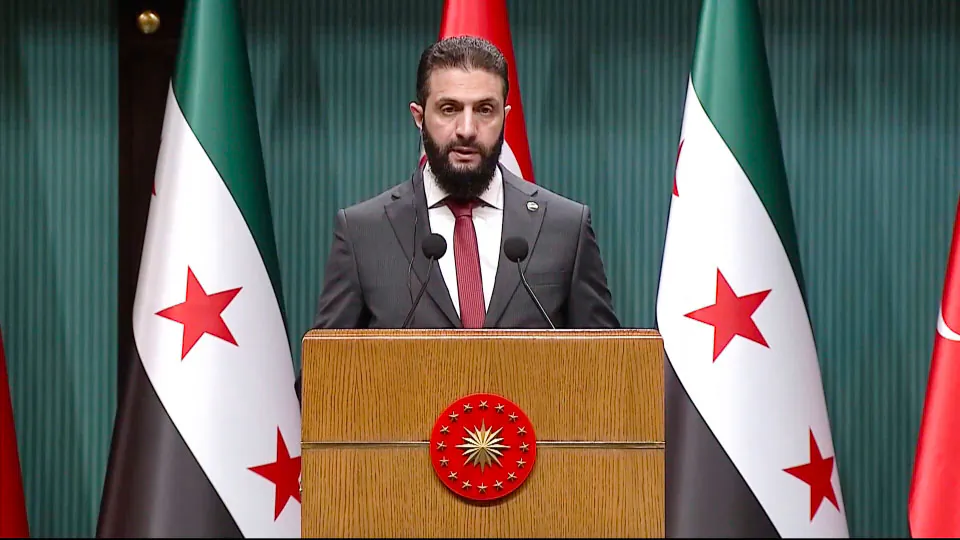

Syrian President Ahmed al-Sharaa arrived in New York City on Sept. 22 to attend a high-level meeting of the U.N. General Assembly, the state-run Syrian Arab News Agency (SANA) reported.
Al-Sharaa, who was named Syria’s interim president earlier in 2025, will be the first Syrian leader to take part in a General Assembly meeting since 1967.
He is expected to deliver an address to the assembly, the 80th high-level meeting of which is set to convene from Sept. 23 to Sept. 29.
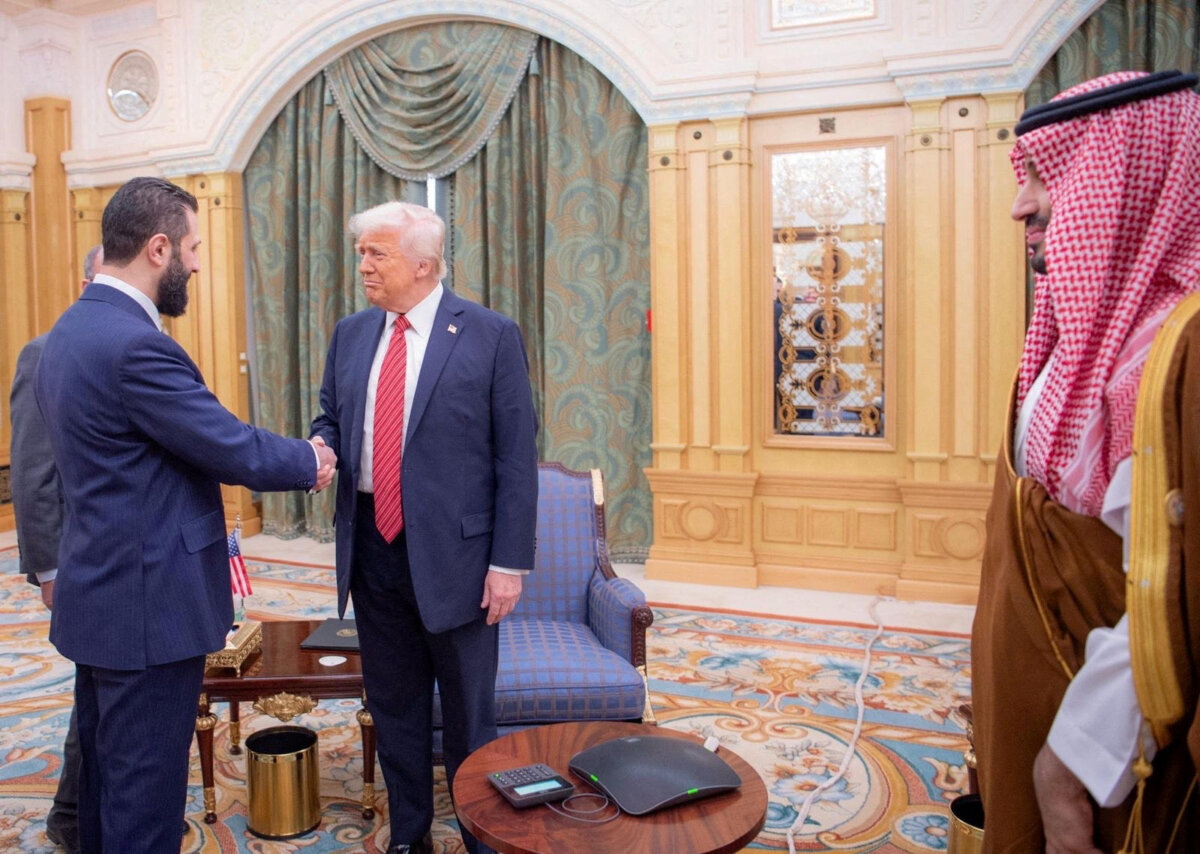
In May, al-Sharaa, a former leader of the al-Qaeda terrorist group, won recognition from U.S. President Donald Trump when the two leaders met in the Saudi capital, Riyadh.
Soon afterward, the White House lifted most U.S. sanctions imposed on Syria while voicing support for al-Sharaa’s efforts to stabilize the country after 14 years of conflict.
In a recent interview with CBS News, al-Sharaa hailed the move by Washington, saying Trump had taken “a big step towards Syria by lifting the sanctions with a quick, courageous and historic decision.”
The most stringent U.S. sanctions on Syria, imposed by Congress in 2019, remain in place and can only be lifted by a congressional vote.
When asked whether he hoped to meet Trump during his current visit to the United States, al-Sharaa replied in the affirmative.
“We need to discuss a great many issues and mutual interests,” he said in the interview, portions of which were broadcast on Sept. 21. “We must restore relations in a good and direct way.”
Along with being Syria’s interim president, al-Sharaa leads Hayat Tahrir al-Sham (HTS), a group with previous ties to both al-Qaeda and the ISIS terrorist group.
HTS was formerly known as the al-Nusra Front. On May 16, 2013, the U.S. State Department designated al-Sharaa, formerly known as Abu Mohammed al-Golani, as a “specially designated global terrorist” and offered $10 million for his capture.
The State Department’s Rewards for Justice website states that under al-Sharaa’s leadership “[the al-Nusra Front] has carried out multiple terrorist attacks throughout Syria, often targeting civilians.”
The Biden administration retracted the counterterror bounty against al-Sharaa at the end of 2024.
In December 2024, HTS spearheaded a Turkey-backed rebel offensive that succeeded in toppling the long-ruling regime of former Syrian President Bashar al-Assad.
In January, leaders aligned with HTS appointed al-Sharaa as Syria’s interim president for an unspecified transitional phase.
Since then, al-Sharaa has visited, and been endorsed by, several regional states, including Turkey, Qatar, Saudi Arabia, Bahrain, and the United Arab Emirates.
1st Post-Assad Poll Next Month
As al-Sharaa set out for New York City, SANA reported that Syria would hold its first post-Assad parliamentary poll “across all electoral districts” on Oct. 5.
According to the news agency, 70 of parliament’s 210 members will be directly appointed by the president.
After election results are “finalized with a presidential decree,” the newly elected People’s Assembly will hold its first session, SANA reported.
Parliamentary polls were initially slated to be held in mid-September. They were postponed because of ongoing sectarian unrest in southern Syria and political wrangling in the country’s northeast, which is largely controlled by the Kurdish-led—and U.S.-backed—Syrian Democratic Forces.
In February, al-Sharaa, who has pledged to protect Syria’s ethnic and religious minorities, said it could take up to five years before the country is ready to hold presidential elections.
The new parliament will be tasked with passing legislation aimed at overhauling decades of state-controlled economic policies and ratifying treaties that could reshape Syria’s foreign relations.
Last week, al-Sharaa said ongoing talks with neighboring Israel aimed at reaching a security deal could yield results in days.
A U.N.-backed agreement is a “necessity,” he said, while asserting that any such deal must ensure respect for Syria’s airspace and territorial integrity.
Syria hopes to reach a deal that will end Israeli military strikes on its territory and secure the withdrawal of Israeli troops who have pushed into the country’s south since the collapse of the Assad regime.
On Sept. 21, Israeli Prime Minister Benjamin Netanyahu said progress had been made toward a deal, but warned that a final agreement was far from imminent.
“We are holding talks with the Syrians,” he said at a Cabinet meeting. “There is some progress, but there was still a ways to go.”
Reuters contributed to this report.
 Friends Read Free
Copy
Facebook
Tweet
Friends Read Free
Copy
Facebook
Tweet