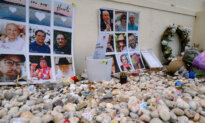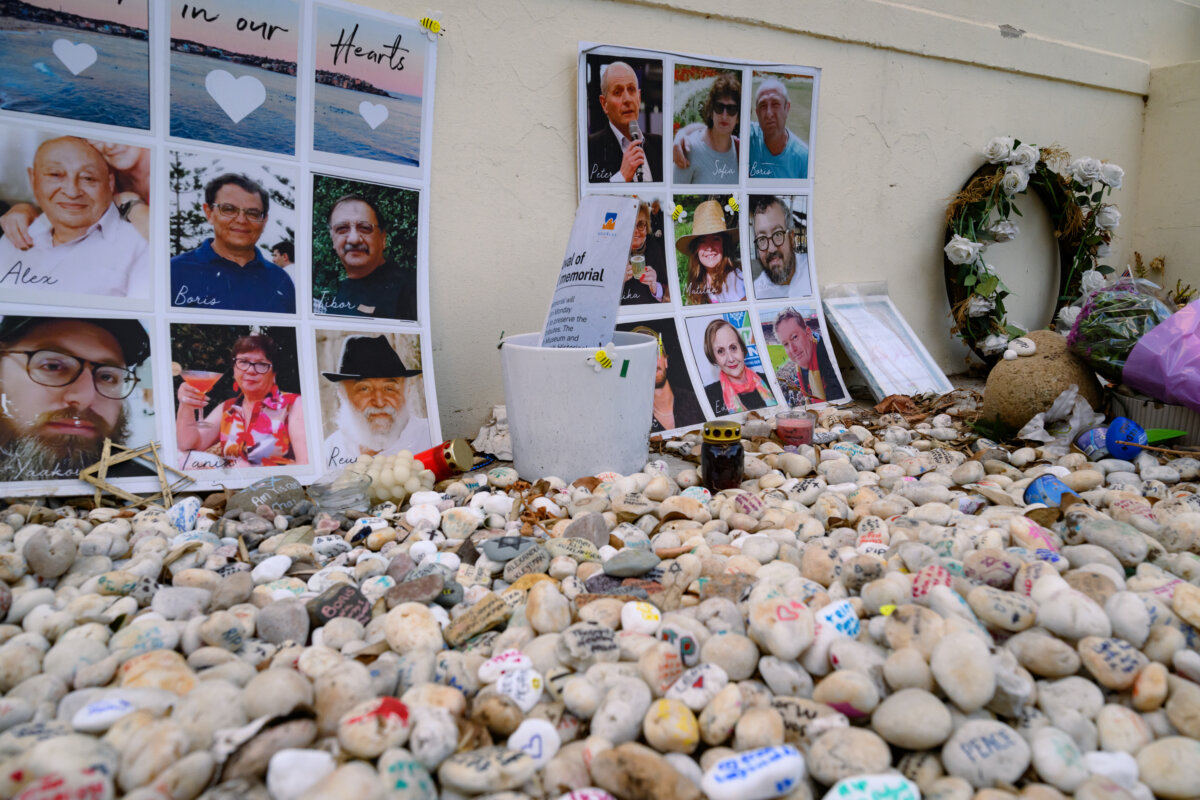
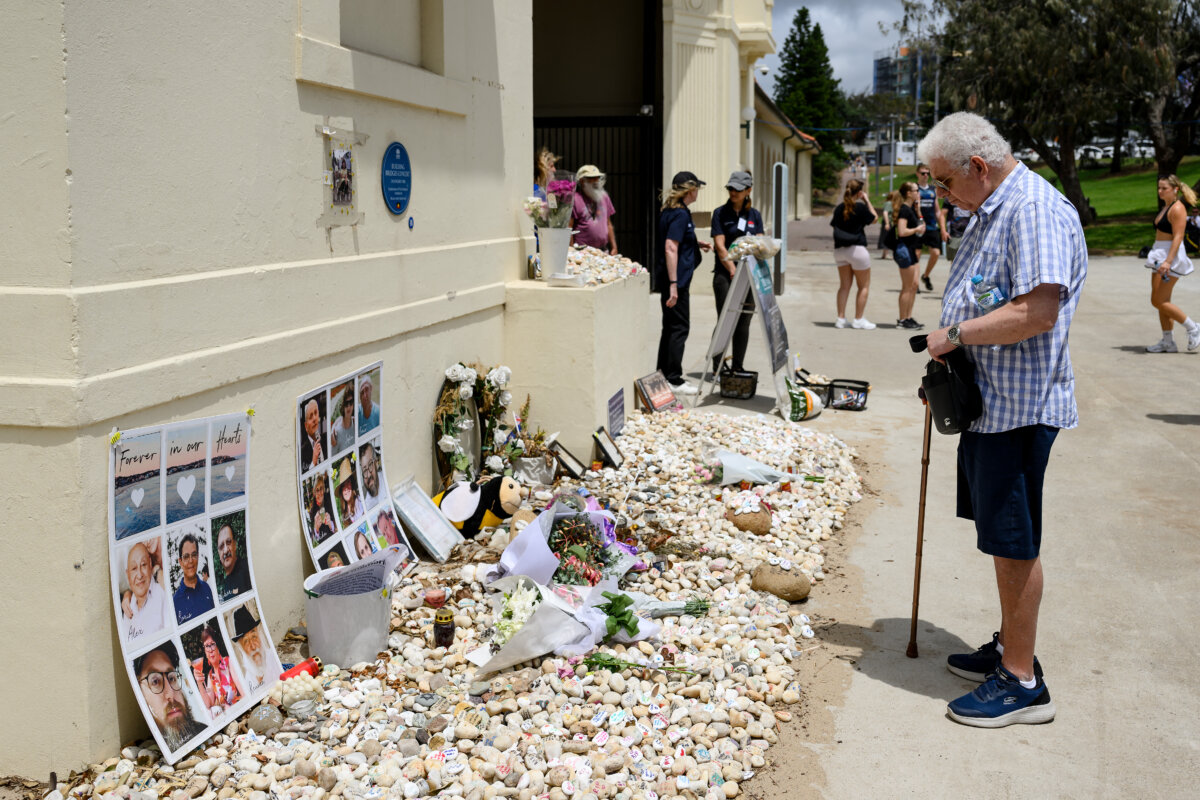
Two months after Australia’s worst terror attack, the Royal Commission on Anti-Semitism and Social Cohesion has held its first public hearing in Sydney, marking the formal start to the inquiry into social cohesion.
The Commission, led by former High Court Justice Virginia Bell, is examining anti-Semitism in Australian society and the broader challenge of rebuilding social cohesion in the wake of the Bondi attack that killed 15 people.
In her opening statement on Feb. 24, Justice Bell acknowledged the scale of the task ahead.
“I trust everyone will appreciate why the focus of this Commission will be on tackling anti-Semitism as a starting point in strengthening our bonds of social cohesion,” she said.
Bell confirmed the inquiry would adopt the International Holocaust Remembrance Alliance’s working definition of anti-Semitism for the proceedings due to its “uncontroversial” nature.
“It provides [that] anti-Semitism is a certain perception of Jews which may be expressed as a hatred towards Jews, and includes anti-Semitism directed toward Jewish or non Jewish individuals, their property, and towards Jewish community institutions and religious facilities,” Bell said.
The commissioner noted that some examples attached to the definition had sparked debate but clarified that “criticism of the policies that may be pursued by the government of Israel from time to time is not of itself anti-Semitic.”
The Commission is required to deliver an interim report by April and a final report by the first anniversary of the attacks which is Dec. 14, 2026.
The inquiry was announced by Prime Minister Anthony Albanese on Jan. 9, after a month of pressure in the wake of the mass shooting at a Hanukkah event on Sydney’s Bondi Beach.
Bell also made reference to broader discrimination in Australian society.
“I’m mindful that while anti-Semitism may be the oldest religious and ethnic prejudice, other religions and ethnicities are also subject to prejudice in Australia,” she said.
“I expect that social cohesion will be advanced by measures that address discrimination against religious faiths, ethnicities and cultures generally.”
Public Submissions Invited
In addition, Bell urged Jewish Australians—particularly students and community members—to share their experiences.
“I’m interested in hearing from Jewish Australians who’ve experienced anti-Semitism, whether at school or at university or in the workplace or elsewhere,” she said.
The commissioner also noted that making a submission would not oblige anyone to appear publicly.
“But I am confident that there will be members of the Jewish community who are willing to give evidence in public about their experiences of anti-Semitism, and that their accounts may be illustrative of wider patterns,” she said.
“In this way, the Commission will seek to assess the impact of anti-Semitism on the daily life of Jewish Australians, and this is an important aspect of the first term of reference.”
Senior counsel assisting the Commission, Richard Lancaster also encouraged members of the public to make submissions through the commission’s website.
Submissions highlighting urgent matters must be lodged by Mar. 13 to be considered for the interim report. Other submissions will be accepted throughout April and May.
Scope of Investigation
While the inquiry will investigates matters related to anti-Semitism in Australia and the Bondi attack, Lancaster noted that the Commission would avoid examining issues that could prejudice future criminal proceedings against the alleged attacker Naveed Akram, who has not yet entered a plea.
“This will inevitably reduce the scope of the Commission’s public hearings and the Commission’s public reports on some issues, but it is necessary to preserve the proper administration of criminal justice,” he said.
The Commission will collect statements and oral evidence from witnesses and experts. No evidence or testimony was heard on the first day of the hearing.
Meanwhile, One Nation’s Pauline Hanson initially called on Bell to address the issue of “radical Islam.”
“I hope the Commissioner addresses this elephant in the room today. As I’ve said, Australians can’t be safe in their own country when radical Islam is allowed to fester unchecked, yet Australian majority views on immigration have been consistently ignored by Labor and the Coalition,” she said on X.
 Friends Read Free
Copy
Facebook
Tweet
Friends Read Free
Copy
Facebook
Tweet