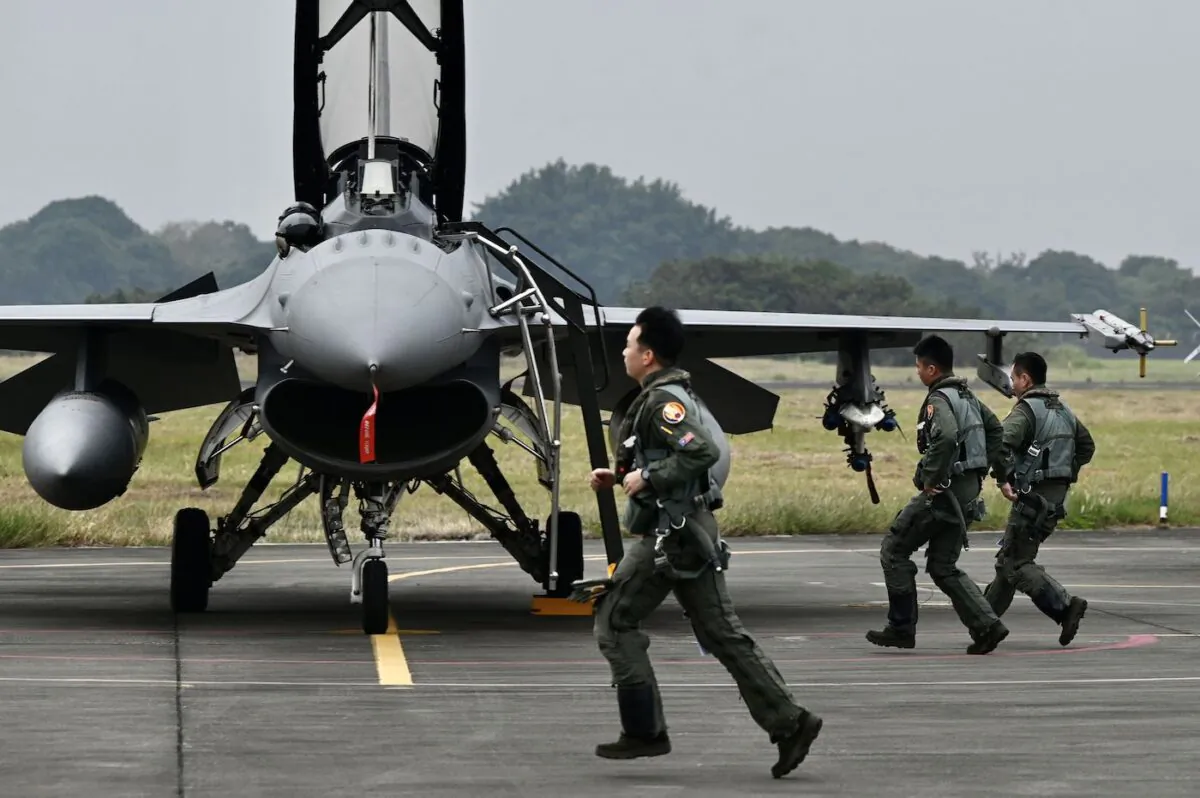
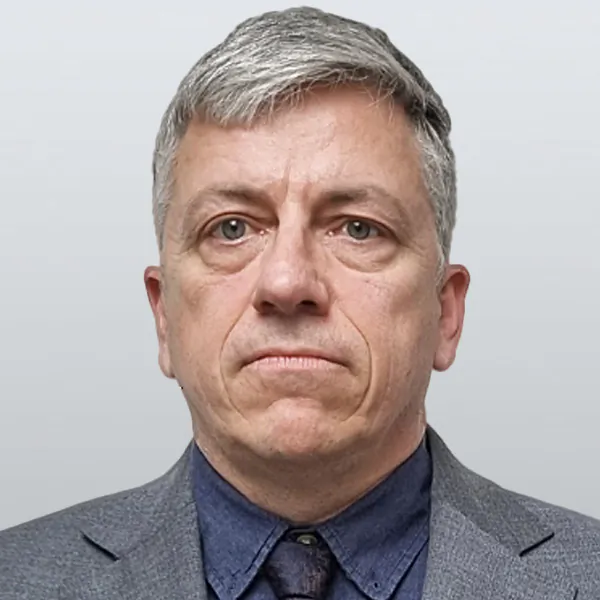
Taiwanese Defense Minister Wellington Koo said on May 19 that he was “cautiously optimistic” about an arms sales deal with the United States that is awaiting U.S. President Donald Trump’s approval.
Koo said U.S. weapons sales to Taiwan were an important “counterbalancing force” for maintaining peace and stability in the Taiwan Strait, adding that Taipei is still talking to Washington about the weapons deal.
In December, the U.S. State Department approved an $11 billion arms package, the largest U.S. weapons package ever proposed for the island, which is formally known as the Republic of China.
Trump said on May 15 that Taiwan was a major topic of discussion during his summit with Chinese leader Xi Jinping and added that he had not yet decided whether to proceed with the U.S. arms package.
“On Taiwan, [Xi] does not want to see a fight for independence because that would be a very strong confrontation,” Trump said.
Taiwanese President Lai Ching‑te said on May 17 that Taiwan has no intention to provoke or escalate conflict but will not be pressured by the Chinese Communist Party (CCP) into giving up its “national sovereignty and dignity, and democratic and free way of life.”
The list of weapons for sale includes High Mobility Artillery Rocket Systems (HIMARS) valued at $4.05 billion, self-propelled howitzers valued at $4.03 billion, and hundreds of Altius loitering munition drones worth $1.1 billion.
China ‘Repeatedly Provoking, Creating Incidents’
Addressing reporters at the Taiwanese parliament, Koo said it is clear that China is “repeatedly provoking, creating incidents and undermining the peaceful and stable status quo in the Taiwan Strait.”
“Therefore, under these circumstances, we believe that maintaining this arms-sales channel is in line with U.S. interests,” he added.
Koo said the United States has maintained peace and stability in the Taiwan Strait region through arms sales channels, adding that “this was established under the Taiwan Relations Act.”
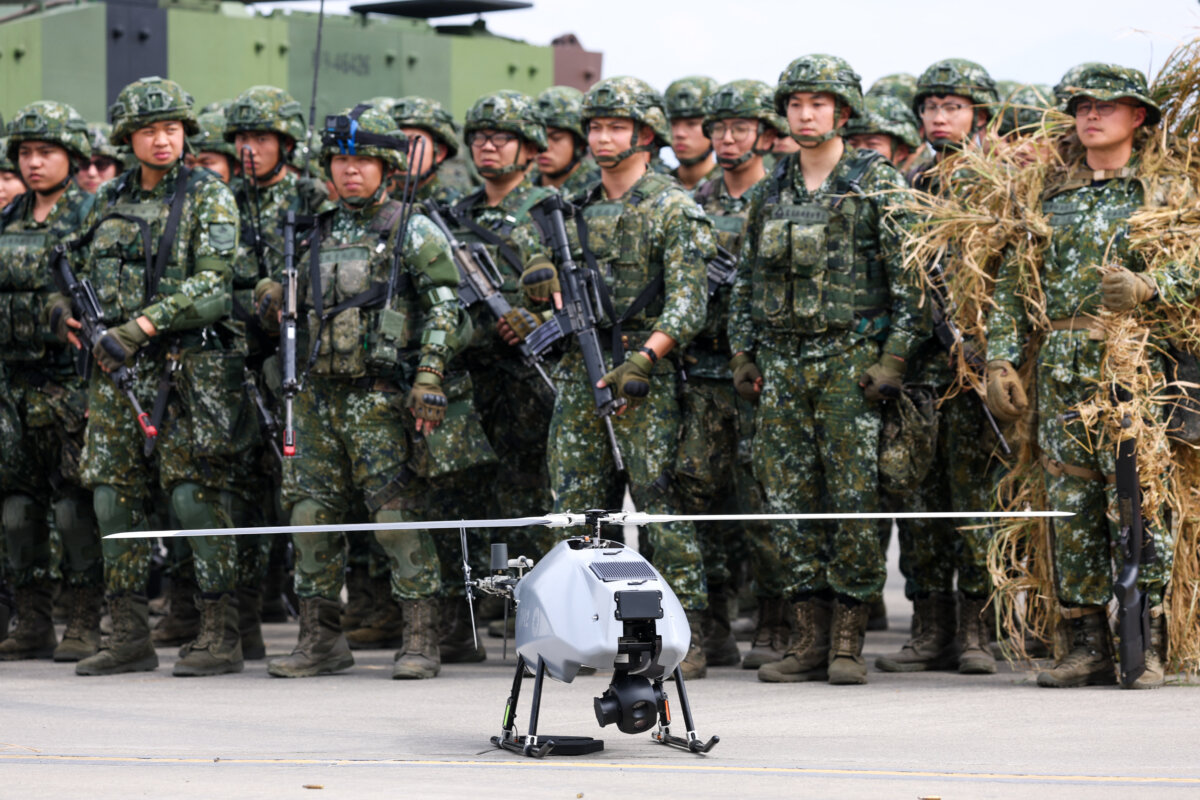
The act, passed in 1979, “declares that in furtherance of the principle of maintaining peace and stability in the Western Pacific area, the United States shall make available to Taiwan such defense articles and defense services in such quantity as may be necessary to enable Taiwan to maintain a sufficient self-defense capacity as determined by the President and the Congress.”
Taiwan has functioned as a de facto separate nation from the communist People’s Republic of China on the mainland since 1949, when Mao Zedong’s army defeated the forces of the U.S.-backed Kuomintang (KMT), led by Chiang Kai-shek.
The CCP in Beijing has maintained what it calls a “One China” policy. In recent years, Xi has led an increasingly aggressive line toward Taiwan and has indicated he would invade if the island ever declared independence.
“Taiwan independence is the chief culprit in undermining peace in the Taiwan Strait – we will absolutely not tolerate or condone it,” Xi said on April 10.
China’s navy said on May 19 that a carrier task group, led by aircraft carrier Liaoning, had been sent to the Western Pacific.
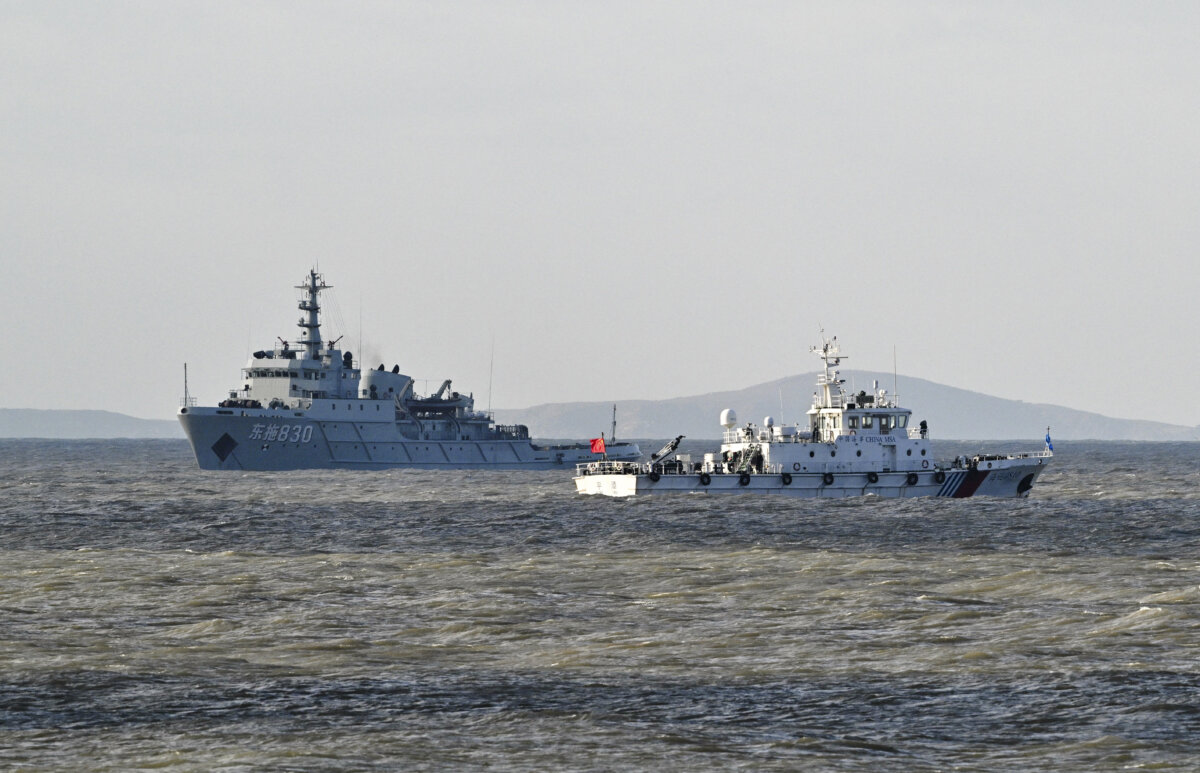
In a statement, China’s navy said the carrier group would “conduct a series of training tasks, including far-sea tactical flight operations, live-fire shooting, support and cover maneuvers, and comprehensive rescue.”
It added that this was routine training, designed “to enhance the forces’ capacity to fulfill their missions,” and that it complied with international law and common practice.
Source of Regional ‘Instability’
Taiwanese Premier Cho Jung-tai said on May 19 that the Chinese military’s activities were the “greatest source of regional unease and instability.”
“The People’s Republic of China continues to conduct military exercises of various scales and types in the Taiwan Strait region, the Indo-Pacific region, the South China Sea, and even around Japan, affecting navigational safety,” Cho said.
The United States has maintained a policy of strategic ambiguity toward Taiwan while remaining the island’s most important security partner and largest supplier of defensive weapons.
In January, Trump said he did not think Xi would take any action against Taiwan during his presidency, which ends in 2029.
“He may do it after we have a different president, but I don’t think he’s going to do it with me as president,” Trump said.
The United States recognized the Republic of China as the country’s rightful government until 1979, when U.S. President Jimmy Carter formally recognized the regime in Beijing.
The KMT ruled Taiwan until 2000, when it lost an election to the Democratic Progressive Party (DPP), which has often pushed for independence. Lai represents the DPP.
Xi has described Lai, who was elected in 2022, as a “separatist” and refused to meet with him.
Last month, the leader of the opposition KMT, Cheng Li-wun, met Xi in Beijing.
Xi told Cheng that the “rejuvenation of the Chinese nation will not change.” Similar wording was used in Beijing’s 2022 white paper on Taiwan, which framed the island’s annexation as a cornerstone of that vision.
Reuters contributed to this report.
 Friends Read Free
Copy
Facebook
Tweet
Friends Read Free
Copy
Facebook
Tweet