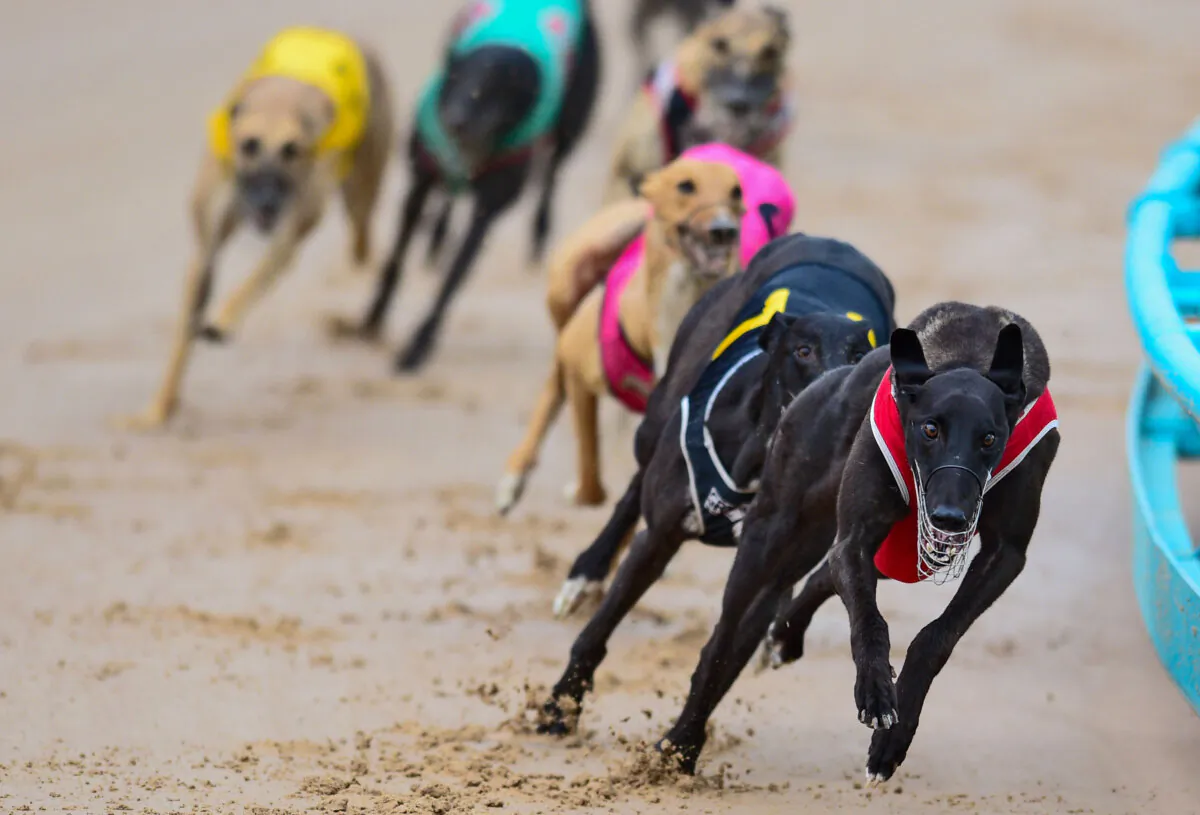

Tasmania will ban greyhound racing by mid-2029, making it the second state after the ACT to end the sport.
Premier Jeremy Rockliff said the move would coincide with the expiry of the government’s current funding agreement with the industry.
“It’s time to draw a line in the sand and ensure an orderly exit from greyhound racing in Tasmania,” Rockliff told reporters on Aug. 10.
While conceding the decision would be “extremely disappointing” for many, he said it was clear the sport no longer matched community expectations.
The announcement follows the death of Raider’s Guide, Tasmania’s 2024 Greyhound of the Year, who was euthanised in July after breaking his neck during a Launceston race.
Coalition for the Protection of Greyhounds President Amy MacMahon welcomed the decision but urged a phased approach to ensure dogs are ethically rehomed and workers supported.
“I think this sends a signal to other states and territories that the tide is turning against greyhound racing,” she said.
Rockliff Moves to Secure Minority Rule
The move comes as Rockliff’s minority Liberal government seeks to shore up parliamentary support before Parliament returns on Aug. 19. After the July 19 elections, the Liberal Party ended four seats short of a majority.
The Greens and Independent Kristie Johnston have long called for a ban, with Johnston saying the decision was an example of “what power sharing looks like in parliament.”
Labor leader Dean Winter criticised the announcement as a “political bid to cling onto power” and said decisions of such magnitude should follow due process.
Taxpayer Millions Keep Industry Alive
Independent economist Saul Eslake says Tasmania’s greyhound industry is in “terminal decline” and survives only through millions in annual taxpayer subsidies.
His May 2025 report found the industry has received $74.6 million in public funding over the past 15 years, while contributing 0.2 percent, about $81 million, to the state’s economy and employment.
Under a 20-year funding deal signed in 2009, the sector receives about $12.70 per person annually—more than double the national average.
Subsidy growth has also outpaced other spending priorities, rising 5.6 percent per year compared with 4.1 percent for education and 5.2 percent for general government services.
Public opposition is mounting, with an EMRS poll finding that most Tasmanians oppose greyhound racing.
In December 2024, 38 veterinarians urged the state to withdraw subsidies by 2029. Ten animal welfare groups have since united to push for a funding phase-out when the current deed ends.
Eslake says subsidies are hard to justify during a housing and cost-of-living crisis.
“There does not appear to be any compelling reason, beyond inertia, for Tasmanian greyhound racing to continue to receive generous government subsidies,” he said.
Scrutiny of greyhound racing is increasing across Australia.
South Australia has put the industry on notice after a damning report in 2023, while New South Wales awaits the findings of the Drake inquiry.
One of NSW’s most iconic venues, Dapto Dogs, is set to close next year after nearly 90 years of racing.
AAP contributed to this article.
 Friends Read Free
Copy
Facebook
Tweet
Friends Read Free
Copy
Facebook
Tweet