
Ukraine hopes that a string of fortified cities in northwestern Donetsk—dubbed the “fortress belt”—will be able to stop any further Russian advance.
That belt is also an area that Russia might demand as part of a peace deal.
Among Russia’s key demands is recognition of its sovereignty over four regions, including Donetsk and Luhansk, which it claims to have annexed in 2022.
“The belt is basically the last 25 percent of Donetsk Province still under Ukrainian control,” UK defense analyst Tim Ripley told The Epoch Times.
“It’s the one thing that keeps the Ukrainians fighting, because once the Russians capture the rest of the province, they can declare the war over. They will have achieved [Russian President Vladimir] Putin’s war aims.”
Extending 31 miles north to south, parallel to the H20 highway, the fortress belt links the Donbas cities of Slovyansk, Kramatorsk, Druzhkivka, and Kostyantynivka.
“Together, these cities form Ukraine’s administrative and logistical nerve center in Donbas,” Abdullah Agar, a Turkish military expert and former special forces officer, told The Epoch Times.
“This line is a crucial logistics network that contains dense road and rail connections. Russia can’t advance further into northwestern Donetsk without breaching it.”
According to Agar, the fortress belt is more than just a fortified defense line.
“It’s a psychological, political, and diplomatic source of morale and legitimacy,” he said. “The longer it remains intact, the more Western support [for Ukraine] increases.
“It’s also important in terms of perception. It signals to the world—and domestic audiences—that Ukraine is still standing, still resisting.”
Heavily Fortified
In a recent report, the Washington-based Institute for the Study of War (ISW) noted that Kyiv has spent the past 11 years “pouring time, money, and effort into reinforcing the fortress belt and establishing significant defense industrial and defensive infrastructure in and around these cities.”
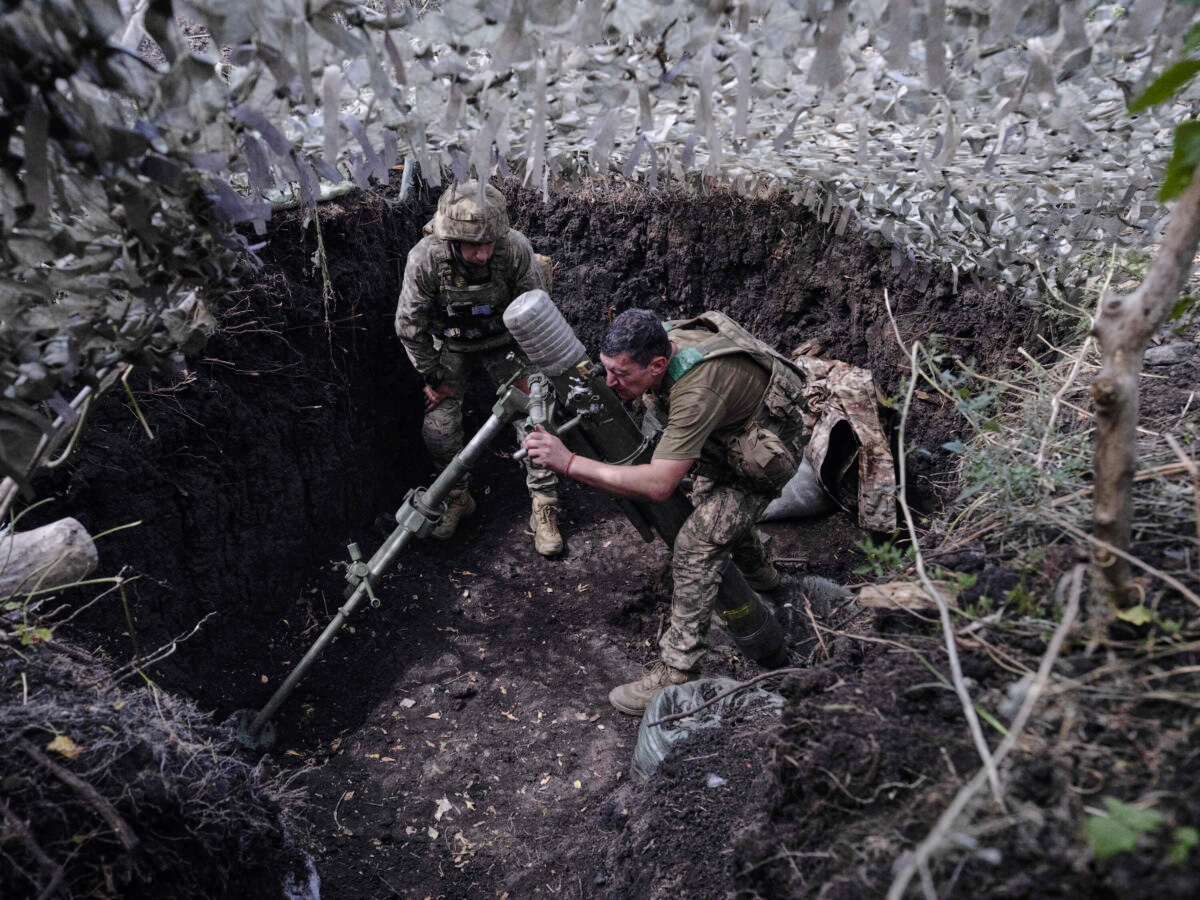
Agar said Kyiv has been fortifying the belt since 2014, furnishing it with a wide range of defenses, including trenches, minefields, anti-tank “dragon’s teeth,” foxholes, concrete fortifications, and underground command centers.
“Apartment blocks and the area’s industrial landscape—which includes cement factories, mines, and metallurgical facilities—provide additional fortifications,” he said.
The belt also bristles with offensive weaponry such as artillery, drones, and anti-tank weapons, Agar said, “all of which provide a networked fire advantage.”
“And there are secondary defense lines in the rear,” he said. “So even if Russian forces breach the first line, they will have to engage in costly urban warfare.”
But while all of these factors give the Ukrainian military certain advantages, Agar said, “these advantages are largely offset by inferior firepower and a lack of air superiority.”
Ripley noted that Ukraine is facing a well-supplied enemy force that enjoys vastly superior troop numbers.
“It’s not as if the Ukrainians have a rock-solid reserve force holding these positions,” he said. “They’re holding it together with whatever they can put in the line, which is becoming increasingly stretched.”
Fortifications—no matter how strong—are “only as good as the number of troops you’ve got to man them, and how much artillery you’ve got to cover the front,” Ripley said.
Buying Time
In 2022, Russia invaded four provinces of eastern Ukraine, including Donetsk and neighboring Luhansk, which together make up the industry-rich Donbas region.
Later in the same year, Moscow announced that it had annexed the four provinces, a move that Kyiv and most Western capitals view as illegal and refuse to recognize.
As it currently stands, Russian forces control virtually all of Luhansk and about 75 percent of Donetsk, including the latter province’s regional capital.
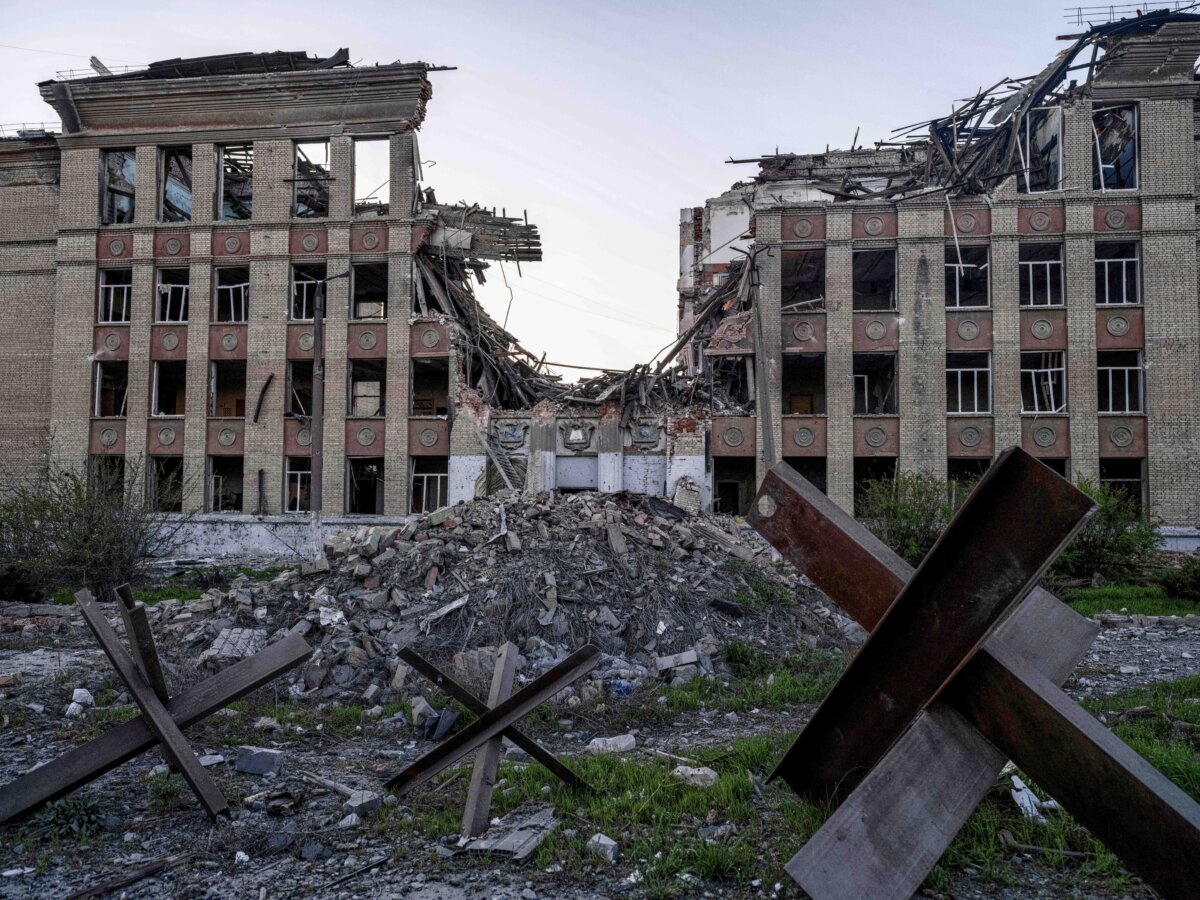
To capture the remaining 25 percent of Donetsk—roughly 2,550 square miles—it will first have to overcome Kyiv’s fortress belt. According to the ISW, Russian forces “have no means of rapidly enveloping or penetrating” the fortress belt.
Agar said most Western assessments emphasize that the belt is Ukraine’s “best line of defense” and that any direct assault on it “will inflict heavy casualties” on Russia, an assertion with which he largely agrees.
“The fortress belt slows the Russian advance and prolongs its timeline, thereby increasing its costs and risks,” he said.
“All points along the belt support one another, which multiplies its defensive capacity. So when Russia attacks the belt directly, it must fight at multiple points at once—not along a single front.
“This increases the strain on the Russian army. It also serves to buy time for Ukraine—time to resupply, rotate troops, and drum up international support.”
‘Imminent Threat’
In its recent report, the ISW stated that Russian forces are “still attempting to envelop the fortress belt from the southwest and are engaged in an effort to seize it that would likely take several years to complete.”
Agar said he believes that this prediction is “not implausible” but that he questions the metrics on which it is based, given recent Russian territorial gains in both Donetsk and the neighboring Dnipropetrovsk Province.
“If Russia puts pressure on Dnipropetrovsk, Ukraine may have to redeploy reserves from Donetsk, weakening the fortress belt,” he said. “Russia is pressuring two fronts at once, hitting the Donetsk belt and the Dnipro line simultaneously.
“It is employing attritional tactics. If Ukraine’s manpower and ammunition decline further, the ‘several years’ timeframe [posited by the ISW] could shorten dramatically.”
Ripley also questioned the claim that Kyiv’s embattled fortress belt would be able to hold out for several more years.
“It all depends on the troops they’ve got there now remaining at their current strength, with their current amount of ammunition and equipment,” he said. “Once those forces drop and start to suffer attrition, their ability to hold that position drops dramatically.
“They’ve already suffered attrition and have had to retreat because they haven’t got enough troops to hold the line to avoid being encircled.
“And these cities [in the fortress belt] will suffer the same fate if the current rates of attrition and losses continue.”
When asked his opinion on how long the fortress belt would hold out barring unforeseen circumstances, Ripley said: “I would give them a year at maximum.
“By the end of the year, all those cities and towns will have fallen or be under imminent threat of falling.
“We can see the rate of the [Russian] advance over the past summer and spring. If you extrapolate that over the next six months, the whole of Donetsk is gone.”
 Friends Read Free
Copy
Facebook
Tweet
Friends Read Free
Copy
Facebook
Tweet