
As the federal government seeks to amend the Citizenship Act, Conservative MPs have made an unsuccessful attempt to limit birthright citizenship, saying a decade of “misguided” policy has broken the consensus on immigration.
The House of Commons is currently reviewing Bill C-3, which aims, among other things, to ensure citizenship by descent is granted to anyone born outside Canada to a parent with citizenship. This would also extend after the first generation if the parent had a “substantial connection” to Canada before the child’s birth, defined as having spent 1,095 cumulative days in Canada.
The bill comes in response to an Ontario Superior Court ruling in 2023 that said imposing a first-generation limit on citizenship for many people, further to legislative changes made by the Stephen Harper government, is unconstitutional.
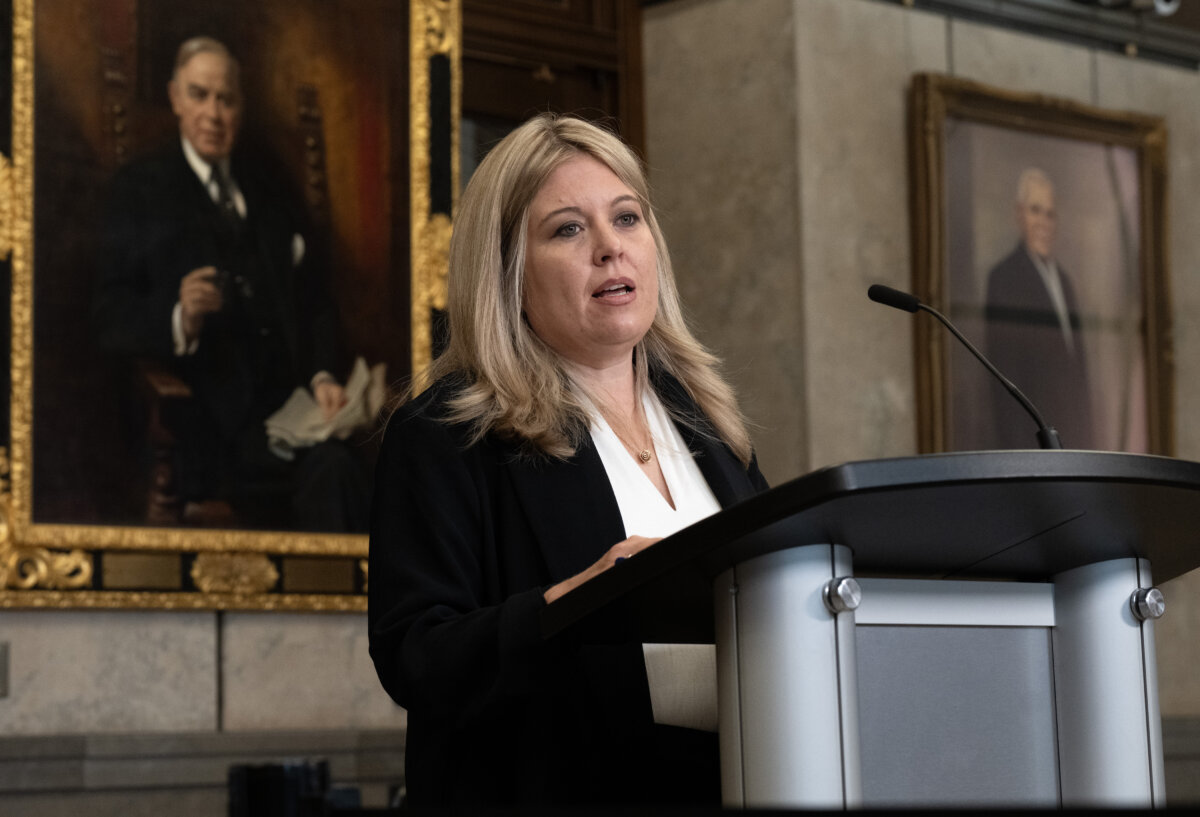
During a clause-by-clause review of Bill C-3 in the Commons immigration committee on Oct. 7, Tory MP Michelle Rempel Garner tabled an amendment seeking to remove the automatic granting of citizenship to individuals born in Canada.
More specifically, her amendment said citizenship would not be automatically granted if a person at the time of birth doesn’t have a parent who is a citizen, a permanent resident, or a bona fide refugee.
Rempel Garner said there’s an increased problem of birth tourism currently, as a large segment of the Canadian population resides in Canada on temporary visas. Birth tourism, the practice of travelling to another country to give birth, has been steadily on the rise in Canada in recent years, save for a hiatus during the COVID-19 period. Rempel Garner, who serves as immigration critic, said levels are 590 percent higher today than there were when Harper left office.
“Without changes to the current unrestricted system of birthright citizenship, as well as the federal government’s relatively porous border policies, Canada risks inviting further organized birth tourism and immigration fraud, as well as further clogging an overwhelmed processing and appeals pipeline,” Rempel Garner told the committee.
The statute granting citizenship at birth has been in place since 1946, but Rempel Garner said high levels of immigration under the Liberal government over the past decade of “misguided” policies warrant a change.
“The government has, through a post-nationalist and large-scale or mass immigration policy, brought into question the intrinsic value of Canadian citizenship, and without immediate reversal, this philosophy risks permanently breaking Canada’s peaceful pluralism and long-standing consensus for immigration,” she said.
There was little debate on Rempel-Garner’s motion, with Liberal and Bloc Québécois MPs signalling they would vote against it. The motion was defeated 5-4, with only Tories supporting it.
“This is a principle that we have to keep in our society, in Quebec and Canada, and unfortunately, I see a Trumpian idea in this Conservative motion,” Bloc MP Alexis Brunelle-Duceppe told the committee.
Brunelle-Duceppe’s comment about a “Trumpian” idea refers to U.S. President Donald Trump’s policy to curb birthright citizenship. The United States and Canada are the only G7 countries to grant unconditional citizenship to individuals born within their jurisdiction.
Trump signed an executive order shortly after entering office to end the practice, calling U.S. citizenship a “priceless and profound gift.” Trump was elected on a pledge to severely curb illegal immigration.
The move has been challenged in courts and after losing two appeals, the Trump administration is hoping the Supreme Court will side with it.
Immigration Minister Lena Metlege Diab declined to comment on Rempel-Garner’s motion during scrum with reporters on Oct. 8 in Ottawa. “I’m looking forward to C-3 advancing through the House,” she said.
Meanwhile her colleague Justice Minister Sean Fraser said birthright citizenship should be maintained. “I think when you start to pick and choose who amongst Canadians gets the full benefits of citizenship, you obviously enter into a very troublesome conversation,” he said.
Other Amendments Pass
Rempel-Garner’s motion on curbing birthright citizenship didn’t pass at committee, but Tories successfully passed other amendments to Bill C-3. Language added to the bill would impose similar requirements to individuals receiving citizenship under C-3 as other prospective immigration applicants in matters of language, knowledge of Canadian history, and security checks.
Another amendment was passed so that the “substantial connection” to Canada required for parents to pass down citizenship, established as having spent 1,095 days in Canada, would have to take place within five consecutive years rather than be cumulative over an unspecified timeframe.
The immigration committee will table a report with its recommendations in the House this week. After the committee review stage, the bill will go back to the House for third reading.
Bill C-3 is being prioritized given the Ontario Superior Court’s decision of 2023 on citizenship by descent suspended its declaration about the unconstitutionality of the law until Nov. 20, 2025. This would create an automatic number of new citizens without tighter conditions.
This suspension has given Ottawa time to come up with new legislation to address the issue. A previous attempt at addressing it with similar measures, Bill C-71, lapsed when Parliament was prorogued in January.
The Parliamentary Budget Officer had reviewed Bill C-71 and projected it would affect 115,000 people.
“Why would the Liberal government create a new system with a potentially limitless chain of migration? This is deeply concerning,” Tory MP Dan Mazier said of those numbers during House debates on the bill on Sept. 19.
Conservatives were the only party to vote against the bill at second reading in the Commons on Sept. 22. The Tories have expressed support for some aspects of the bill, including restoring citizenship for “lost Canadians” and making it easier for adopted children to receive citizenship.
Liberals have presented the bill as a measure supporting diversity and family reunification.
“While some countries are restricting access to citizenship, Canada is taking a more principled approach, one that embraces diversity, cross-border families and the lasting ties Canadians have abroad,” Liberal MP Stéphane Lauzon said during House debates.
“Providing thoughtful and inclusive pathways to citizenship beyond the first generation affirms that Canadian identity is shaped not only by place of birth but also by connection, contribution and values.”
The Canadian Press contributed to this report.
 Friends Read Free
Copy
Facebook
Tweet
Friends Read Free
Copy
Facebook
Tweet