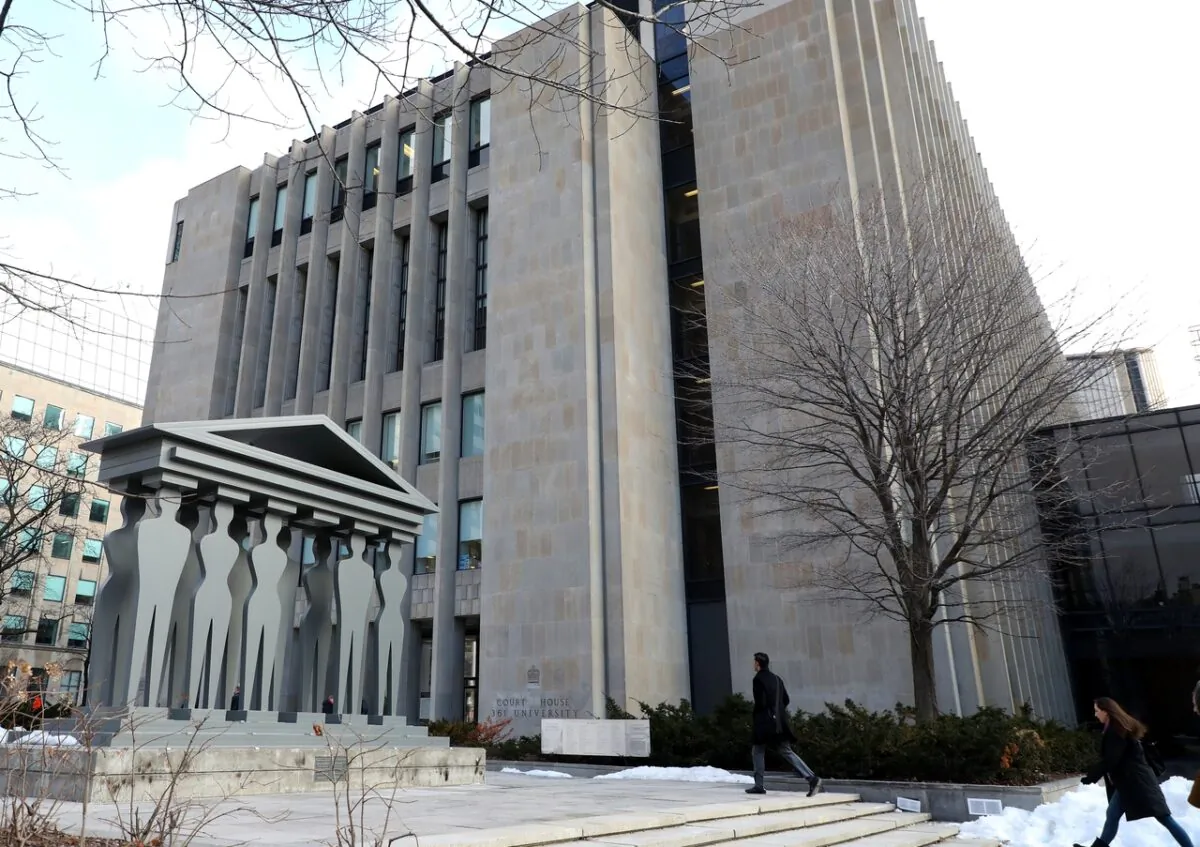

A Toronto-area plastic surgeon has been ordered to pay $21.5 million to thousands of former patients after an Ontario judge found he violated their privacy by recording them with surveillance cameras throughout his clinic.
The clinic owned by Dr. Martin Jugenburg, who also goes by “Dr. 6ix,” had installed 24 cameras in various areas including those where patients would be required to undress.
Ontario Superior Court Justice Paul Schabas found the surveillance “abused [Jugenburg’s] position of trust” between doctor and patient and amounted to a highly offensive invasion of privacy, awarding $5,000 to each patient who attended surgical appointments and $500 to those who attended non-surgical appointments, along with $1 million in punitive damages.
The court rejected the defence’s argument that the cameras were installed for security purposes, finding that patients in consultation and treatment rooms had a strong and reasonable expectation of privacy and that proof of improper intent was not required to establish liability.
Schabas concluded the conduct amounted to “intrusion upon seclusion,” a Canadian privacy tort covering serious invasions of privacy that a reasonable person would find highly offensive, particularly in a medical setting where patients are in a vulnerable position and entitled to a heightened expectation of confidentiality.
The judge emphasized that liability for intrusion upon seclusion does not require proof of improper intent or voyeurism, meaning that even non-malicious surveillance can constitute a serious privacy tort where it is objectively highly offensive. The court also found that patients were not meaningfully informed of the recording and therefore could not provide valid, informed consent, making the surveillance legally improper regardless of its stated purpose.
“As I have found, Dr. Jugenburg knew exactly what he was doing – invading patients’ privacy. His conduct as a physician was reprehensible. He abused his position of trust and betrayed his vulnerable patients from whom he was profiting,” Schabas wrote.
“He installed surveillance cameras in very private places for his own benefit. Although not hidden, he did not inform, let alone seek consent from his patients or his colleagues, and few noticed the cameras.”
The cameras first came to light following an exposé by CBC Marketplace in 2018.
“In the course of an investigation into breast implant surgery offered by private cosmetic surgery clinics, two Marketplace journalists attended at the Clinic in November 2018. One of them posed as a patient,” the court document says.
“During her consultation with a nurse at the Clinic, the journalist noticed what appeared to be a surveillance camera on the ceiling of the consultation room. … the journalist expressed concern about the camera. However, she was told there were cameras all around the clinic.”
Following the Marketplace investigation, Ontario’s medical regulator, the College of Physicians and Surgeons of Ontario (CPSO), and the Office of the Information and Privacy Commissioner (IPC) both launched inquiries. The CPSO attended the clinic the same day the story aired in December 2018, disabled the camera system, and later seized the recording devices as part of its investigation into the doctor’s conduct.
The IPC also investigated and ultimately ruled that the clinic’s “blanket use of surveillance cameras for non-health purposes” was unacceptable and violated Ontario’s Personal Health Information Protection Act.
The clinic did not respond before press time to a request for comment.
 Friends Read Free
Copy
Facebook
Tweet
Friends Read Free
Copy
Facebook
Tweet