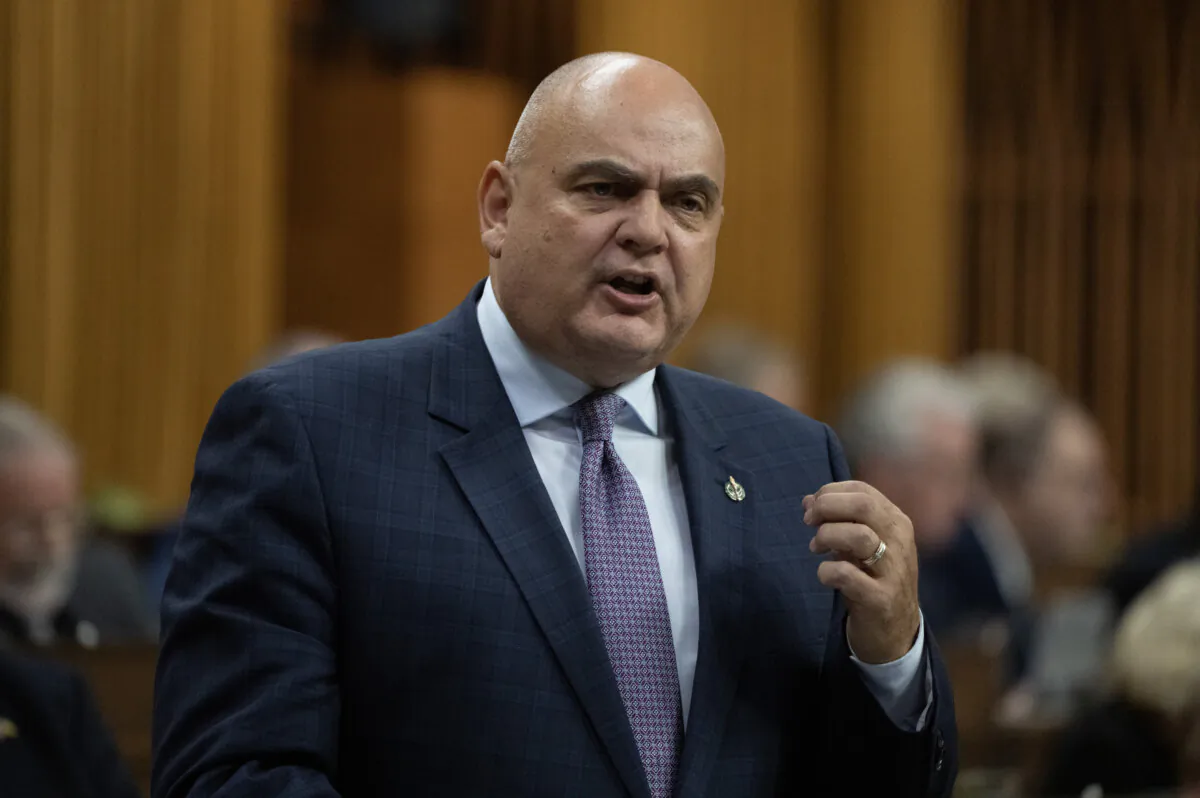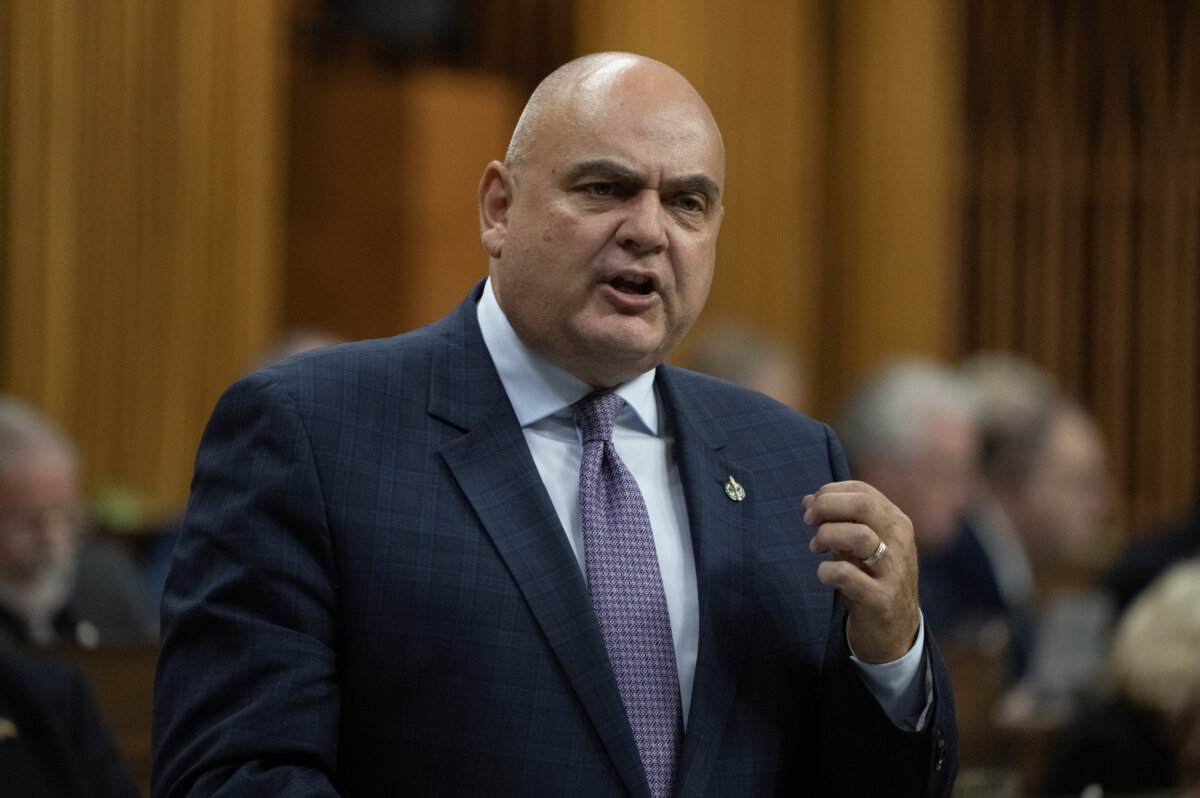

Conservative MP Larry Brock has launched a petition calling for the Liberal government to reform Canada’s bail system and repeal “soft-on-crime” legislation, citing an increase in violent crime over the last decade.
“Increasingly, it’s repeat, violent offenders committing these crimes; individuals who never should have been back on the streets in the first place,” the MP said in a July 3 statement. “That’s why I’m calling on the federal government to take immediate action.”
Statistics Canada data shows violent crime has increased by 50 percent since 2015, while sexual assaults have risen by 74 percent, gun crimes are up by 116 percent, and extortion cases are up by 357 percent, Brock said.
The petition also noted that the provinces of Ontario, Alberta, and Saskatchewan have called for Ottawa to take stronger action on bail provisions, as have several municipalities.
Brock’s petition calls for Canada’s criminal code to be amended to make bail more restrictive for repeat violent offenders, particularly those charged with firearms offences and intimate partner violence. The petition seeks to support law enforcement and victims’ rights advocates while working with provinces, territories, and indigenous communities on bail policies.
The petition also calls for Bill C-5, which eliminated mandatory minimum sentences for violent offences, to be repealed. Bill C-75, legislation that also encourages judges to release offenders at the earliest opportunity under the “least onerous conditions,” would also be repealed. Bill C-75 was passed in 2019 in part to reduce the proportion of incarcerated indigenous people, while Bill C-5 was passed in 2022 with a goal of promoting “more effective responses” to criminal conduct.
“This is an issue all members of all parties heard during the campaign. Canadians are scared, and they’re tired of revolving door justice,” Brock said. “Judges want to keep violent offenders behind bars, but their hands are tied.”
The Liberal government’s Bill C-5 from 2022 eliminated 20 mandatory minimum sentences on gun and drug offences to address “systemic racism in Canada’s criminal justice system.” After several high-profile killings by people who had previously been given bail, the Liberals passed legislation known as Bill C-48 in 2024 to make changes to the bail system.
The legislation targets repeat offenders in Canada who have used weapons such as knives and bear spray, as well as those repeatedly accused of intimate partner violence. It also added a new reverse onus provision to these offenders, meaning they will be detained while awaiting trial unless they can prove they are not a flight risk or a threat to public safety.
Justice Minister Sean Fraser recently said the government plans to table a bill in the fall to introduce stricter bail conditions and sentencing for some crimes, particularly those involving human trafficking, home invasion, car theft, and organized crime. This was a promise that the Liberals made during the election campaign.
Fraser said the country has seen an increase in certain types of crime, citing auto thefts in Toronto as an example, and said that these changes to the law would establish a stronger deterrent. Fraser added that the government will be holding consultations on its plans, and that he is open to suggestions based on expertise and evidence.
During the last election, the Conservatives promised to get tougher on crime by enacting a “three-strikes-and-you’re-out” law that would prevent individuals convicted of three serious offences from getting bail, probation, parole, or house arrest. They also said they would give life sentences to major traffickers of drugs, people, and firearms, and implement tougher sentences for intimate partner violence.
The Liberals, meanwhile, promised to “reinvigorate” the gun-buyback program for assault-style firearms, recruit 1,000 more RCMP officers and 1,000 new Canada Border Service Agency officers to tackle drug and human trafficking, and make bail laws stricter for violent and organized crime, home invasions, car theft, and human trafficking, particularly for repeat offenders.
The Canadian Press contributed to this report.
 Friends Read Free
Copy
Facebook
Tweet
Friends Read Free
Copy
Facebook
Tweet