
Conservative MP Adam Chambers says layoffs at a Hamilton steel plant should raise questions about Canada forging closer economic ties with China, citing concerns about Chinese steel dumping in the Canadian market.
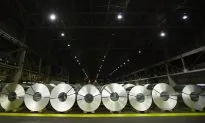
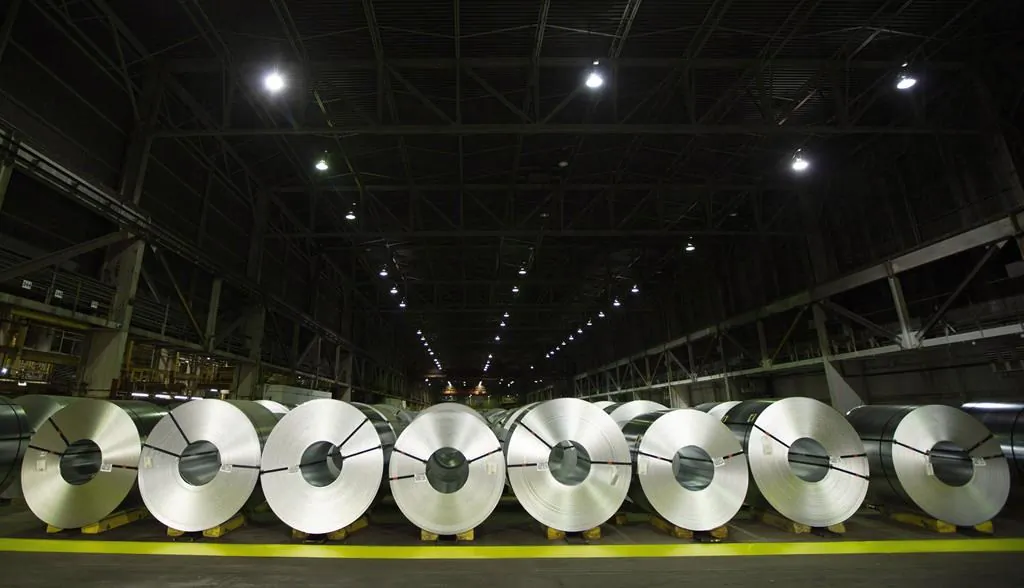
Stelco Holdings Inc. announced on Sept. 28 that it would indefinitely idle finishing operations at its steel plant in Hamilton, Ont., due to “market uncertainty,” a move that could affect as many as 500 employees.
Stelco said the decision is necessary to help “ensure the survival” of the company amid what it described as a challenging and unsustainable market caused by ongoing trade disruptions affecting the Canadian steel industry. The company also cited U.S. tariffs and declining demand for its products.
Chambers said on social media that the “primary focus” should be on the workers affected, which he called “awful and heart-wrenching.” He also said the layoffs “should raise further questions about getting closer to China,” arguing that cheap Chinese steel has been dumped in Canada and harmed the domestic industry.
China is the world’s largest steel producer, producing 960.8 million metric tonnes of crude steel in 2025, compared with Canada’s 11.5 million tonnes. The OECD (Organisation for Economic Co-operation and Development) has reported that Chinese steel producers receive substantially more government subsidies than producers elsewhere, contributing to excess capacity and increased exports.
In 2024, the median Chinese steel firm received subsidies equivalent to 15 times the share of assets received by the median steel producer elsewhere, according to the OECD. Chinese steelmakers exported a record 131 million tonnes in 2025.
According to the federal government, imports of steel and aluminum made in China nearly doubled from 356,914 tonnes in 2020 to 689,734 tonnes in 2024. China accounted for about 6 percent of Canada’s steel imports in 2024.
Canada imposed a 25 percent surtax on certain steel and aluminum products from China in October 2024. In July 2025, Ottawa also introduced a 25 percent surtax on certain steel and aluminum products from non-U.S. countries that contain steel melted and poured in China or aluminum smelted and cast in China, as part of measures to prevent trade diversion.
Chinese steel shipments to Canada subsequently fell by 38 percent in 2025, to about 400,000 tonnes from roughly 650,000 tonnes a year earlier, according to figures from the Canadian Steel Producers Association.
Despite the targeted measures by the government, reports of China dumping steel in Canada have continued. In April, the CBSA said it’s investigating whether steel racks from China are being sold at “unfair prices” in Canada after receiving complaints from a number of local steel manufacturers.
“The complainants allege that as a result of an increase in the volume of the dumped and subsidized imports, they have suffered material injury in the form of price erosion and depression, lost sales, as well as adverse impacts on production, capacity utilization, employment and financial performance,” the CBSA said.
Following a trip to China in early 2026, Prime Minister Mark Carney announced that Canada would reduce its tariffs on Chinese electric vehicles in exchange for Beijing reducing its tariffs on certain Canadian agricultural and seafood products. The prime minister said Canada and China were “forging a new strategic partnership” during his January visit to Beijing, where the two countries also signed memorandums of understanding covering sectors including energy, law enforcement, cultural exchanges, wood products, and food safety.
In 2026, Canada expanded tariff relief for certain Chinese steel and aluminum products that are in short supply in Canada, while maintaining the 25 percent surtax on covered Chinese products generally. The expanded remission program added several steel, aluminum, and steel-derivative products.
 Friends Read Free
Copy
Facebook
Tweet
Friends Read Free
Copy
Facebook
Tweet