
A Robodebt whistleblower says exposing the troubled automated debt recovery scheme has led to a decade of mental pressure and bullying for her and her family.
During a recent parliamentary inquiry, Jeannie-Marie Blake, a Service Australia employee on the frontline of implementing the pilot Robodebt scheme, talked about her traumatic experience of becoming a whistleblower.
The Robodebt scheme, formally known as the Online Compliance Intervention program, was launched by the federal Coalition government in July 2016 as an attempt to recover alleged welfare overpayments from recipients of Centrelink benefits.
The program used an automated data-matching system that compared income data reported by welfare recipients to Centrelink, with annual income data from the Australian Tax Office, to determine whether they were overpaid.
If the system spotted a difference, it automatically assumed the welfare recipient had been overpaid and issued them a debt notice.
Later, the scheme was found to have falsely accused many welfare recipients of owing money to the government, forcing them to make unnecessary repayments.
The scheme was suspended in 2019 after a federal court ruled it unlawful.
During the course of its operation, the Robodebt scheme raised $1.73 billion (US$1.12 billion) of debt payments from 433,000 people.
However, it was estimated that $751 million was wrongly recovered from 381,000 Australians.
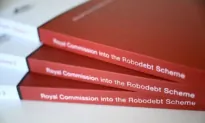
A 2023 report (pdf) by the Royal Commission into the Robodebt Scheme revealed that the program inflicted a wide range of harm on welfare recipients, including distress, trauma, anxiety, mental illness, and, in some cases, suicide.
In 2021, a federal judge approved a settlement worth at least $1.8 billion for the victims.
A Whistleblower’s Traumatic Experience
Blake said she realised that the Robodebt scheme was problematic at the very beginning.
“Involvement in Robodebt was a deeply traumatic experience. I tried, from the very beginning, when there was a part of an initial programme pilot, to blow the whistle on the scheme,” she told the Legal and Constitutional Affairs Legislation Committee earlier this month.
“I immediately saw Robodebt for what the Royal Commission eventually concluded it to be–unlawful and deeply unethical. I thought it should be stopped [and] never proceed beyond the pilot.”
However, Blake said when she and other Service Australia employees raised concerns, they were met with a stark response from management: resign, transfer or comply.
“The message was as blunt as that–shut up or leave. Our concerns were ignored, and instead, we received threatening communications, performance targets, [and] threats of underperformance,” she said.
“Code of conduct breaches were used to suppress dissent. Daily emails reminded us that if we were to speak outside our team to anyone about our work, we could be terminated.”
The Service Australia employee also noted that she eventually lost her career for speaking out, which took a toll on her mental health and well-being.
“My mental health suffered. I struggled with alcohol dependency. I became unable to parent properly or care for my elderly parent. I endured suicidal ideation,” she said.
“A decade since I first blew the whistle on Robodebt, and over two years since I gave evidence at the Royal Commission, I’m still suffering.
“I was so traumatised by my experience that I’m [still] on worker’s compensation, barely subsisting on a fraction of my former salary. Ultimately, my family and my career have paid the very high price of speaking up.”
Blake also noted that while the whistleblowers were ultimately vindicated, their lives have seen little change.
“The Royal Commission vindicated those who raise concerns, and yet we still suffer,” she said.
“Society benefits when whistleblowers speak up. Ultimately, Robodebt was stopped, but we’re left here on a scrapheap, paying the high price for our sacrifice, a sacrifice that I made in the public’s best interest.”
4 in 5 Whistleblowers Suffer Reprisal: Human Rights Law Centre
At the same time, Blake said she was aware that her story was not unique and that there were other whistleblowers who were in a similar situation.
“In recent years, there’s been Australians prosecuted for blowing the whistle, a whistleblower imprisoned for speaking up,” she said.
“There are dozens more that have had their careers ended or sidelined for doing the right thing, not to mention those many like my colleagues during Robodebt, who simply walked away in disgust.”
Blake’s concerns were shared by representatives from the Human Rights Law Centre (HRLC), who revealed the bleak picture of what whistleblowers in Australia face.
“Our data shows that almost four in five whistleblowers will suffer reprisal after having blown the whistle without any guidance or assistance,” said Madeleine Howle, a lawyer at the HRLC.
“One in four whistleblowers will suffer bullying or harassment. One in five will have workplace performance allegations made against them with alarming frequency.
“We are seeing whistleblowers hit with retaliatory legal action, few of whom can afford to defend such claims from their employers.”
In some cases, whistleblowers do not face workplace reprisal after coming forward.
However, Howle pointed out that they could still be subject to procedural burnout from prolonged investigations.
“The law may be providing protections, but the reality is that more often than not, whistleblowers pay a very high price when it comes to holding business and government to account,” she said.
 Friends Read Free
Copy
Facebook
Tweet
Friends Read Free
Copy
Facebook
Tweet