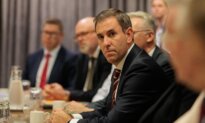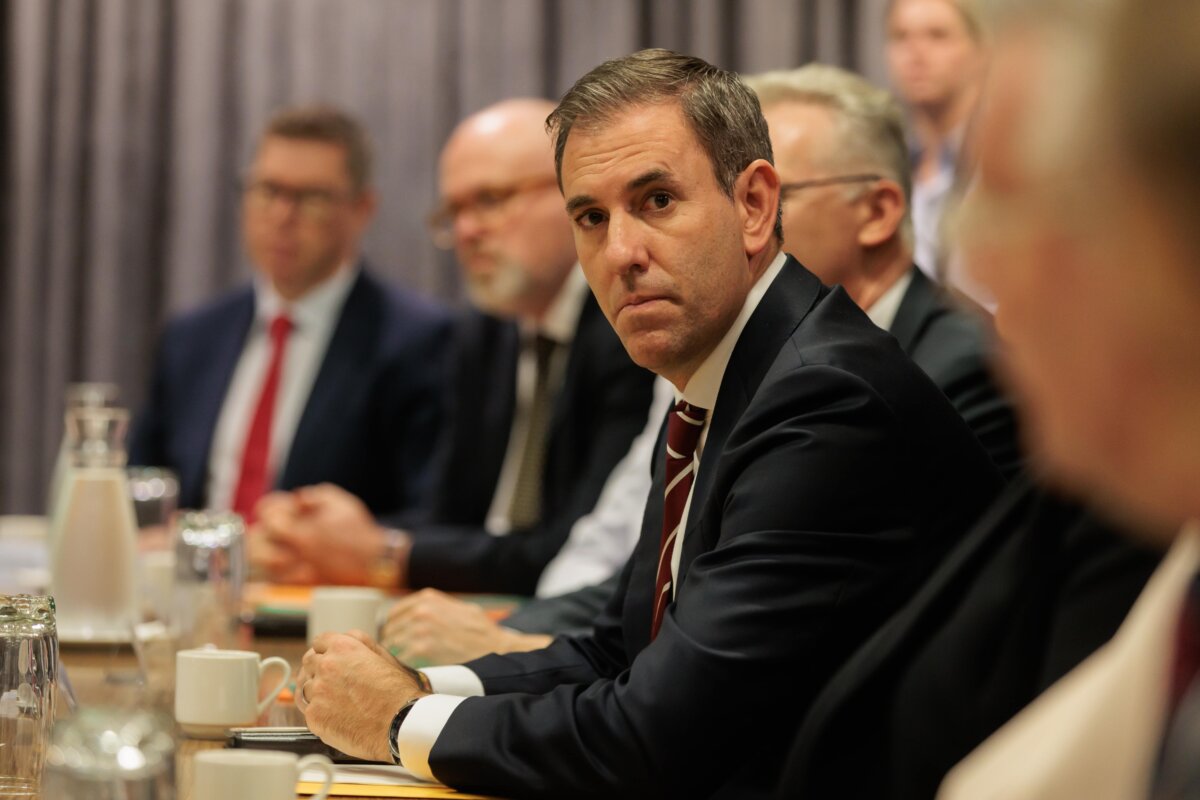
Australian Treasurer Jim Chalmers has moved to calm fears of a looming recession after the Reserve Bank of Australia (RBA) earmarked the possibility after raising interest rates a second time.
The central bank on March 17 lifted the cash rate to 4.1 percent with blame placed on disrupted global energy prices linked to the Iran conflict.
RBA Governor Michelle Bullock warned that Australia may have to confront the possibility of a recession if inflation continues.
Responding to the warning, Chalmers said it was not in the government’s forecast.
“The Reserve Bank’s forecasts are not forecasting a recession in our economy. Neither are the government’s. The point that the [RBA] governor is making is a point that I would be very comfortable making, which is that we have to get on top of this inflation challenge and the global environment is highly uncertain and volatile,” he told Nine News on March 18.
“The comments that Governor Bullock made yesterday are entirely consistent with the comments that I’ve made in recent days and weeks.”
The treasurer also rejected claims that government spending was contributing to high inflation, citing a reduction in expenditure after the Labor government came into power.
“When it comes to spending as a share of the economy, under our predecessors it was up near a third of the economy, we got it down closer to a quarter, it’s now in the 26s,” he said.
In addition, Chalmers signalled the possibility of further spending cuts in the upcoming federal budget.
“There will be more savings in the May budget, there will be more spending restraint, and that will be consistent with the very substantial progress we’ve made so far,” he said.
Federal Labor’s biggest moves to cut down on government spending including cutting back on consultancy fees and trying to rein in NDIS spending, however, while doing this it has also expanded spending in other areas like paying off student debt, offering short term energy relief, providing more free childcare services, and so on.
What RBA Governor Says About Recession
In her speech following the RBA’s rate decision, Bullock said that while the central bank was trying to bring inflation down, it would not do so at any cost that could risk a recession.
“I wouldn’t say we want to do that. The best contribution we can make to full employment, and in fact, to things like investment and productivity and so on, is to have low and stable inflation.” she told reporters.
“So, we do need to keep our eye focused on that ball. We don’t want to have a recession, but if it’s hard to get inflation down, then we’re going to have to deal with that possibly.”
While acknowledging the risks, Bullock said the impact of global affairs was hard to pin down.
“We don’t know what’s going to happen in that context. And in fact, there’s been lots of predictions that the world economy would, particularly after the tariff problems in early 2025 that the world would go into recession,” she said.
“That abated, and the world economy actually ended up … doing quite well. In some cases, it’s still possible … that everything will turn out okay, having said that, the board is alert to risks of that nature.
“And if circumstances change, and if it does look like the world economy is in big trouble, then that will have different implications for inflation, and we will be looking very hard at what we need to do in those circumstances.”
 Friends Read Free
Copy
Facebook
Tweet
Friends Read Free
Copy
Facebook
Tweet