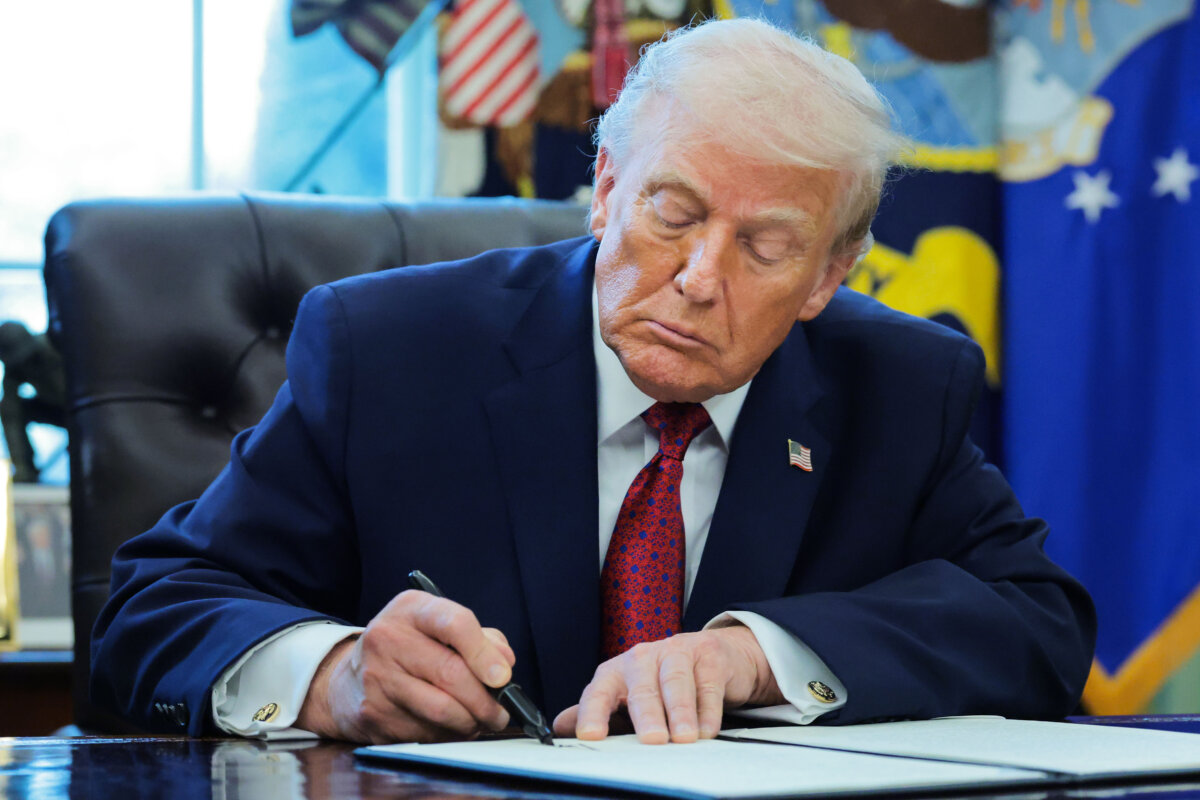

U.S. President Donald Trump questioned on Jan. 14 how much support the exiled crown prince of Iran had in the Middle Eastern country.
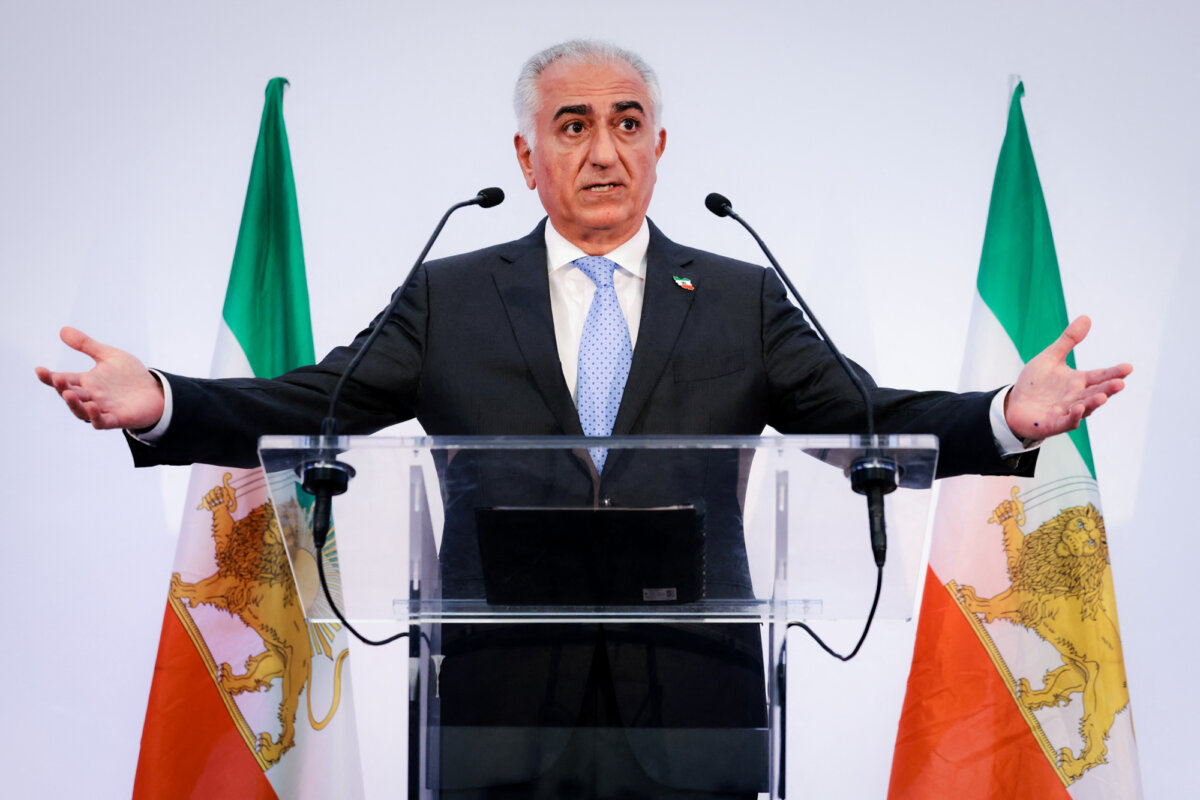
Reza Pahlavi, the son of the last shah of Iran, Mohammad Reza Pahlavi—who was ousted in the Islamic Revolution of 1979, which brought the first ayatollah to power—has been a prominent figure in the protests that have raged in that country since December 2025, cheering on the demonstrators from abroad.
However, Trump, in an interview with Reuters, appeared unsure whether the Iranian people would accept the exiled royal as their leader should the current regime fall.
“He seems very nice, but I don’t know how he’d play within his own country,” the president said of Pahlavi, who left Iran before the fall of his father’s regime and has been a resident in the United States for decades.
“And we really aren’t up to that point yet.
“I don’t know whether or not his country would accept his leadership, and certainly if they would, that would be fine with me.”
Pahlavi has discussed the possibility of both a constitutional monarchy, potentially with an elected rather than hereditary monarch, and a republic in Iran, stressing that it is up to the Iranian people to decide through a free and democratic process and that his main focus is helping to transition Iran away from the Islamic Republic.
He has announced a detailed plan for a transition period if the current regime falls, and during the latest round of nationwide demonstrations, he has issued statements urging further protests.
“Continue the fight, as you have done so far,” Pahlavi said in a social media statement on Jan. 13. “Do not allow this regime to create the illusion that life is normal.”
Trump went on to say that it is a possibility that the current theocratic leadership of Iran could be ousted during the protests, but noted that “any regime can fail.”
“Whether or not it falls or not, it’s going to be an interesting period of time,” he said.
Trump has repeatedly threatened to intervene in Iran following the outbreak of the protests, posting on Truth Social earlier this week: “Save the names of the killers and abusers. They will pay a big price.”
In the post, he announced the cancellation of all talks with Iranian officials and assured the protesters that “help” was on the way.
Trump also told CBS Evening News that if Iran executes protesters, the United States would “take very strong action.”
On Jan. 14, however, Trump relayed information that no executions of protesters are expected.
“We’ve been told that the killing in Iran is stopping,” Trump said at a press conference. “It’s stopping, and there’s no plan for executions or an execution.”
When asked to clarify the source of the comment, which implies that discussions on the situation are still ongoing between the administration and Tehran, he referenced conversations with “some very important people on the other side” but didn’t elaborate.
“They’ve said the killing has stopped and the executions won’t take place. There was supposed to be a lot of executions today and … the executions won’t take place,” Trump said.
“We’re going to find out … but we’ve been told on good authority, and I hope it’s true. Who knows? … But they told me that there’ll be no executions, and so I hope that’s true.”
When asked by a reporter whether the update means that the United States is taking military action “off the table,” Trump said that the U.S. would “watch and see what the process is.”
Trump’s assertion that the executions were not going ahead was echoed by Iranian Foreign Minister Abbas Araghchi, who said on Jan. 14 that “there is no plan” for the regime to hang people.
When asked directly about potential executions during an interview on Fox News, Araghchi said hanging is out of the question.
“I can tell you, I am confident about that. There is no plan for hanging at all,” he said.
“This is another piece of the misinformation campaign … to provoke President Trump and drag him into this question that could have disastrous consequences.
“Hanging is out of the question.”
Iran frequently uses the death penalty; the U.S.-based Human Rights Activists News Agency (HRANA) reported that 2,063 people were executed in the country in 2025.
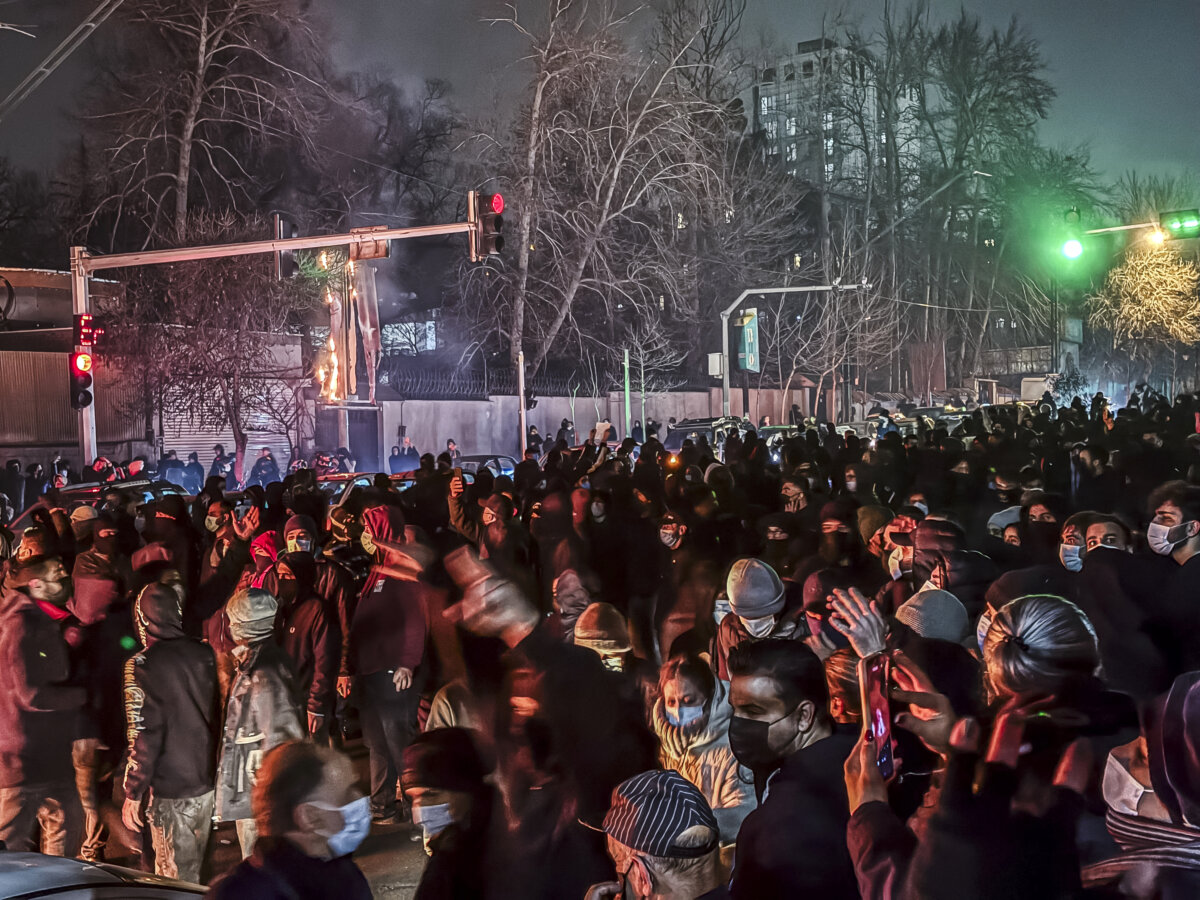
HRANA says the death toll of the protests has already soared into the thousands.
“Regarding human casualties, the total number of confirmed deaths has been announced as 2,615. Of these, 2,435 were protesters, and the deaths of 13 children under the age of 18 have been confirmed,” HRANA said on Jan. 14.
“Additionally, 14 non-protesting civilians are recorded among the fatalities. On the other side, 153 members of security forces and government supporters have lost their lives. Furthermore, 882 additional deaths remain under investigation.”
HRANA’s figures show the current round of protests to be the most deadly since the Islamic Republic came to power in Iran.
Other reports put the death toll of the latest protests much higher.
The Epoch Times has not been able to independently verify the figures.
Reuters, The Associated Press, and Joseph Lord contributed to this report.
 Friends Read Free
Copy
Facebook
Tweet
Friends Read Free
Copy
Facebook
Tweet