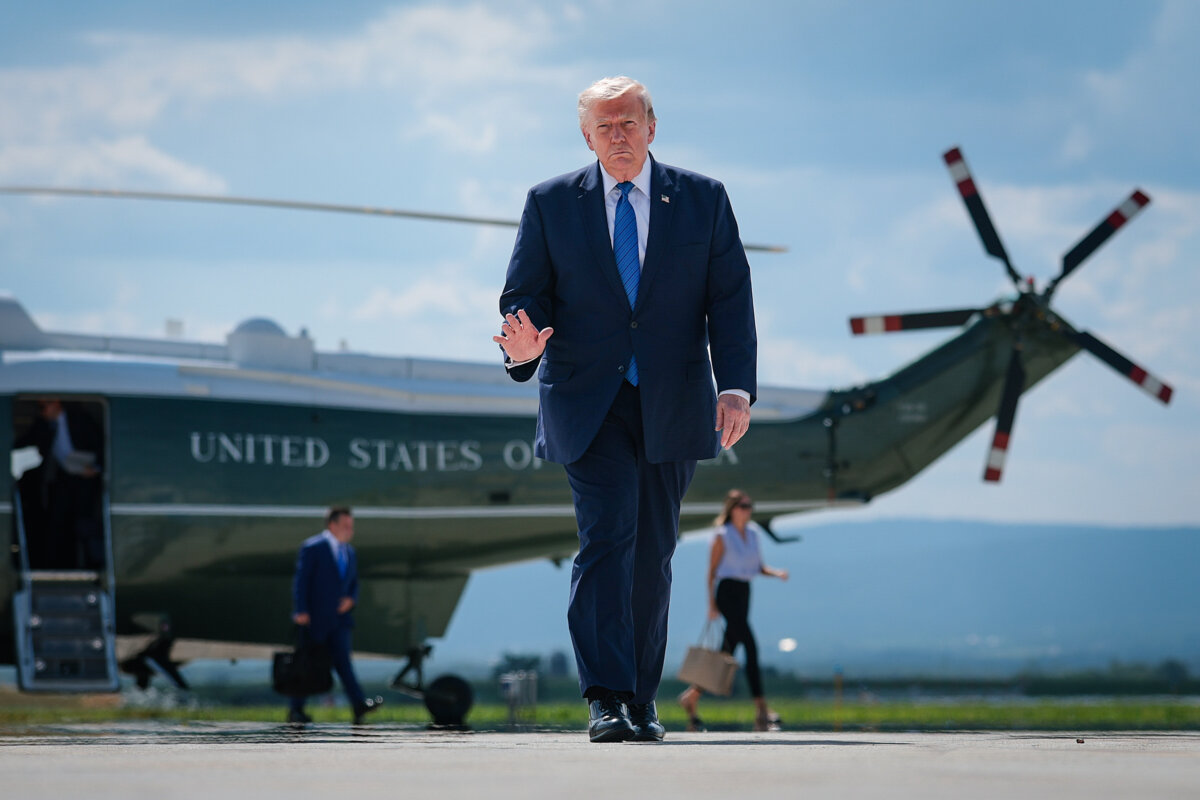

U.S. President Donald Trump said late Tuesday that an agreement to reopen the Strait of Hormuz could be announced within days, as Iran reported progress in talks with Oman on a safe shipping corridor and Qatar said mediators were circulating proposals between Washington and Tehran.
“It could happen. Tomorrow or the next day,” Trump told reporters traveling with him in California on the evening of Aug. 4. “A lot of progress has been made.”
Trump later told Fox News that the strategically vital waterway is “going to be open very soon,” while warning that U.S. forces would respond if the diplomatic effort collapsed.
“If they back out again, they are going to get hit really hard,” he said.
Iran continues to deny that it is negotiating directly with the United States. Statements from Qatar and U.S. officials indicate that messages and draft proposals are moving between Washington and Tehran through regional mediators.
Qatari Foreign Ministry spokesman Majed Al-Ansari said Tuesday that Qatar, Oman, and Pakistan were working closely to facilitate negotiations, including through the exchange of draft proposals.
A proposed resolution “is being circulated between the parties,” Al-Ansari told Bloomberg, while cautioning that no final agreement had been reached and that there was no clear timeline for one.
“What matters to us now is the resumption of negotiations, and to achieve this, a ceasefire and the reopening of the Strait of Hormuz must be guaranteed,” he told a press conference in Doha, according to Turkish media outlet Anadolu Agency.
While Al-Ansari said that no final agreement had been reached thus far, he was cited by Qatar’s foreign ministry as expressing hope that efforts at mediation “would yield positive outcomes in the near future.”
Iran Reports Progress
Iranian Foreign Ministry spokesman Esmail Baghaei said talks with Oman on establishing safe inbound and outbound shipping routes were progressing positively at both the technical and political levels.
“The talks, which are being held between the two coastal states of the Strait of Hormuz, are focused on establishing safe shipping routes while safeguarding the sovereign rights and security interests of Iran and Oman alike,” Baghaei said on Aug. 4, according to Iran’s state-run IRNA news agency.
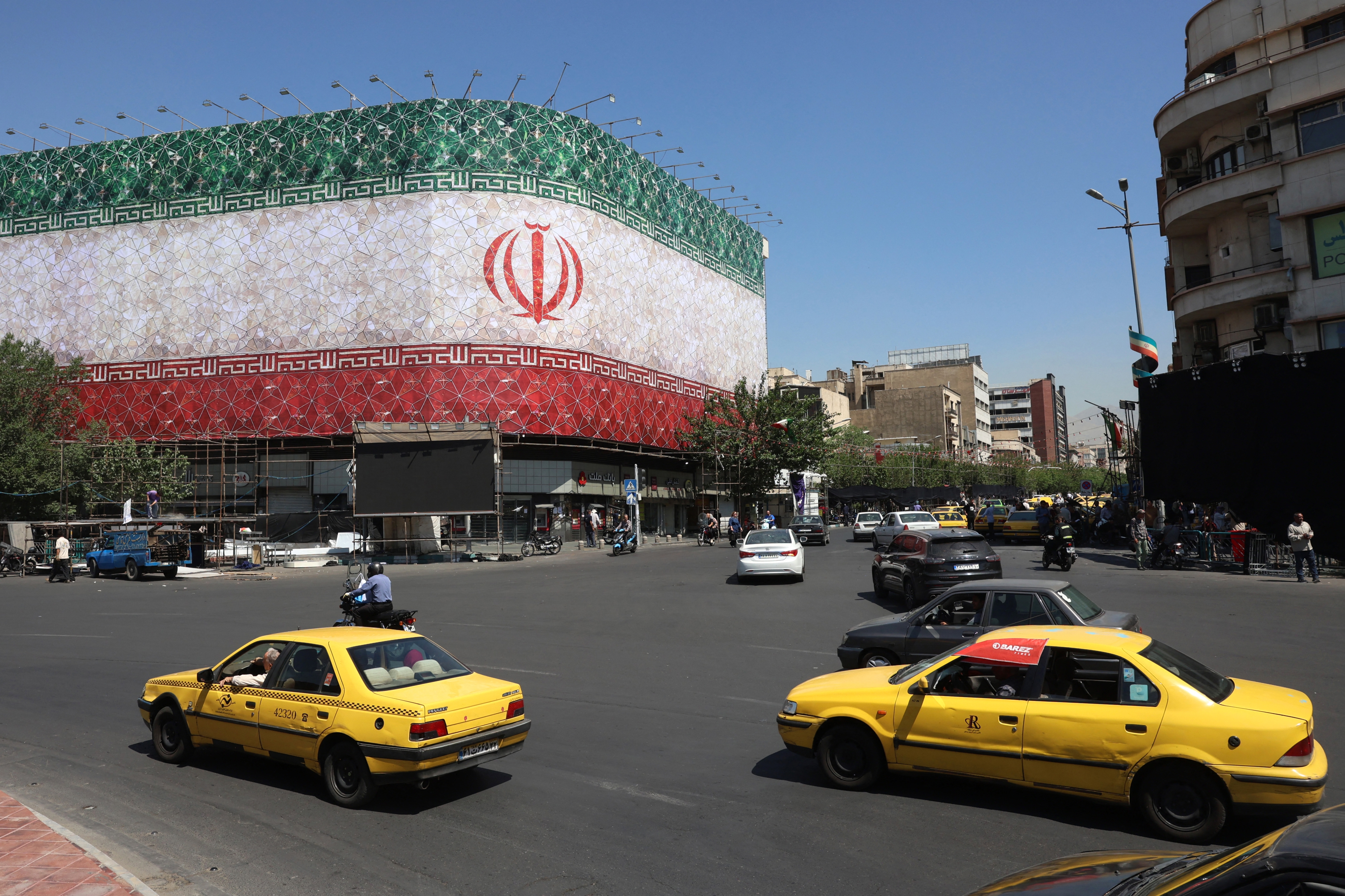 Traffic moves past the Iranian national flag displayed on a building at Enghelab Square in Tehran on June 14, 2026. (AFP via Getty Images)
Iran insists that the discussions are strictly bilateral and do not involve Washington.
Trump has rejected that characterization, accusing Iranian leaders of publicly denying talks after privately seeking an agreement.
“Iranian Leadership is unbelievably duplicitous!” Trump wrote in an Aug. 3 post on social media, saying Tehran had requested talks and then claimed it was dealing only with Oman.
Qatar’s account appeared to support Trump’s broader contention that indirect U.S.–Iran contacts remain active. Al-Ansari said Qatari communications with various parties were continuing and that mediators were working to create conditions for the resumption of direct dialogue.
“Communications are ongoing at various leadership levels with relevant parties in pursuit of making a breakthrough in the negotiations,” Qatar’s foreign ministry said in a statement citing Al-Ansari, adding that the “minimum demands at the current stage are to return to the previous status” of the Strait of Hormuz.
Before the U.S.–Iran war broke out in late February, shipping was unconstrained through Hormuz, where roughly one-fifth of the world’s seaborne oil transited. Following joint strikes against Iran by Israel and the United States, Iranian forces began targeting the strait, laying naval mines and attacking vessels with drones and missiles, with shipping slowing to a crawl, sending crude prices higher.
U.S. Secretary of State Marco Rubio also confirmed that progress had been made, although there was “not finality yet.”
Iran has maintained that the Strait of Hormuz remains closed in areas under its control and says restrictions will continue until U.S. military involvement ends.
Washington has disputed Tehran’s characterization of the state of Hormuz shipping. U.S. Central Command said Tuesday that the southern route through Omani waters remained open to commercial vessels.
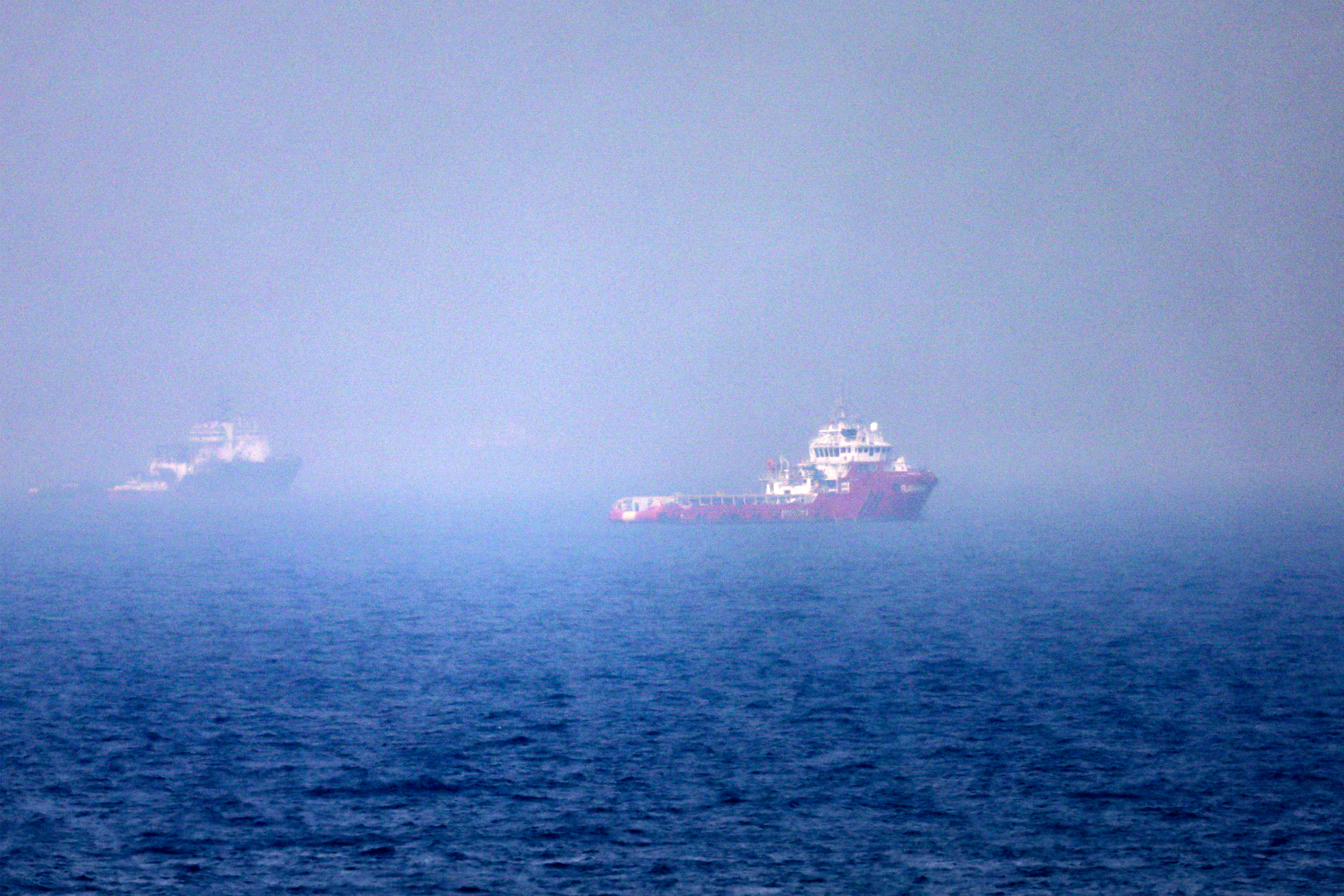 Ships sail near the Strait of Hormuz off the eastern coast of the United Arab Emirates at Khor Fakkan on July 13, 2026. (AFP via Getty Images)
Oil prices rose Wednesday after Yemen’s Iran-backed Houthis said they had attacked a Saudi oil tanker in the Red Sea, tempering hopes for an imminent deal to end hostilities.
Brent crude futures rose $1.51, or 1.9 percent, to $80.87 per barrel as of 7:23 a.m. ET. U.S. West Texas Intermediate futures gained 90 cents, or 1.2 percent, to $76.67 per barrel.
 Friends Read Free
Copy
Facebook
Tweet
Friends Read Free
Copy
Facebook
Tweet