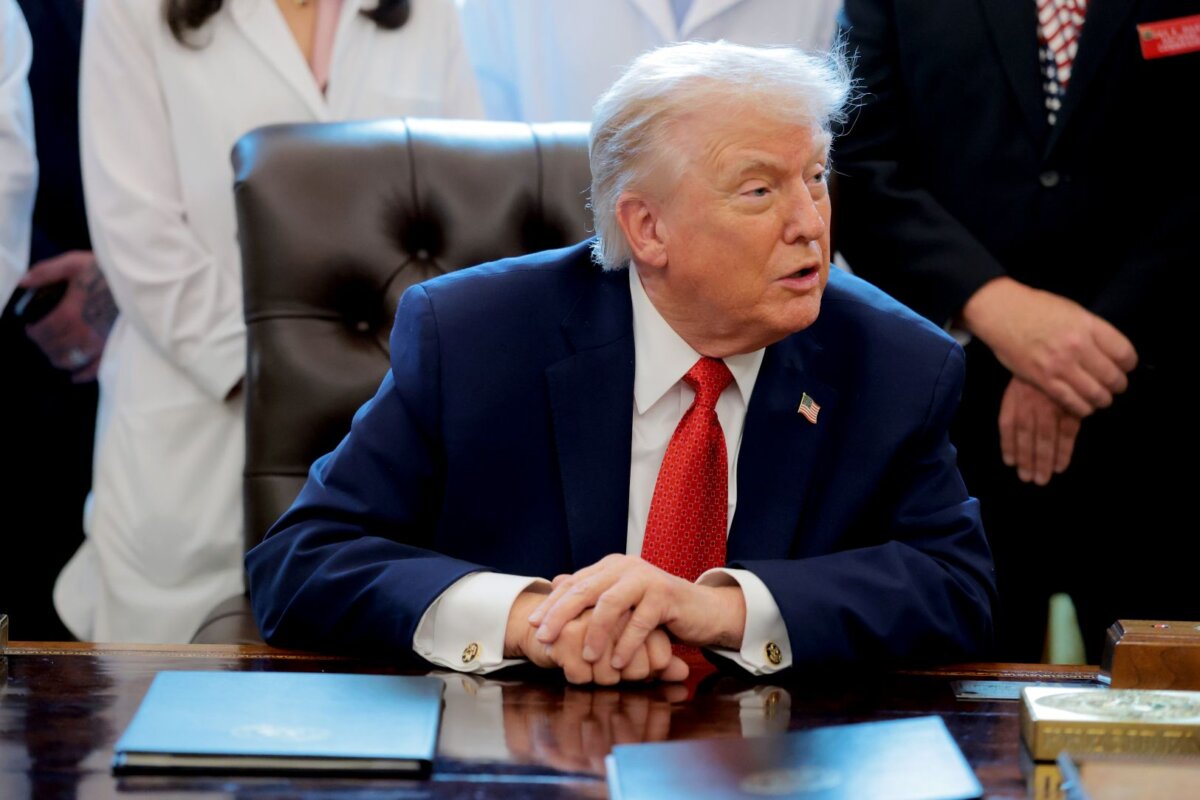

U.S. President Donald Trump said on Jan. 4 that he did not believe Ukraine targeted Russian President Vladimir Putin’s residence in a drone attack last week, countering claims from Moscow.
“I don’t believe that strike happened. There is something that happened fairly nearby, but had nothing to do with this,” Trump told reporters aboard Air Force One en route to Washington from Florida.
On Dec. 29, 2025, Russian Foreign Minister Sergei Lavrov said Kyiv used 91 drones to target Putin’s residence in the city of Novgorod. All drones were destroyed, Russian officials said. Ukraine denied the claims.
Trump had responded to the alleged attack with concern, saying it was “not good.”
“It’s one thing to be offensive because they’re offensive. It’s another thing to attack his house,” Trump said on Dec 29. “It’s not the right time to do any of that, and can’t do it.”
When asked aboard Air Force One on Jan. 4 why he initially took Moscow’s assertions at face value, Trump said: “Because nobody knew at that moment. That was the first I heard about it. … [Putin] said that his house was attacked. We don’t believe that happened, now that we’ve been able to check, but that was the first we ever heard about it.”
The Epoch Times contacted the Russian government for comment but did not receive a response by publication time.
Peace Negotiations Ongoing
The alleged attack happened during ongoing negotiations between Moscow and Kyiv, mediated by the United States, to end the conflict in Ukraine, which is heading into its fifth year next month.
When asked whether he would set a time frame on the Russia–Ukraine peace plan, Trump said, “I don’t do deadlines.”

The president has previously said that there is no firm deadline for a peace deal.
“I think we’ll have a deal at some point, hopefully in the not too distant [future],” he told reporters on Jan. 4.
On Dec. 28, 2025, Trump met with Ukrainian President Volodymyr Zelenskyy at Mar-a-Lago in Florida to discuss the plan to end the war. The U.S. president expressed optimism that an end was in sight.
“We’re getting a lot closer, maybe very close” to a peace deal, he said.
Following the purported drone attack, the Kremlin said the incident would harden Moscow’s position in negotiations.
Kremlin spokesman Dmitry Peskov told reporters on Dec. 30 that the alleged strike was intended to derail peace talks and, as a result, would carry diplomatic consequences for Kyiv.
“This terrorist action is aimed at collapsing the negotiation process,” Peskov said. “The diplomatic consequence will be to toughen the negotiating position of the Russian Federation.”
On Dec. 29, Zelenskyy said the alleged strike was a “complete fabrication” that was “intended to justify additional attacks against Ukraine, including Kyiv, as well as Russia’s own refusal to take necessary steps to end the war.”
“Ukraine does not take steps that can undermine diplomacy,” Zelenskyy wrote on X. “To the contrary, Russia always takes such steps. This is one of many differences between us.”
Correction: A previous version of this article misstated the number of years the Russia–Ukraine conflict has been active. The Epoch Times regrets the error.
 Friends Read Free
Copy
Facebook
Tweet
Friends Read Free
Copy
Facebook
Tweet