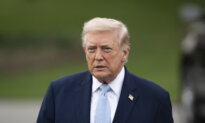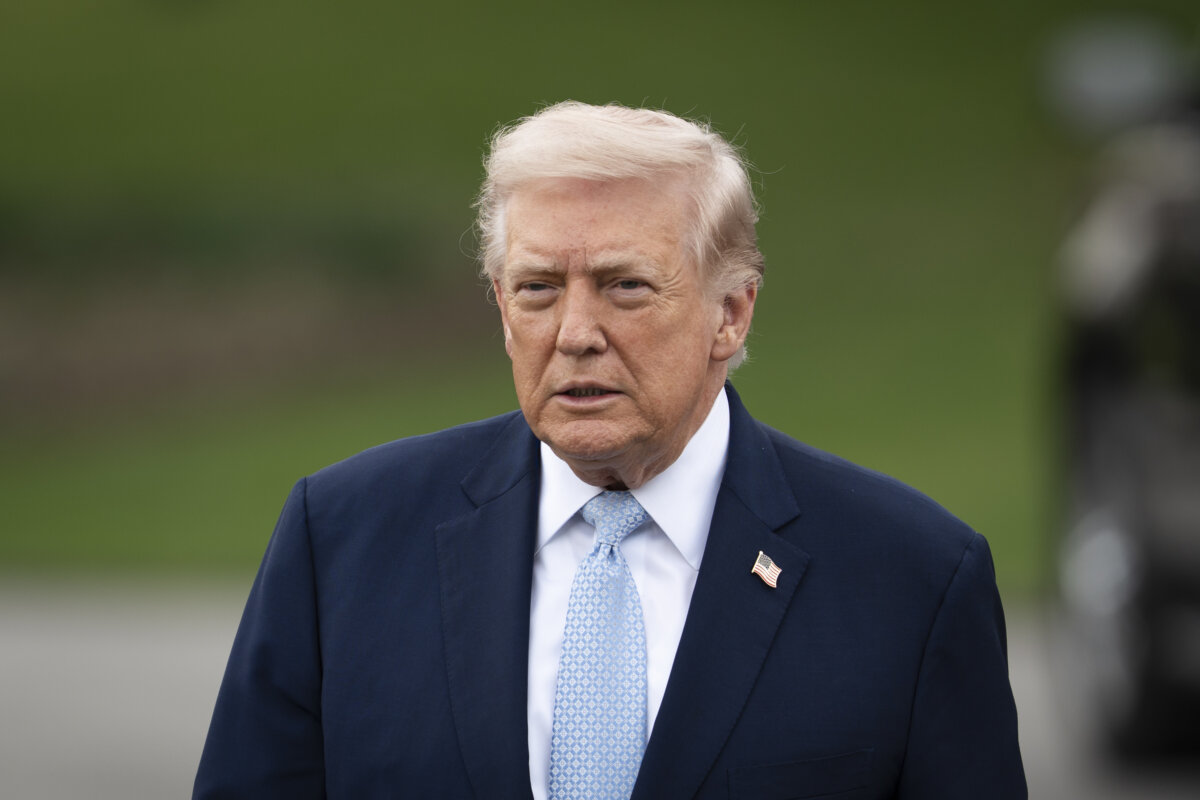

U.S. President Donald Trump, on May 6, told reporters that the United States will obtain enriched uranium from Iran’s controversial nuclear program amid proposals that have been made to end the war and reopen the Strait of Hormuz.
“We’re going to get it,” Trump told a reporter as he left a White House event, referring to the Iranian uranium. “We’re going to get it.”
During the brief exchange with the reporter, Trump did not say how the U.S. government would acquire the substance.
One of Trump’s top objectives in launching military strikes against Iran, which began on Feb. 28, was to ensure that the Iranian regime does not develop a nuclear weapon. Iran has yet to hand over the more than 900 pounds of enriched uranium that it has stated is in its possession.
U.S., Israeli, and European officials have long said Tehran is seeking to acquire a nuclear weapon, although Iran has insisted that its nuclear program is intended for civilian purposes. On multiple occasions over the years, the United Nations’ nuclear agency has stated that its inspectors were rebuffed by Iranian officials and has questioned the legitimacy of Iran’s claims about its facilities.
In an interview with PBS published on May 6, Trump reiterated that Iran “cannot have a nuclear weapon” and said that any economic cost due to the military campaign would be “worth it” to prevent Tehran from obtaining one.
When asked about whether the uranium would be handed over by Iran to the United States, he responded: “It goes to the United States.”
The president on May 6 also talked about peace negotiations, a day after his May 5 announcement that he would be ending the U.S. military’s operation to assist the safe passage of neutral civilian shipping through the Strait of Hormuz, a key waterway that carries about a fifth of the world’s oil and gas on a normal day.
“If we make this deal, we’ll be lightening up on Iran with sanctions,” Trump told PBS on the negotiations. “If they agree, it’s over, and if they don’t agree, we bomb.”
The effective closure of the strait by the Iranian regime has caused fuel prices to surge, weakened the global economy, and placed enormous economic pressure on a number of countries, including China.
Earlier this week, the United Arab Emirates stated that its defense forces engaged with drones and missiles that originated from Iran. It also stated that a key oil-producing facility was struck on May 4.
Iran denied that it launched drones or missiles at the Gulf country in recent days, saying it would have made the announcement if it had fired upon the country, according to state-run Tasnim News.
Trump, at the May 6 White House event, told reporters that administration officials are engaged with Iranian negotiators who want to reach an agreement and that any final deal must meet U.S. requirements.
“We’re dealing with people that want to make a deal very much, and we’ll see whether or not they can make a deal that’s satisfactory to us,” he said, saying that they “want to negotiate.”
Iranian President Masoud Pezeshkian said Tehran is ready for diplomacy with the United States while he was speaking with French President Emmanuel Macron in a phone conversation that was carried through state-run PressTV on May 6.
“[The country] is ready to seriously pursue diplomatic paths to end the war, while emphasizing the realization of the rights of the Iranian nation,” Pezeshkian said, according to the report.
Reuters contributed to this report.
 Friends Read Free
Copy
Facebook
Tweet
Friends Read Free
Copy
Facebook
Tweet