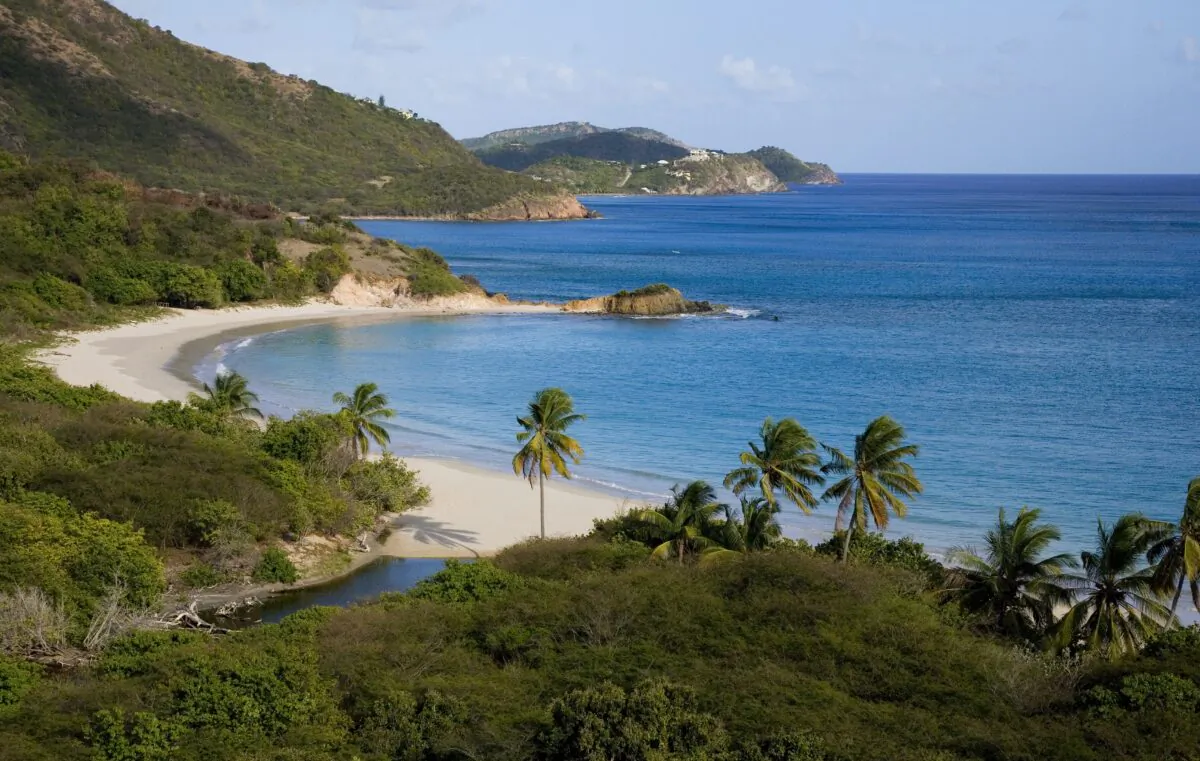

The Caribbean nations of Dominica and Antigua and Barbuda announced on Jan. 5 that they agreed to take in third-country nationals who entered the United States illegally.
Dominican Prime Minister Roosevelt Skerrit said the island nation has entered into an “internal agreement” with the United States that would allow illegal immigrants to be deported to Dominica in cases in which the individuals cannot be returned to their home countries because of safety concerns.
Dominica has been in talks with the United States following U.S. President Donald Trump’s Dec. 16, 2025, proclamation that imposed “partial restrictions and entry limitations” on its citizens.
“Dominica has been engaged in ongoing dialogue with the United States on matters of mutual interest, and an agreement has been reached on one of the primary areas of collaboration,” Skerrit said during a news conference.
Skerrit stated that during talks, the U.S. State Department acknowledged that no “violent individuals” or illegal immigrants who pose national security threats should be sent to Dominica.
The Dominican leader did not provide details on when the discussion with the State Department occurred and when transfers could occur.
Skerrit said the move would help protect Dominican citizens’ access to “lawful travel, education, employment, and family connections” in the United States while also strengthening his nation’s cooperation with the U.S. government.
“I believe this will further deepen our longstanding relationship and signal clearly that Dominica remains a willing and reliable partner of the United States in our region,” he said.
Officials of Antigua and Barbuda said the country has signed a nonbinding memorandum of understanding proposed by the United States on the possible acceptance of “a very limited number” of third-country nationals, including refugees.
The United States has sought cooperation in transferring illegal immigrants who cannot be returned to their home countries for safety reasons, according to Antigua and Barbuda’s prime minister’s office.
The government said under the memorandum of understanding that the island nation would not take in anyone with a criminal record and would accept only third-country nationals who are “already present in the United States” and have passed the necessary intelligence vetting and national security assessments.
The Caribbean nation, also listed in Trump’s Dec. 16, 2025, proclamation, said it has been in talks with U.S. officials to restore normal visa issuance and renewals for its citizens.
In an emailed statement to The Epoch Times, a State Department spokesperson said the Trump administration remains committed to securing the border but did not provide details on talks with other governments.
“Implementing the Trump Administration’s immigration policies is a top priority for the Department of State. As Secretary Rubio has said, we remain unwavering in our commitment to end illegal and mass immigration and bolster America’s border security,” the spokesperson said.
The White House said in a fact sheet that Trump imposed visa restrictions on nationals from Dominica, Antigua and Barbuda, and several other countries, citing “severe deficiencies in screening, vetting, and information-sharing” needed to protect national security and public safety.
 Friends Read Free
Copy
Facebook
Tweet
Friends Read Free
Copy
Facebook
Tweet