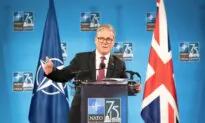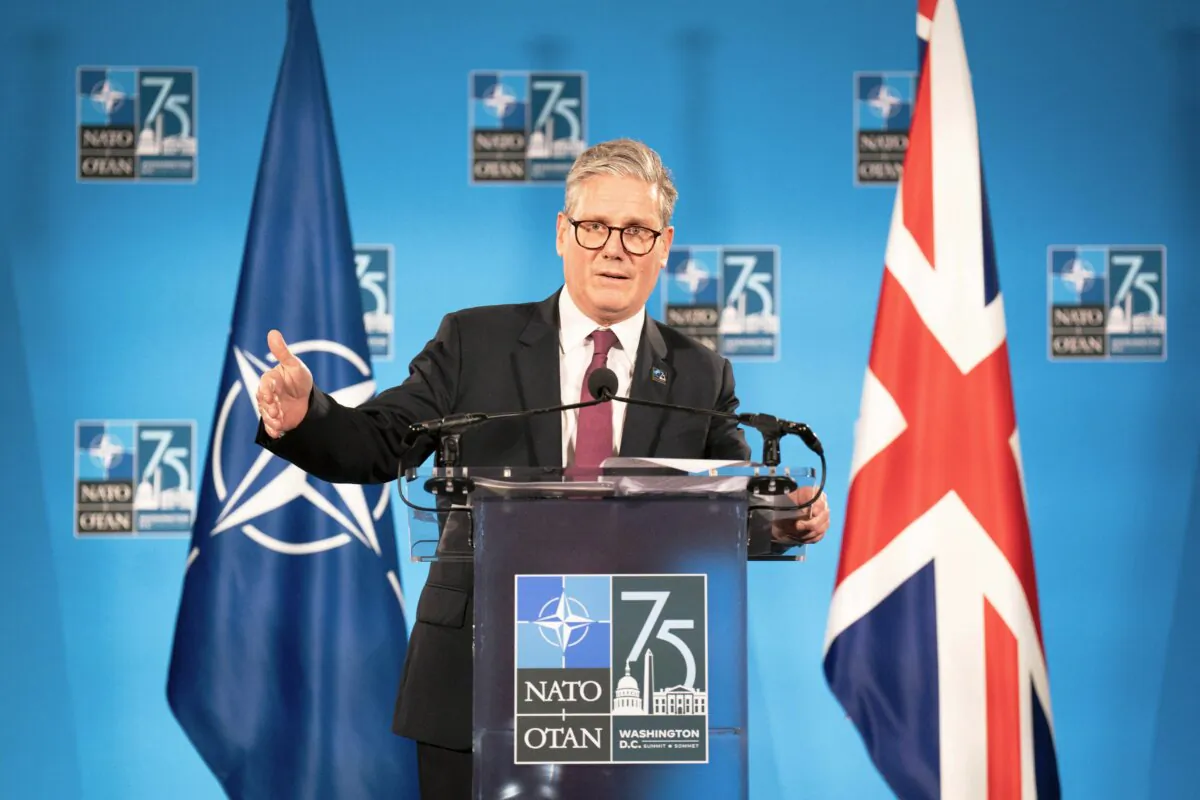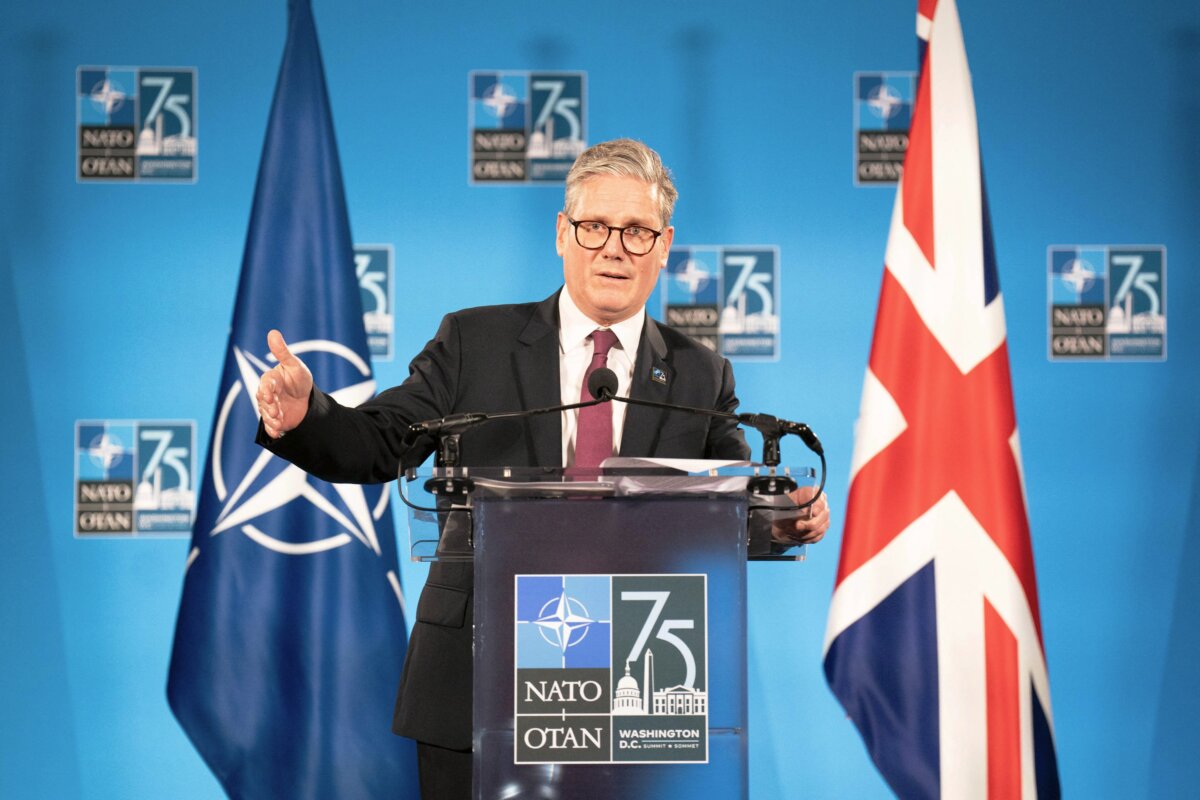

Prime Minister Keir Starmer has pledged that the UK will boost defence spending to 5 percent of gross domestic product (GDP) by 2035 to meet a NATO target.
The commitment comes as the leaders of all 32 NATO member countries met in The Hague on Tuesday for a two-day summit.
On Wednesday, they are expected to formally endorse a target for NATO members to spend 5 percent of their economic output on defence.
In a prepared statement published on Monday ahead of the summit, Starmer said the increase in defence spending would make the UK safer in an era of “radical uncertainty”.
The government’s National Security Strategy, launched on Tuesday, reaffirmed the spending pledge, while warning “for the first time in many years” that Britain must prepare for the possibility of a “wartime scenario.”
Earlier this year, the government announced plans to raise defence spending to 2.5 percent of GDP by 2027 and to 3 percent within the decade.
Under NATO’s new estimate, the UK expects to reach at least 4.1 percent of GDP in 2027.
Questions Over Funding, Delivery
Speaking at the summit, Starmer said the increase in defence spending would not come at the expense of welfare.
“It’s coming from the overseas development aid,” he told reporters in the Netherlands.
He also reaffirmed Labour’s tax pledges, adding, “We’ve got commitments in our manifesto about not making tax rises on working people and we will stick to our manifesto commitments.”
Despite the reassurance, critics questioned whether the government had a clear plan to meet its targets.
Shadow Foreign Secretary Dame Priti Patel said the government lacks transparency over how it would reach the core defence spending goal.
“So, when will he actually deliver a plan to get to 2 percent, and why won’t he heed our calls to hit 3 percent by the end of this Parliament, which could be vital, and a vital stepping stone on the way to that higher defence spending that he is seeking,” she added.
The Institute for Fiscal Studies (IFS) also raised financial concerns.
Bee Boileau, a research economist at the IFS, said that raising core defence spending from 2.6 to 3.5 percent of GDP would require around £30 billion more annually in today’s terms.
She said that 3.5 percent of national income is not an unprecedented figure.
“We last spent 3.5 percent of national income on defence at the end of the 1980s, and in previous decades we spent a much larger share of national income on defence. But in the past the government was also spending much less on health,” Boileau said.
She added that increases in health and defence spending will result in “considerable additional pressure” on public finance and the size of the state in the coming years.
National Security Strategy
The National Security Strategy sets out plans to modernise the UK’s armed forces and invest heavily in science and technology.
Proposals include expanding munitions production, building new warships and submarines, and deploying artificial intelligence and autonomous military systems.
The government has also pledged £86 billion for research and development to strengthen UK leadership in areas such as quantum computing, biotechnology and space.
Legislation will include a new Cyber Security and Resilience Bill, a Foreign Influence Registration Scheme, and the creation of National Biosecurity Centres to protect against emerging threats.
Russian cyber attacks and sabotage, as well as alleged Iranian “hostile activity” in the UK, were cited as growing concerns.
The strategy also highlights increasing espionage and interference by China, promising “greater robustness and consistency” in how the UK engages with Beijing.
“Some adversaries are laying the foundations for future conflict, positioning themselves to move quickly to cause major disruption to our energy and or supply chains, to deter us from standing up to their aggression,” the document stated.
The government stressed the importance of alliances, reaffirming the UK’s role in NATO, and expanding engagement in the Indo-Pacific, Middle East and Africa.
Matt Western, chair of the Joint Committee on the National Security Strategy, welcomed the strategy, saying that “focusing on delivery will be key.”
“Security is no longer something that happens ‘over there’ – it is an increasingly tangible feature of our lives,” he said in a June 24 statement.
Western also called for more detail on trade-offs the government will likely need to reach its goals.
“Its position on China is particularly unclear,” he added.
 Friends Read Free
Copy
Facebook
Tweet
Friends Read Free
Copy
Facebook
Tweet