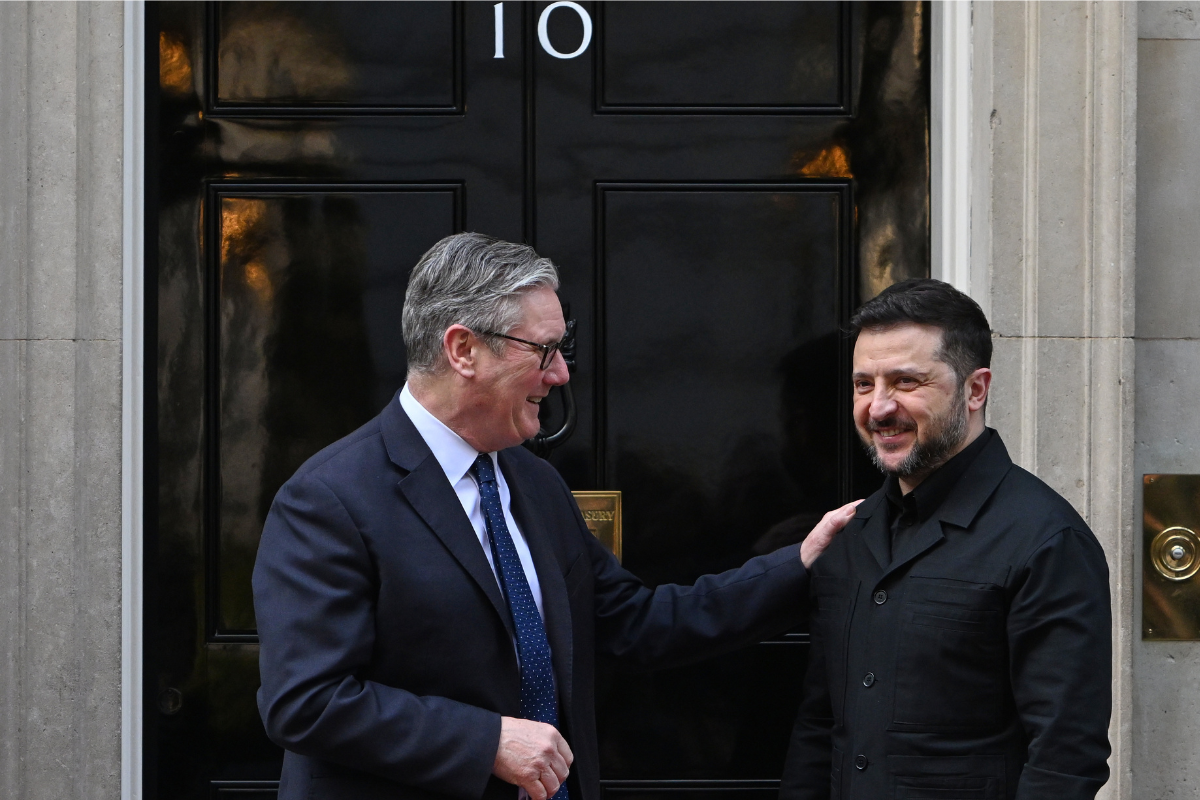

The leaders of the UK, France, and Germany said on June 7 that they support Ukrainian President Volodymyr Zelenskyy’s call for direct talks with Russian President Vladimir Putin to achieve a ceasefire.
British Prime Minister Keir Starmer, German Chancellor Friedrich Merz, and French President Emmanuel Macron said in a joint statement that any effort to reach a ceasefire deal with Russia should include active participation from Europe and the United States.
The leaders met with Zelenskyy in London on June 7.
They outlined five conditions for reaching a lasting peace deal between the two nations, starting with “an immediate and complete ceasefire” and using the current line of contact as the starting point for negotiations.
The leaders emphasized that international borders cannot be altered through the use of force, and that Russia must respect Ukraine’s right “to choose its own security arrangements and alliances.”
Other conditions include granting Ukraine “robust and legally binding security guarantees” once a ceasefire is in force, keeping Russian assets immobilized until the war ends and Russia compensates Ukraine for war-related damages, and ensuring that European security interests are protected in any settlement reached.
“Leaders commended President Zelenskyy’s call for an end to the war, negotiated by diplomatic means, as set out in his letter to the President of the Russian Federation of 4 June 2026,” they wrote.
The leaders also condemned Russia’s large-scale missile and drone attacks on Ukrainian cities and denounced what they described as “dangerous Russian drone incursions into NATO territory.”
A Ukrainian marine drone exploded in a Romanian port, authorities in Bucharest said on June 6. Authorities evacuated Constanta port, and more than 1,000 people were removed from beaches on the Black Sea and the nearby Danube Delta as a precaution, Romanian Deputy Interior Minister Raed Arafat told a briefing.
Romanian President Nicusor Dan said that in addition to that drone, a second one self-detonated off the port, and two others exploded approximately 90 miles east of Constanța.
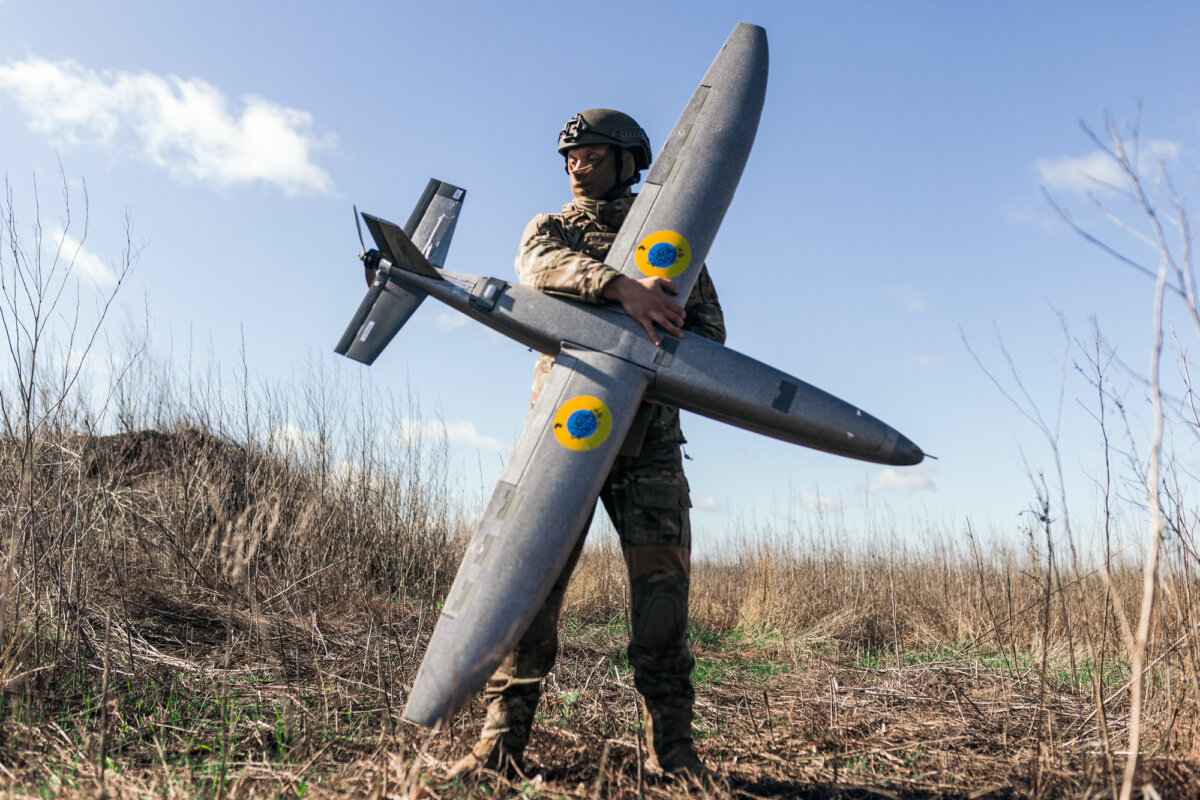
In May, authorities said a Russian drone had strayed into Romanian territory, crashing into an apartment building in the southeastern city of Galati.
Putin on May 29 said it was too early to tell whether the drone was Russian, suggesting that it might have been a stray Ukrainian drone, and adding that Ukrainian drones had previously been spotted in the Baltic countries, Finland, and Poland.
“The first reaction was exactly the same as it is now in Romania: The Russians are coming,” Putin said. “Then, after a short time, it turned out that it had nothing to do with Russian drones.”
Zelenskyy previously issued an open letter to Putin proposing a face-to-face meeting to secure a ceasefire in the war, which has been ongoing for more than four years.
“Ukraine is ready for a full ceasefire for the duration of the negotiations. This is standard practice, and current developments around Iran only reinforce that point,” he wrote in a June 4 letter.
Zelenskyy said his nation “will continue fighting for its existence” if Putin refuses to agree to end the war.
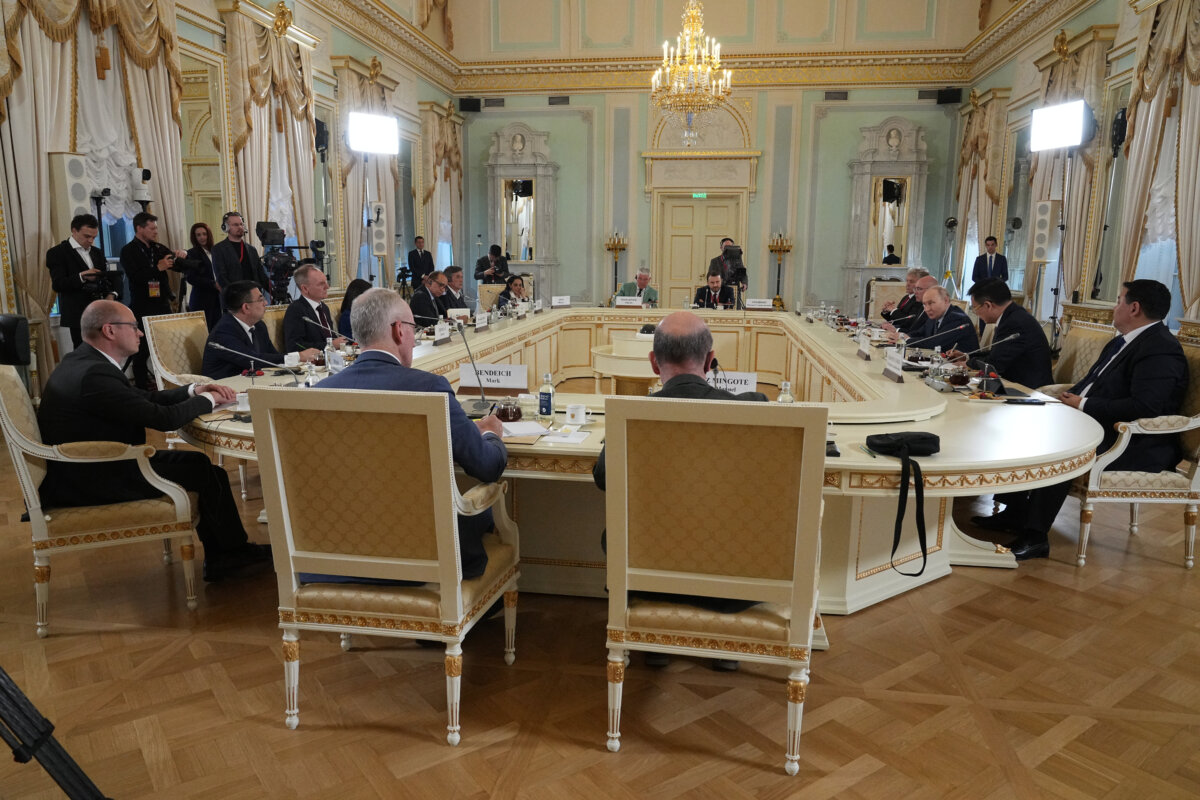
Speaking at the St. Petersburg International Economic Forum on June 6, Putin said he saw “no point” in meeting the Ukrainian leader until a long-term deal is reached.
“Let experts work out some decisions, and after that it’s possible to meet to attend the signing of some documents. But it’s necessary to find a solution first,” he said.
The Russian leader also suggested that U.S. President Donald Trump’s peace proposals could help end the war if Kyiv were ready to compromise.
Zelenskyy later responded in a post on X, saying the Russian leader was choosing war.
In another post on June 7, Zelenskyy said he discussed with Starmer Ukraine’s need for more missiles for air defense systems and other necessary items to protect energy infrastructure.
Moscow is demanding that Ukraine surrender the rest of its eastern Donbas region, which includes two of the four disputed regions in their entirety.
Zelenskyy has said this would leave the remains of Ukraine dangerously vulnerable to further Russian attacks and impact hundreds of thousands of people living in the region.
Victoria Friedman and Rachel Roberts contributed to this report.
 Friends Read Free
Copy
Facebook
Tweet
Friends Read Free
Copy
Facebook
Tweet