
The UK recorded a record monthly surplus of 30.4 billion pounds (about $40.9 billion) in January, initial government estimates show on Feb. 20.
The amount exceeded the 24.1 billion pounds ($32.5 billion) expected by the government’s Office for Budget Responsibility (OBR), according to the Office for National Statistics (ONS), and was the highest surplus since records began in 1993.
The windfall has been put down to strong income tax and capital gains tax revenue and lower debt interest payments, which are a usual feature in January as this is when British annual income tax bills are due.
“Initial estimates show that the public sector recorded a £30.4 billion ($40.9 billion) surplus in January 2026, £15.9 billion ($21.4 billion) higher than, or double that of January 2025, and £6.3 billion ($8.5 billion) above the Office for Budget Responsibility’s November 2025 forecast; the highest surplus in any month since records began in 1993 (not adjusted for inflation),” the OBR said in its monthly public sector finances bulletin.
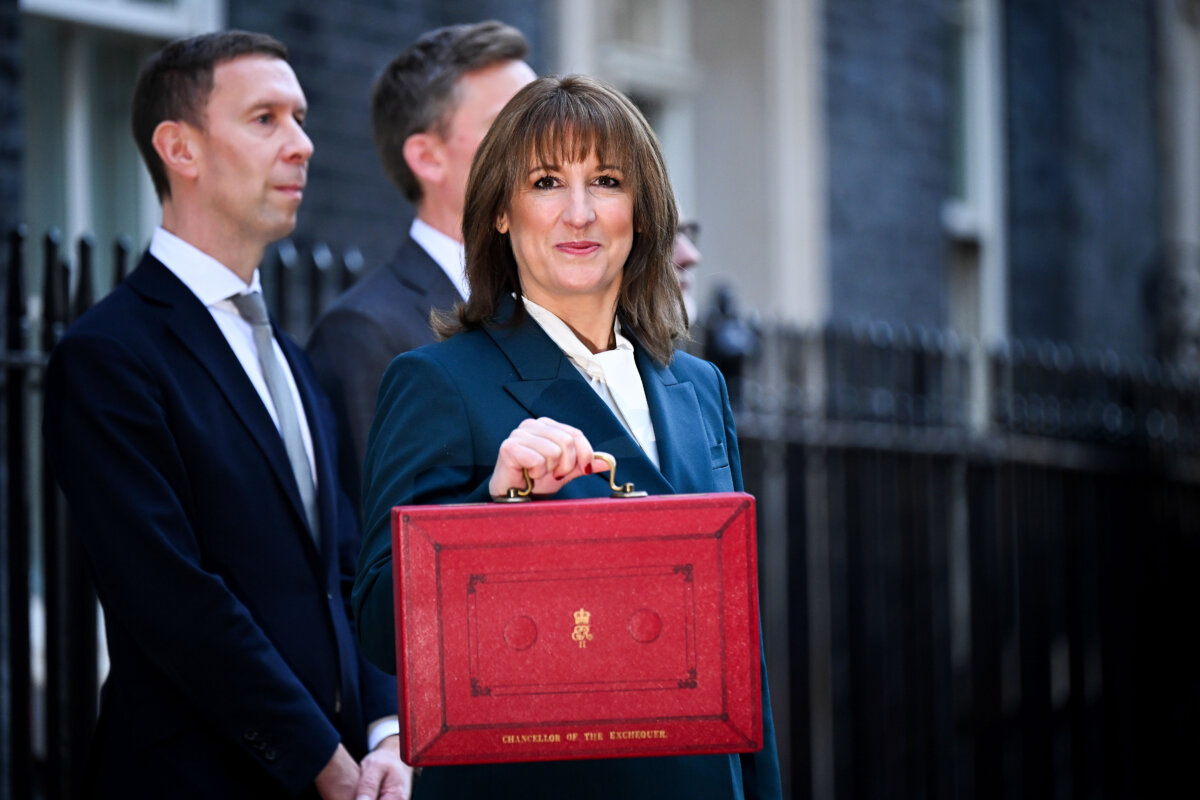
British Chancellor of the Exchequer Rachel Reeves said in a Feb. 20 post on X that the UK’s economic plan is “the right one.”
“Inflation down. Interest rates down. Borrowing down. Retail sales up. UK fastest growing European G7 economy,” Reeves said.
The figures come just under a fortnight before Reeves is set to deliver her annual Spring Forecast for 2026, on Mar. 3, where she will update parliament on the state of UK finances.
From the start of the financial year in April 2025, UK public borrowing totaled 112.1 billion pounds ($151 billion), the ONS said, down 11.5 percent from the first 10 months of the 2024–25 financial year.
This is below the OBR forecast of 120.4 billion pounds ($162.2 billion), which predicted a total deficit of 138.3 billion pounds ($186.3 billion), or 4.5 percent of gross domestic product (GDP) for 2025–26.
At the start of the financial year, the OBR forecast the government would be able to reduce borrowing to 3.9 percent of GDP.
The OBR is due to release new growth and borrowing forecasts on March 3.
Some UK borrowing costs are linked to inflation, and the public finances have benefited from an ongoing fall in the retail prices index, according to the ONS.
UK public sector net debt, excluding public sector banks, was provisionally estimated to be 92.9 percent of GDP at the end of January 2026 and remains at levels last seen in the early 1960s, when the country was still recovering from World War II. This means if the entirety of the UK’s annual economic output were used solely to pay off this debt, ignoring interest and other factors, it would cover about 92.9 percent of the debt, leaving a shortfall.
This ratio is used to gauge the scale and sustainability of government borrowing relative to the economy’s size, making it easier to compare across time periods or countries, as it accounts for inflation and economic growth.
The news of the record monthly surplus comes the same day it was announced that UK consumers had upped their spending in January at the fastest rate in nearly four years.

Purchases made both online and in-store rose 4.5 percent from a year earlier, the biggest increase since February 2022.
Sales volumes were up 1.8 percent from a month earlier, beating the median forecast for a 0.2 percent increase.
The monthly jump reflected strong sales of artwork and antiques, alongside continued demand from online jewellers, according to the ONS.
The spike in jewellery sales comes amid soaring gold prices across the globe, with the precious metal generally regarded as a safe haven asset during times of economic uncertainty.
 Friends Read Free
Copy
Facebook
Tweet
Friends Read Free
Copy
Facebook
Tweet