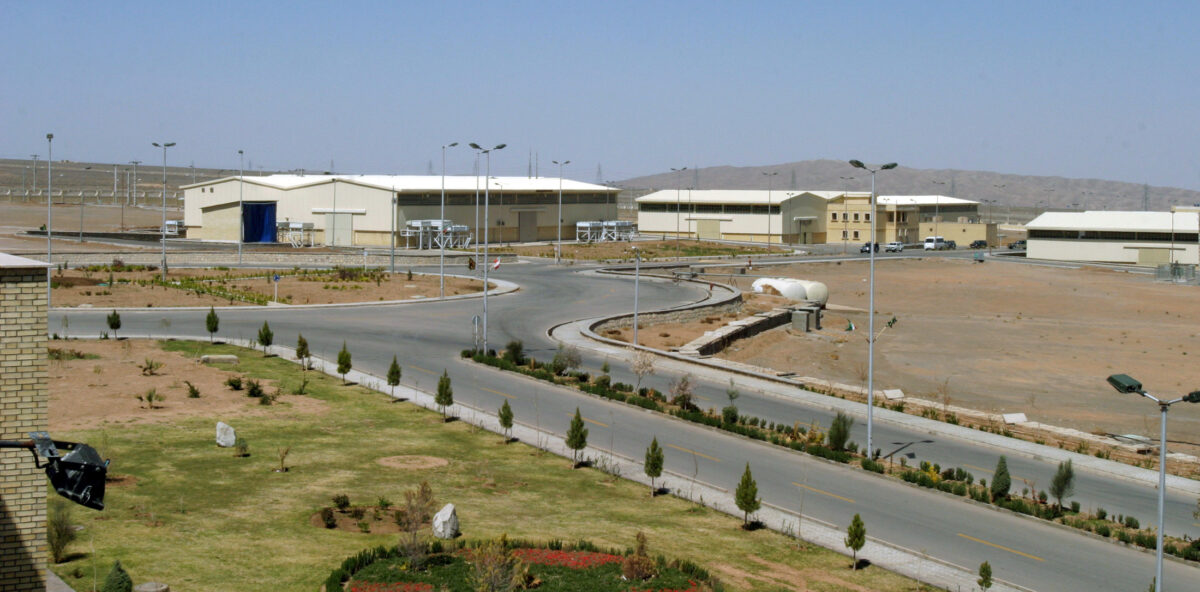

The United Nations nuclear watchdog said on March 3 that one of Iran’s enrichment sites sustained damage during the joint U.S.–Israeli operation against the Islamic Republic.
“Based on the latest available satellite imagery, IAEA can now confirm some recent damage to entrance buildings of Iran’s underground Natanz Fuel Enrichment Plant (FEP),” the International Atomic Energy Agency (IAEA) said in a post on X.
“No radiological consequence expected and no additional impact detected at FEP itself, which was severely damaged in the June conflict.”
The announcement confirms comments made by Iran’s ambassador to the IAEA, Reza Najafi, who told reporters outside a closed-door meeting at the IAEA’s headquarters in Vienna, Austria, on March 2 that the U.S. and Israel had hit “nuclear facilities yesterday.”
When asked which facilities were hit, he replied: “Natanz.”
It also confirms an assessment made by the Institute for Science and International Security, a nonprofit based in Washington.
The institute said in a March 2 post on X that commercial satellite images produced by Colorado-based company Vantor showed the first evidence that the Natanz site had been struck in the ongoing campaign.
The institute said the images clearly show “damage from two separate strikes to the access points to the underground Natanz enrichment plant, which although not operational post-June 2025 strikes may still contain enriched uranium cylinders, enrichment related equipment, and possibly recoverable centrifuges.”
The Institute did not say whether the Natanz site had been hit by a U.S. or Israeli strike.
At the March 2 meeting in Vienna, the IAEA said that it could not rule out a “possible radiological release” in Iran as a result of the ongoing U.S.–Israeli attack on the Islamic Republic.
IAEA Director General Rafael Grossi called the situation “very concerning,” adding that the organization “cannot rule out a possible radiological release with serious consequences, including the necessity to evacuate areas as large or larger than major cities.”
He also said that, so far, no elevation of radiation levels above the usual background levels has been detected in countries bordering Iran or at any of the nuclear installations within the country.
The U.N. nuclear watchdog chief said Iran “and many other countries in the region that have been subjected to military attacks have operational nuclear power plants and nuclear research reactors, as well as associated fuel storage sites, increasing the threat to nuclear safety.”
Grossi said the United Arab Emirates has four operating nuclear reactors, and Jordan and Syria have operational nuclear research reactors.
“Bahrain, Iraq, Kuwait, Oman, Qatar, and Saudi Arabia have also been attacked,” Grossi said. “These countries all use nuclear applications of some sort or another. We therefore urge utmost restraint in all military operations.”
Natanz Nuclear Facility
U.S. officials said 2025’s Operation Midnight Hammer destroyed Natanz, along with the Fordow and Isfahan nuclear sites.
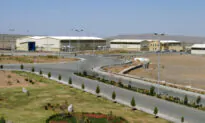
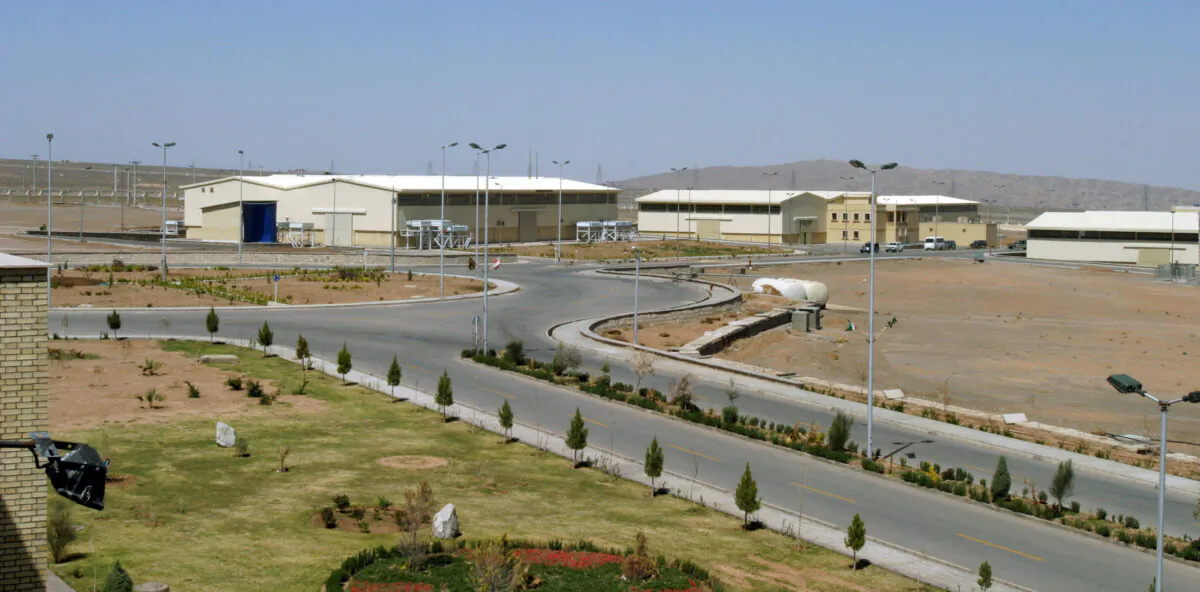
The Natanz Nuclear Facility, officially the Shahid Ahmadi Roshan Nuclear Facilities, is located near the city of Natanz, about 180 miles south of Tehran.
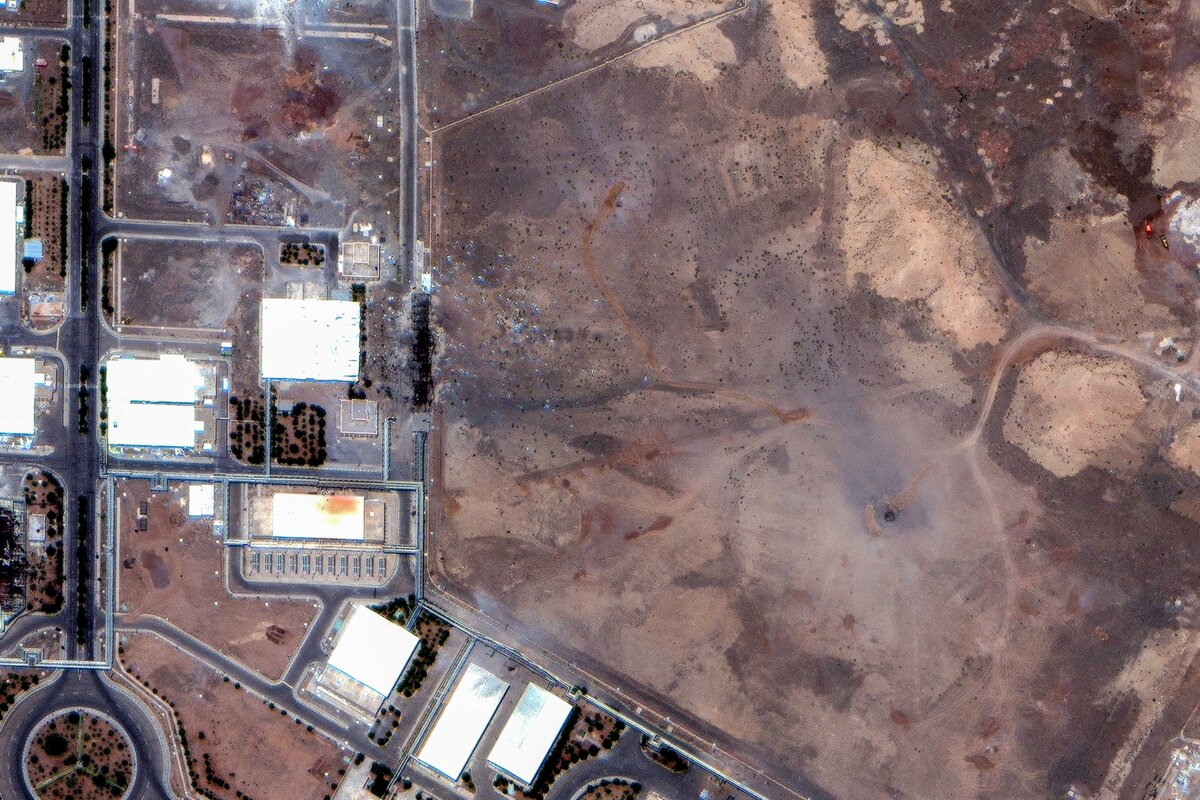
According to the IAEA, strikes during Operation Midnight Hammer “destroyed the above-ground part of the Pilot Fuel Enrichment Plant, one of the plants at which Iran was producing uranium enriched up to 60 percent.”
The watchdog said in June 2025 that the facility’s electricity infrastructure, including an electrical substation, a main electric power supply building, and emergency power supply and back-up generators, had also been destroyed.
 Friends Read Free
Copy
Facebook
Tweet
Friends Read Free
Copy
Facebook
Tweet