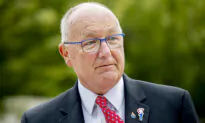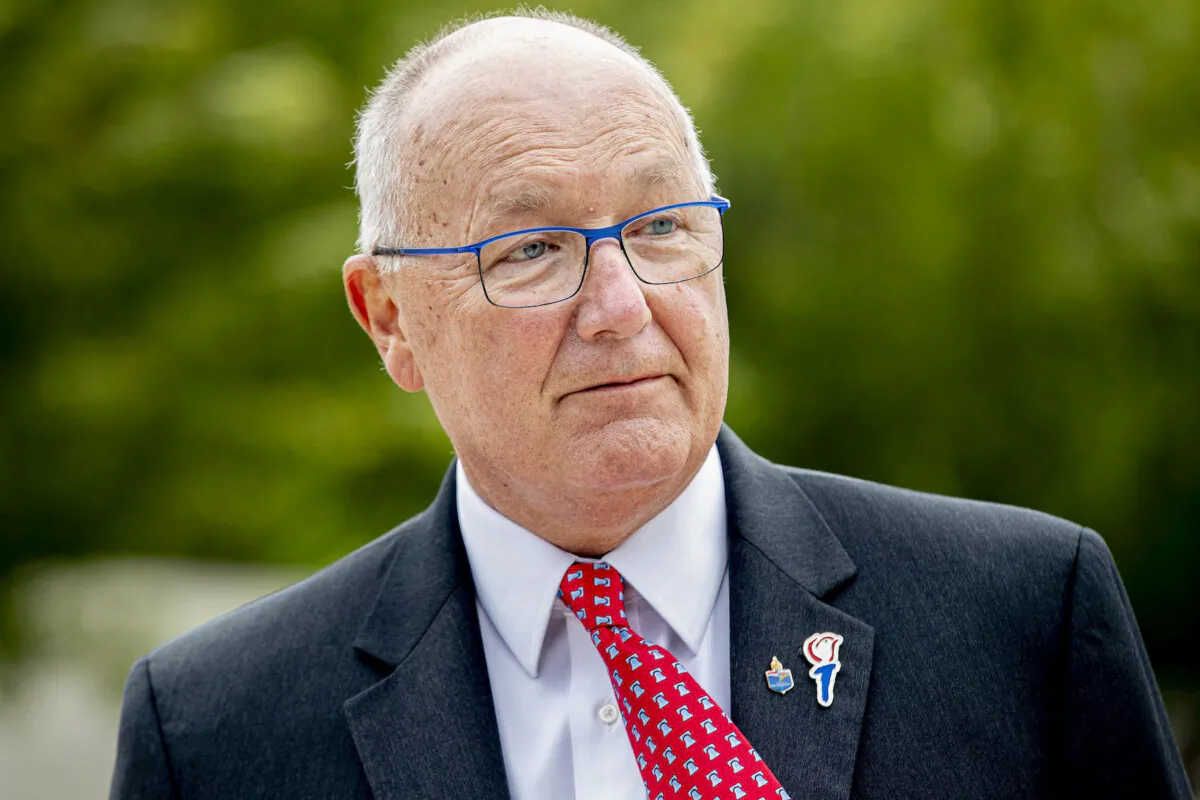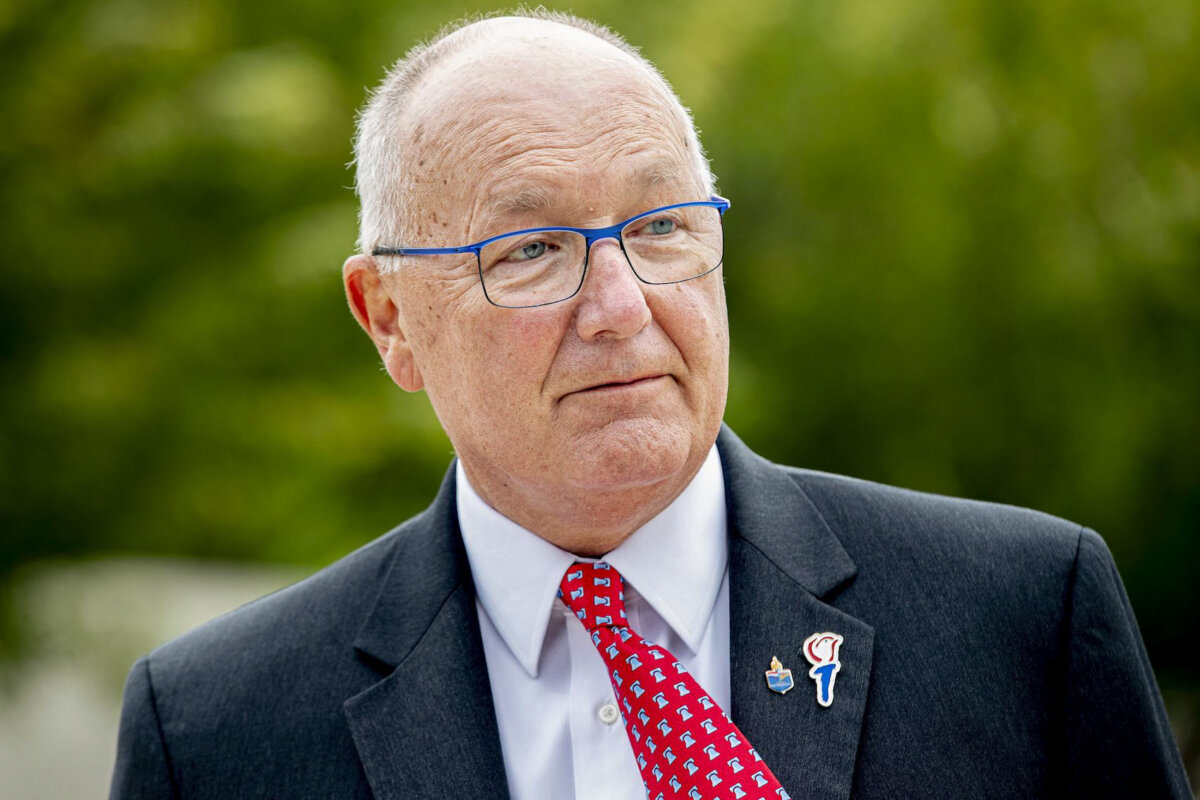

U.S. Ambassador to Canada Pete Hoekstra says the United States won’t commit to reaching a new trade agreement with Ottawa by July 21, a date cited by Prime Minister Mark Carney as the target for a deal.
Hoekstra added that Canada will likely have to pay “some level of tariff” like all countries.
“I’m not going to commit to a date,” Hoekstra said during a July 4 interview with CTV News when asked if the two countries were on track to reach a deal before the deadline.
The July 21 date was cited by Carney and other Canadian officials after the prime minister and U.S. President Donald Trump met during the G7 summit in Kananaskis, Alta., on June 16 and agreed to reach a deal within 30 days. After Trump said he would end trade negotiations with Canada due to Ottawa’s digital services tax on June 27, and Canada subsequently rescinding the tax on June 29, Carney said his government is back on track to reach a deal with Washington by July 21.
In the July 4 interview, Hoekstra added that he would not characterize negotiations between the two countries as “tumultuous,” but that the two countries are “working through some things.” He also said the United States has some ideas that “will make trade freer, fairer, and better for both countries” and that the overall agreement “at the end of the day” would be good for the United States and Canada.
When asked if Canada would have to accept some tariffs from the United States when the agreement is made, he said Trump had “made it clear, I think, every country is going to pay some level of tariff.”
For several months, Canada and the United States have been in trade discussions after the United States imposed a series of tariffs. The United States currently has 25 percent tariffs on goods not covered under the United States-Mexico-Canada Trade agreement, 25 percent tariffs on vehicles and parts, 50 percent tariffs on steel and aluminum, and 10 percent tariffs on energy and potash.
‘Media-Driven’
During the interview, Hoekstra was also asked about Trump’s repeated comments about Canada becoming the 51st state. Hoekstra said this has not come up in his discussions with the president, and suggested it is a “media-driven thing.”
“I’ve been dealing with the media for a long time, and if the media wants to talk about the 51st state, they can. I’m not going to, but it’s not an issue that Canadian citizens bring up to me on any kind of a basis,” he said.
Trump first made the comments about Canada becoming the 51st state to former Prime Minister Justin Trudeau during his November visit to Mar-a-Lago in Florida to discuss incoming tariffs, while also referring to Trudeau as the “governor” of a “great state.”
When Prime Minister Mark Carney visited the White House on May 6 to discuss trade with Trump, the president repeated that he would like to see Canada join the United States, but acknowledged it “takes two to tango.”
Trump also said there was nothing Carney could say to get him to lift the tariffs, and added, “That’s just the way it is.” Carney said following the meeting that the talks had been “very constructive” and that the two men would have more trade talks in the future.
Trump also mentioned Canada joining the United States during an interview with Fox News last weekend, saying Canada “relies entirely on the United States, we don’t rely on Canada.”
 Friends Read Free
Copy
Facebook
Tweet
Friends Read Free
Copy
Facebook
Tweet