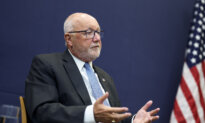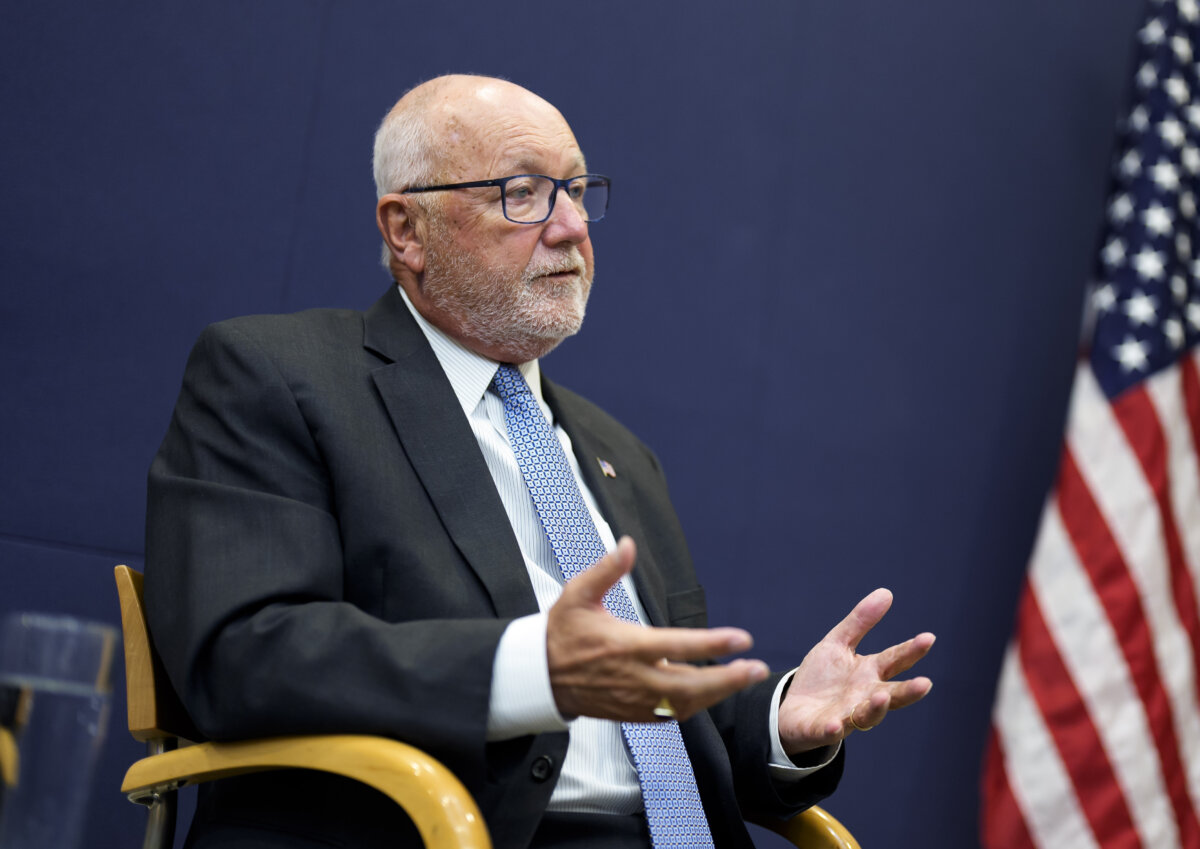

U.S. Ambassador to Canada Pete Hoekstra says comments made by Industry Minister Mélanie Joly and actions by other Canadian political leaders could amount to election interference ahead of the U.S. midterm elections.
Hoekstra told “The Really Big Show” podcast that the comments of Industry Minister Mélanie Joly and some other Canadian lawmakers in recent weeks could be seen as meddling in tight electoral races. Americans vote on Nov. 3 to determine which party will control the U.S. House of Representatives and the U.S. Senate for the remainder of President Donald Trump’s term.
“We’re closely watching Canadian activities because it appears that some of this, from our perspective, in the way we view our elections, could be inferred to be election interference,” Hoekstra said during the interview posted on Oct. 13.
“You have Minister Joly saying, ‘of course we are going to target tariffs in politically sensitive states,’” he added.
Hoekstra’s comment references a remark made by Joly during an Aug. 25 press conference in which she and Finance Minister François-Philippe Champagne outlined a dollar-for-dollar retaliatory response to the White House invoking Section 338 tariffs on Canada.
Joly said at the time that the items Ottawa is targeting with the counter-tariffs in certain states represent strategic choices designed to put political pressure on Washington.
Joly was asked about Hoekstra’s comments during an Oct. 14 press conference in Ottawa. She told reporters Canada would never interfere in America’s political landscape.
“Absolutely not, we would never do that, and we never accept that also being done to us in Canada,” Joly said when asked about the ambassador’s suggestions.
She said she has made several trips to the United States to “engage with” state representatives, both Democrats and Republicans.
“Fundamentally, what I’ve done in the U.S. is to attract investments and I think I’ll be able to have good news of investments by different American companies to Canada,” Joly said. “And that will continue to be my strategy in the U.S. and around the world.”
Hoekstra also referenced comments made by former Prime Minister Justin Trudeau during a Sept. 22 discussion at Brown University, where Trudeau criticized the Trump administration’s trade policies, saying they were driving up prices for American consumers without necessarily benefiting the United States. Trudeau described Canada as one of America’s oldest and best allies, and questioned the impact of Washington’s trade dispute with Ottawa.
Hoekstra said foreign policy leaders were welcome to visit the United States, but said they should keep their “nose out of American politics four weeks before an election.”
The ambassador did not make mention of Conservative Leader Pierre Poilievre’s visit to Michigan to meet with auto industry leaders this week to advocate for a tariff-free auto sector between the two countries.
U.S. officials have also raised concerns about other Canadian politicians, including Liberal MP Anthony Housefather, who campaigned for U.S. Democratic Rep. Debbie Wasserman Schultz in Florida during her primary campaign in August, according to officials who spoke to Canadian reporters on background.
Hoekstra was also critical of Ontario Premier Doug Ford’s decision to run a multimillion-dollar advertising campaign last year to oppose U.S. tariffs. Hoekstra said the campaign could be “interpreted as political interference.”
“It’s never happened in America before… but Canada decided that they would test the waters and see how far they could go,” he said.
Ford has repeatedly criticized the Trump administration’s tariffs, arguing they would hurt workers and consumers on both sides of the border. Speaking to reporters on Aug. 24, after U.S.-Canada trade talks collapsed and Washington imposed new tariffs on Canadian goods, Ford urged Americans to consider the economic impact when voting in November’s midterm elections.
“When it comes to the midterms, I have a message to the Americans: Don’t vote in a person that’s going to kill your jobs,” Ford said at the time.
Hoekstra said during his podcast interview that the United States would not tolerate any interference in its electoral processes. He added that any consequences meted out as a result of alleged foreign interference would have to be determined on a case-by-case basis based on the specific violation.
“We’ve got very strict laws on what foreigners can and cannot do in the United States with elections,” he said.
Prime Minister Mark Carney recalled Canadian trade negotiators from Washington on Aug. 21 after negotiations stalled, saying the terms proposed by the White House were unacceptable.
The United States imposed 50 percent tariffs on about US$20 billion worth of Canadian goods effective Aug. 22. Ottawa announced dollar-for-dollar counter-tariffs on U.S. goods on Aug. 25, with the measures taking effect Sept. 8.
 Friends Read Free
Copy
Facebook
Tweet
Friends Read Free
Copy
Facebook
Tweet