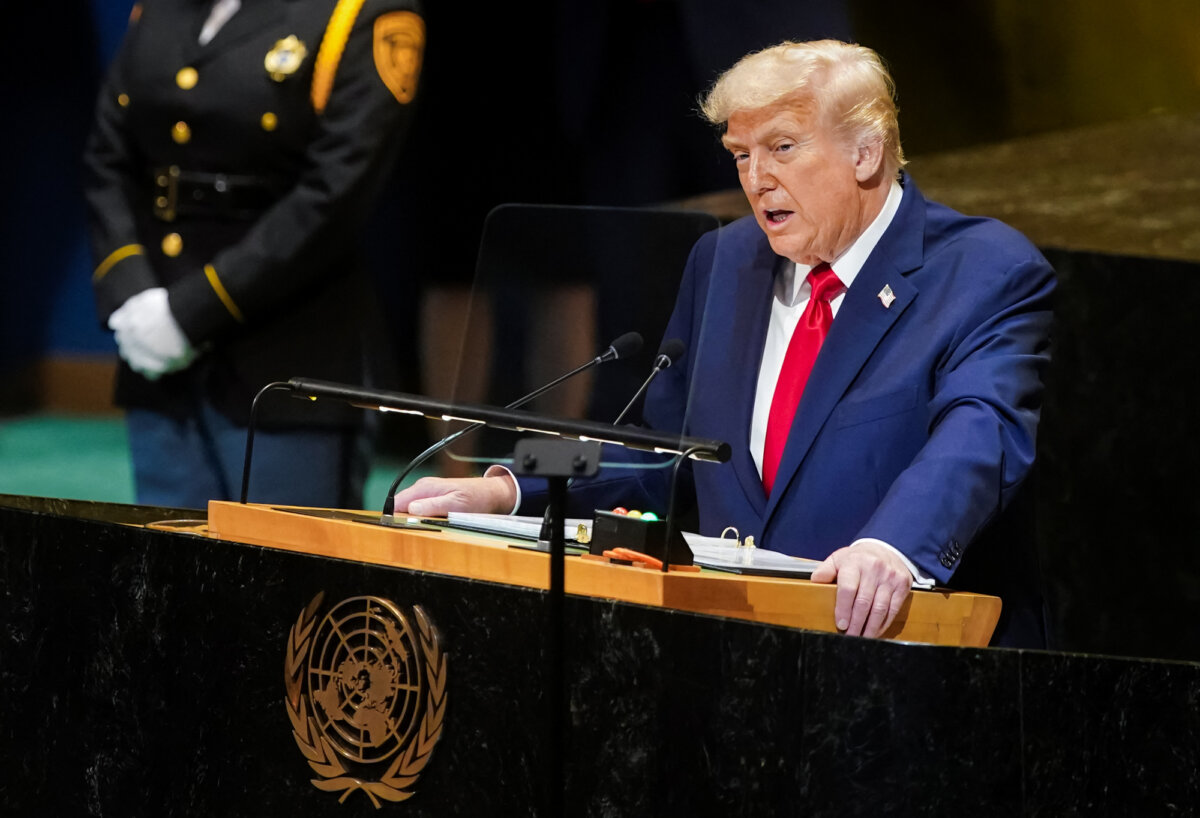

On the sidelines of the recent U.N. General Assembly meeting in New York City, the United States signed a raft of landmark trade deals with the Central Asian nations of Kazakhstan and Uzbekistan.
U.S. officials, including President Donald Trump, hailed the agreements as significant boons to the U.S. economy and job market.
According to experts, however, the deals are about more than mere economics and bilateral trade.
“These deals show that Central Asian states are willing to work closely with U.S. companies because they understand how important it is for the current U.S. administration to make deals that promote U.S. exports and create jobs,” Mamuka Tsereteli, a senior fellow at the Central Asia-Caucasus Institute at the American Foreign Policy Council, said.
But the agreements are also a means of “attracting U.S. support,” Tsereteli told The Epoch Times.
“They help the Central Asian states improve their strategic position vis-a-vis other strategic actors that are interested in the region,” he said. “They also help the United States improve its strategic position in Greater Central Asia.”
US Wheeling, Dealing
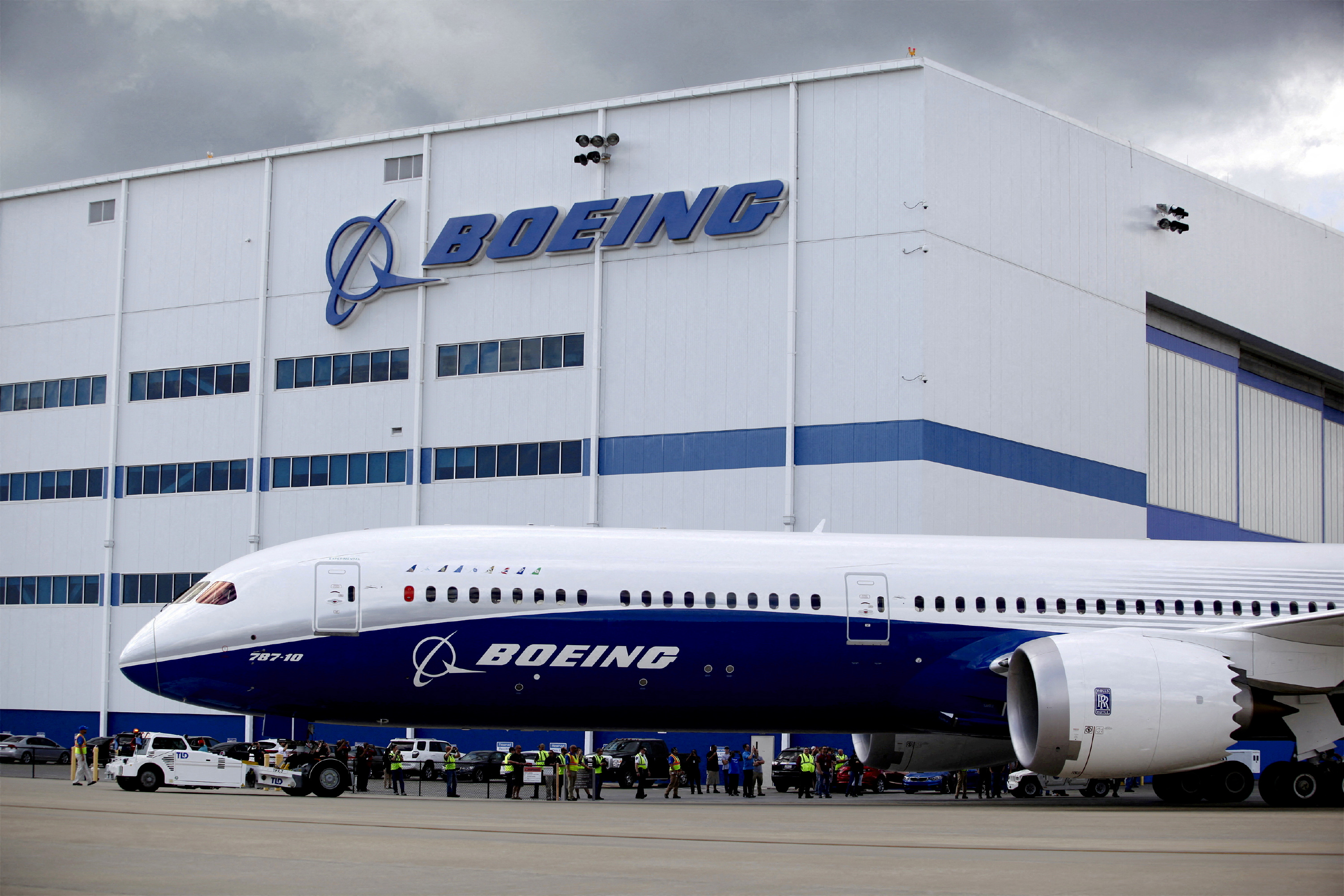
On the margins of the General Assembly meeting, which was held Sept. 23–29, Uzbekistan signed an $8.5 billion deal for the purchase of 22 Boeing 787 passenger jets for its national carrier.
The U.S. Commerce Department’s International Trade Administration described the deal as “the largest commercial aircraft agreement of its kind in Central Asia.”
Writing on Truth Social, Trump hailed the “GREAT deal,” which he said would create more than 35,000 jobs in the United States.
He also praised Shavkat Mirziyoyev, his Uzbek counterpart, describing him as “highly respected” and a “man of his word.”
“We will continue to work together on many more items!” wrote Trump, who also briefly met with Mirziyoyev on the assembly’s sidelines.
According to Mirziyoyev’s press office, his discussion with Trump focused on “further expanding strategic partnership relations, and implementing joint cooperation projects in priority areas.”
U.S. wheeling and dealing at the General Assembly didn’t end there.
On the same day, Kazakhstan inked a $4.2 billion agreement with Wabtec, a U.S. rail equipment firm, for the purchase of 300 locomotives for its national railway system.
In a statement, the U.S. Commerce Department described the agreement as “the largest rail equipment deal in history.”
“This landmark deal advances U.S. manufacturing jobs and accelerates growth, opportunity, and connectivity in America and Central Asia,” the statement quoted Commerce Secretary Howard Lutnick as saying.
Speaking in New York City, Kazakh President Kassym-Jomart Tokayev commended his U.S. counterpart’s “leadership in advancing pragmatic diplomacy.”
According to Matthew Bryza, a former White House and senior State Department official, the twin deals appear to suggest that “a threshold has been crossed, at least in President Trump’s mind, about encouraging U.S. engagement with companies—and the governments—of Uzbekistan and Kazakhstan.”
“The Boeing deal with Uzbekistan is significant, as is the locomotive deal with Kazakhstan,” he said.
“But that’s just the beginning,” said Bryza, who previously served as Washington’s ambassador to Azerbaijan.
“There’s a whole series of other agreements on investments involving U.S. firms and Uzbekistani counterparts that were also signed in New York by President Mirziyoyev and various U.S. companies,” he said.
In addition to the Boeing agreement, Uzbekistan signed a $1 billion exploration deal with U.S. minerals firm Traxys, along with other agreements in the transport, technology, and mining fields.
Powers Eye Resource-Rich Region
Together with Uzbekistan and Kazakhstan, the Central Asia region includes Kyrgyzstan, Tajikistan, and Turkmenistan. All five are former soviet republics.
In recent years, the region’s vast potential—especially in terms of rare minerals, energy, and overland transport—has drawn the attention of resource-hungry foreign powers.
In 2023, the first China–Central Asia Summit was held in the Chinese city of Xi’an, where Beijing extended significant financial support for the development of the region’s infrastructure within the context of its Belt and Road Initiative.
Later the same year, the first U.S.–Central Asia summit convened in New York City under the “C5+1” format, and the leaders of all six participant states explored potential areas of cooperation.
Brussels followed suit in April of this year, when the Uzbek city of Samarkand hosted the first EU–Central Asia Summit, which focused largely on land transport and trade corridors.
For the EU, deeper ties with the Central Asian States would give it access to regional trade routes that bypass Russia, especially the emerging Trans-Caspian International Transport Route—or “Middle Corridor”—linking China to Europe.
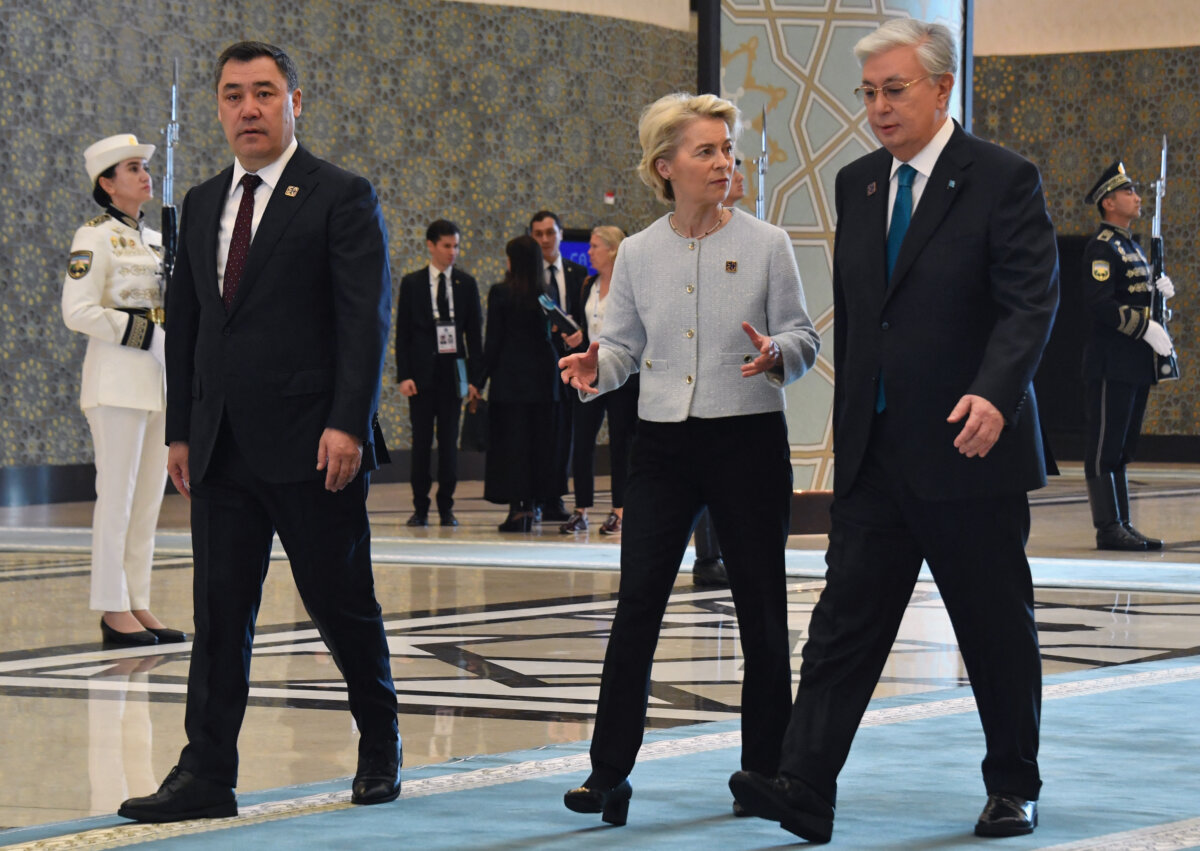
According to Tsereteli, the fact that the two major trade deals signed in New York City were both related to transport is “definitely significant.”
“The U.S. is interested in free and open access to Central Asian resources, and in greater integration of these resources in the global economy,” he said. “American companies have significant investments in the development of some of these resources, with more to come.”
“Everything that helps Central Asian countries send their resources to the United States, Europe, and other parts of the world—outside the control of Russia, China, and Iran—is in the U.S. interest,” Tsereteli said.
U.S. involvement in the development of Central Asian infrastructure, he said, is “based on the concept of shared access—and shared benefits—for multiple actors.”
“China and Russia seek control and domination,” Tsereteli said. “The U.S. approach is more beneficial—both for the Central Asian states and the global economy.”
Bryza said the freshly inked trade deals indicate “a deepening of the Trump administration’s innovative approach to foreign policy, which relies on investment and business by U.S. firms with counterparts elsewhere.”
“We first saw this in Ukraine with the critical minerals deal that President Trump touted as a way to provide a sort of security guarantee to Ukraine, thinking—or hoping—that the presence of U.S. investors and companies would deter [Russian President Vladimir] Putin from conducting future attacks on Ukraine,” he said.
“In the case of these Central Asian countries, it seems that the Trump administration is driven by the same impulse to expand U.S. influence regionally using trade and investment.”
Uzbekistan and Kazakhstan, Bryza said, “seem to be using connectivity with U.S. companies as a way to shore up their own independence from Russia and strengthen their ties with the United States.”
 Friends Read Free
Copy
Facebook
Tweet
Friends Read Free
Copy
Facebook
Tweet