
The U.S. Treasury Department on Jan. 29 issued a general license easing some sanctions on Venezuela’s oil industry, authorizing established American companies to engage in the sale, transport, and refining of the country’s crude shortly after Venezuelan lawmakers approved changes to the nation’s main oil law.
General License No. 46 from the U.S. Office of Foreign Assets Control (OFAC) permits transactions ordinarily prohibited under Venezuela sanctions regulations, including those involving state-owned Petróleos de Venezuela, S.A. (PdVSA) and its affiliates. It applies to lifting, exporting, selling, storing, marketing, purchasing, delivering, or transporting Venezuelan-origin oil by U.S. entities formed before Jan. 29, 2025, provided contracts are governed by U.S. law and that payments to blocked parties go into designated U.S.-controlled accounts.
The Treasury Department notes that the license does not authorize “any transaction involving a person located in or organized under the laws of” Russia, Iran, North Korea, Cuba, or China.
Companies must report transaction details, including parties, quantities, values, and payments, to U.S. authorities.
OFAC Director Bradley T. Smith signed the license, effective immediately.
The easing of some sanctions came shortly after the Venezuelan National Assembly approved sweeping reform of its oil law, easing state control to attract foreign investment and granting operators more autonomy.
After passing a final vote, acting leader Delcy Rodríguez signed the measure on Jan. 29, reversing decades of socialist policies under former leader Nicolás Maduro and his predecessor, Hugo Chávez. The changes include lower taxes, expanded ministerial powers for contracts, and potential asset transfers.
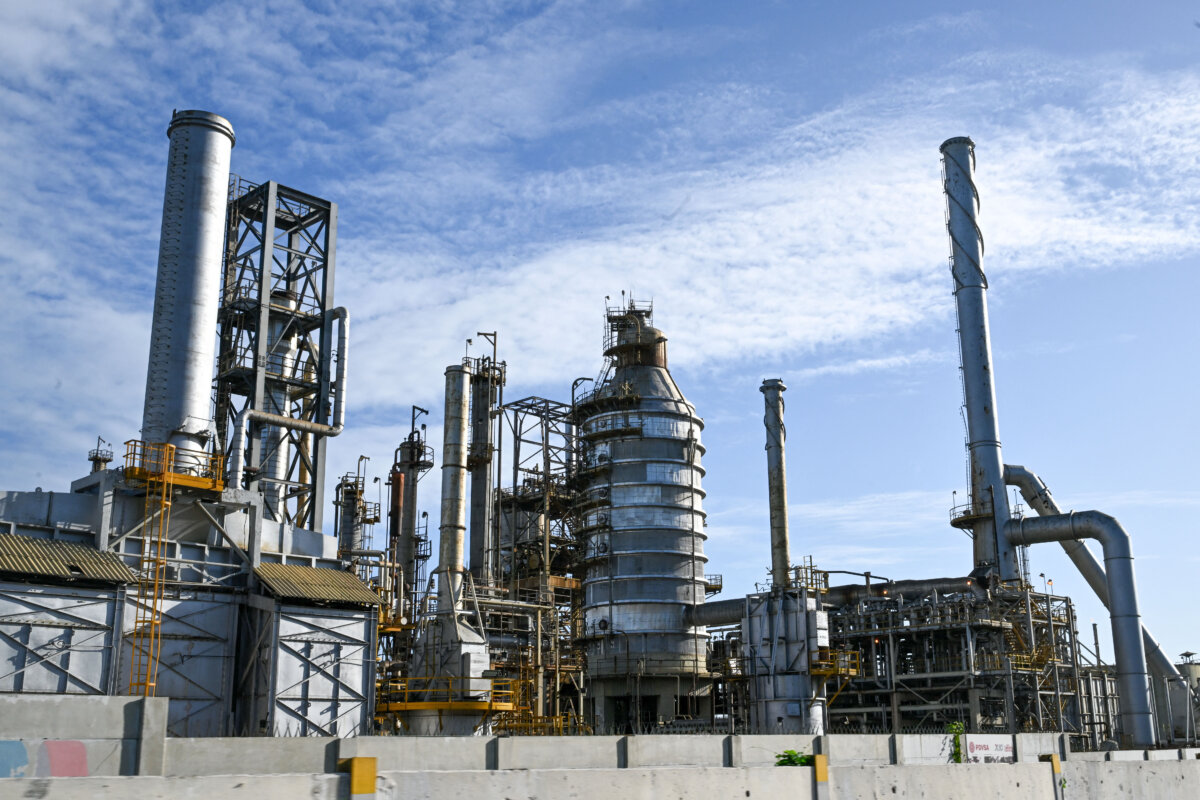
U.S. officials have tied the sanctions relief to a $100 billion reconstruction plan for Venezuela’s dilapidated oil infrastructure, with American companies poised to invest heavily. President Donald Trump has said U.S. companies will spend at least that amount to revive production, potentially increasing global supplies and lowering prices.
ExxonMobil is considering a return to Venezuelan operations, while Chevron plans an immediate production boost.
Vice President JD Vance has said that Venezuela can sell oil “only if those sales advance U.S. national interests.”
The developments follow the Jan. 3 U.S. capture of Maduro and his wife, Cilia Flores, in Caracas, ending his rule amid narco-terrorism charges. Maduro and Flores have pleaded not guilty to the charges.
The United States has seized multiple sanctioned tankers linked to Venezuelan oil, including the Sophia and Bella-1, to block alleged shadow fleet operations.
Trump has vowed indefinite U.S. management of exports.
Venezuela, with the world’s largest proven oil reserves, saw output plummet due to mismanagement and sanctions, first imposed by the United States in 2017.
The Biden administration briefly eased restrictions in 2023 via General License 44 but reimposed them in 2024 when commitments faltered. PdVSA was designated in 2019, freezing assets and barring U.S. dealings.
Chevron aims to boost exports to 300,000 barrels per day (bpd) to the United States in March, up from 100,000 bpd in December 2025. Oil traders such as Vitol and Trafigura have secured licenses.
 Friends Read Free
Copy
Facebook
Tweet
Friends Read Free
Copy
Facebook
Tweet