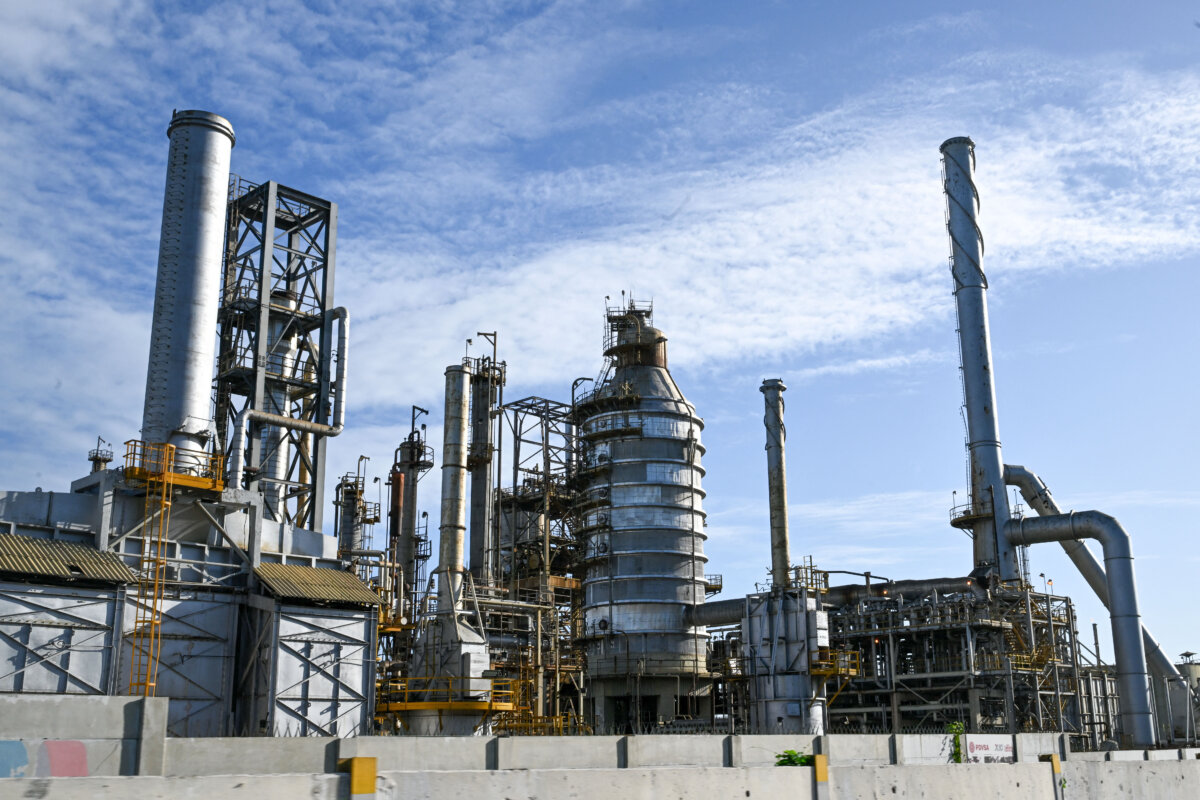

Venezuela has approved a reform that opens the country’s oil sector to deeper collaboration with private companies, rolling back more than two decades of state dominance that became a hallmark of its socialist project.
On Jan. 29, Venezuela’s National Assembly passed an amendment to the Hydrocarbons Law, the main framework regulating every aspect of the oil industry, from exploration and drilling to refining, transport, and sales.
According to an official communication from the parliament, the amendment allows private companies in joint ventures with state-owned oil enterprise PDVSA to directly market their share of production.
The change effectively gives foreign partners much clearer operational and commercial control over their ventures, pushing PDVSA into a more secondary role compared to the current model.
The reform maintains a 30 percent royalty paid to the state, but that can be lowered to 15 percent under a new tax regime designed to spur investment in undeveloped fields, the parliament reported. It also eliminates several other fiscal burdens, including the Wealth Tax and various special contributions, in an effort to improve operators’ cash flow and, in the government’s words, “ensure the social profitability” of Venezuelan crude.
The amendment also allows companies to resolve disputes in international forums rather than relying solely on Venezuela’s courts. By contrast, the current framework demands that mixed companies include in their terms and conditions a clause requiring that all disagreements be resolved exclusively by Venezuelan courts, under Venezuelan law, and may not give rise to any “foreign claims.”
Still, the overhaul stops short of the large-scale privatization some investors had hoped for. PDVSA remains under full state control, and the reform does not contemplate breaking up or privatizing the national oil company.
The new measure has been signed the same day by acting President Delcy Rodríguez, who took over after her boss, Nicolás Maduro, was captured in a military operation and taken to the United States to stand trial on narco-terrorism charges.
The last major amendment to the Hydrocarbons Law came in 2006 under Maduro’s predecessor and mentor, Hugo Chávez. That version tightened state control by placing joint ventures under PDVSA’s operational command, classifying them as state-owned entities, and sharply limiting private participation in exploration, production, and commercialization.
During the Chávez years, foreign energy giants such as ExxonMobil and ConocoPhillips left Venezuela after being forced into minority positions alongside Venezuela’s national oil company, PDVSA, or facing outright seizures of their assets. Some companies, including Chevron, stayed on under joint ventures with the state.
Venezuela’s oil output has since plummeted due to a combination of underinvestment, mismanagement, crumbling infrastructure, and Western sanctions, shrinking from about 3 million barrels per day in the late 1990s to an estimated 1 million barrels per day in 2025.
Chevron accounts for about one-quarter of Venezuela’s output and manages exports of roughly 120,000 to 150,000 barrels per day of crude oil to U.S. Gulf Coast refiners under a license issued by the U.S. Department of Treasury. Most of the rest of Venezuela’s oil exports are sold to China at steep discounts through what are popularly called “shadow fleets,” typically older tankers that use deceptive shipping practices to transport sanctioned goods while concealing their true origins or destinations.
 Friends Read Free
Copy
Facebook
Tweet
Friends Read Free
Copy
Facebook
Tweet