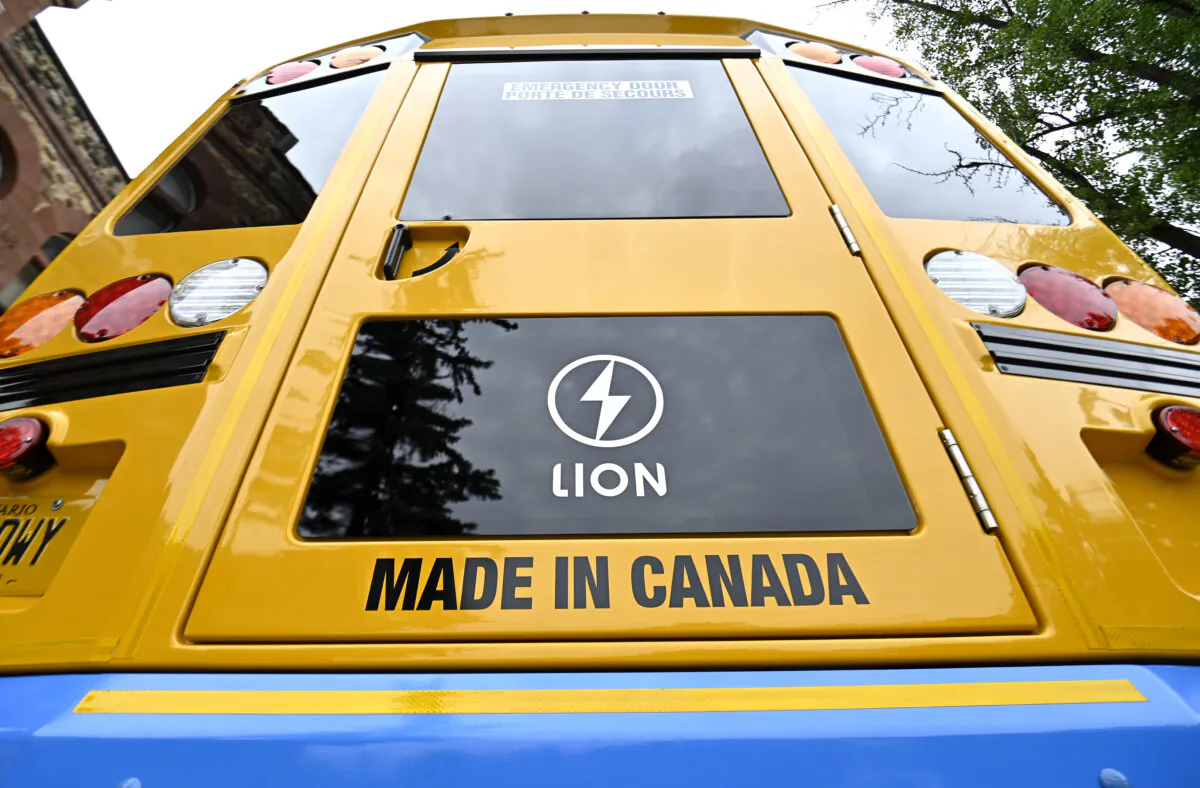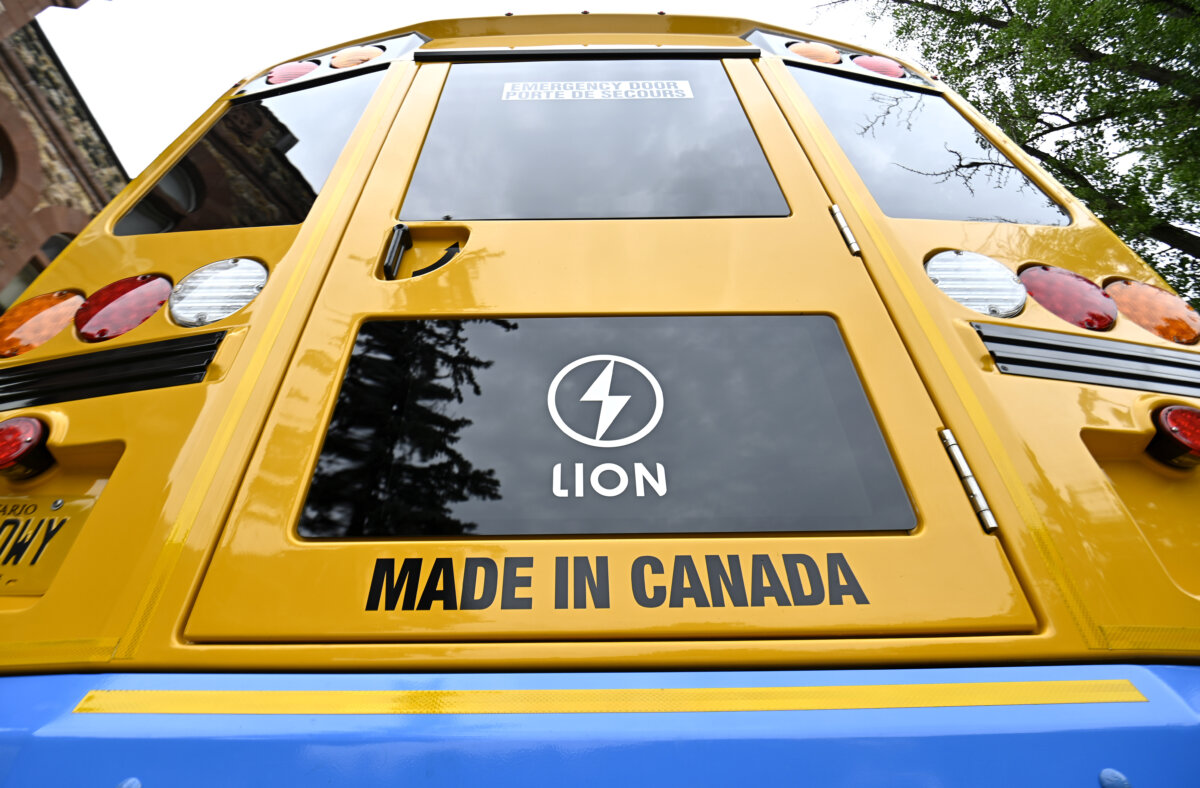

The U.S. government is out tens of millions of dollars after the bankruptcy of a Canadian electric vehicle company that was awarded nearly US$160 million to build hundreds of electric school buses, the head of the U.S. Environmental Protection Agency (EPA) says.
Lee Zeldin, who was named President Donald Trump’s EPA administrator in January, told Fox News in a recent interview that Quebec vehicle-maker Lion Electric failed to deliver many of the buses it was paid for.
“The Biden administration sent all of the money… They gave all the money up front. Well, guess what? They just declared bankruptcy,” he said referring to Lion Electric’s move to file for bankruptcy protection last December.
Lion Electric received just shy of US$160 million to manufacture hundreds of battery-powered buses for school districts across the United States as part of the previous government’s climate agenda, said Zeldin.
Lion has also received more than $177 million from the Quebec government and $30 million from Ottawa.
Federal documents show that the U.S. government gave Lion Electric US$159 million to manufacture 435 battery-powered buses between October 2022 and May 2024 under the EPA’s US$5 billion Clean School Bus program.
“They still haven’t provided $95 million worth of school buses to 55 school districts,” said Zeldin. “It’s the American taxpayer that gets screwed.”
Lion Electric was the third-largest recipient of the Clean School Bus program, established by the Democrats’ infrastructure bill in 2021, which subsequently became a signature climate initiative during both Joe Biden’s presidency and Kamala Harris’ vice-presidency.
The Quebec company received several rounds of government funding from the United States while struggling financially for several years. It has reported hundreds of millions of dollars in net losses since 2020.
Lion Electric went through several rounds of layoffs last year and shut down production at its plant in Joliet, Illinois, although it retained its manufacturing plant in St-Jérôme, Que. The company was $500 million in debt when it filed for bankruptcy protection from creditors in December.
Lion Electric was acquired by a group of Quebec investors in May and, under its new business plan, the Quebec firm will focus exclusively on electric school buses assembled and sold in the province. The company has also said it will no longer honour warranties on school buses sold in the United States.
Lion Electric did not return a request for comment by publication time. Earlier this month, the monitor appointed by the court to oversee Lion’s restructuring sent a letter to U.S. clients, notifying them their warranties and purchase orders had been voided.
“As part of the transaction, most of the Lion Group assets, liabilities, and rights were transferred to a corporation that will be eventually wound-up by way of bankruptcy proceedings,” the letter dated July 15 said.
“For further clarification, all warranties and purchase orders in the United States were transferred into the new corporation to be bankrupted. All warranties and purchase orders that you could have with the Lion Group are therefore not being legally assumed by the company post transaction.”
The company has previously said it had nearly 2,000 buses and more than 200 trucks on the road in North America. A May press release announcing Lion Electric’s acquisition said approximately 1,000 buses are operating in Quebec, and those warranties will be honoured.
Spending Review
Washington, D.C.-based World Resources Institute figures indicated Lion had roughly 1,600 electric school buses on the road in the United States in December 2023, with approximately 1,800 more on order. Those numbers are higher than its two main competitors, Blue Bird Corporation and Thomas Built Buses, according to the institute’s data.
The Trump administration has vowed to perform thorough reviews of prior spending on green energy, including purchases of electric buses.
As part of that, Zeldin released the EPA’s proposal late last month to rescind the 2009 Endangerment Finding, which paved the way for electric vehicle mandates under the previous administration. He said the Barack Obama-era finding was used to justify more than $1 trillion in regulations, which included the Clean School Bus program.
The program was also investigated by House Energy and Commerce chairman Brett Guthrie due to potential fraud concerns.
The report found that $1.9 billion was doled out in rebates and another $1 billion was given in grants to fund electric buses in school districts nationwide as part of the program.
The Canadian Press contributed to this report.
 Friends Read Free
Copy
Facebook
Tweet
Friends Read Free
Copy
Facebook
Tweet